Orthodox Calendar, December 2
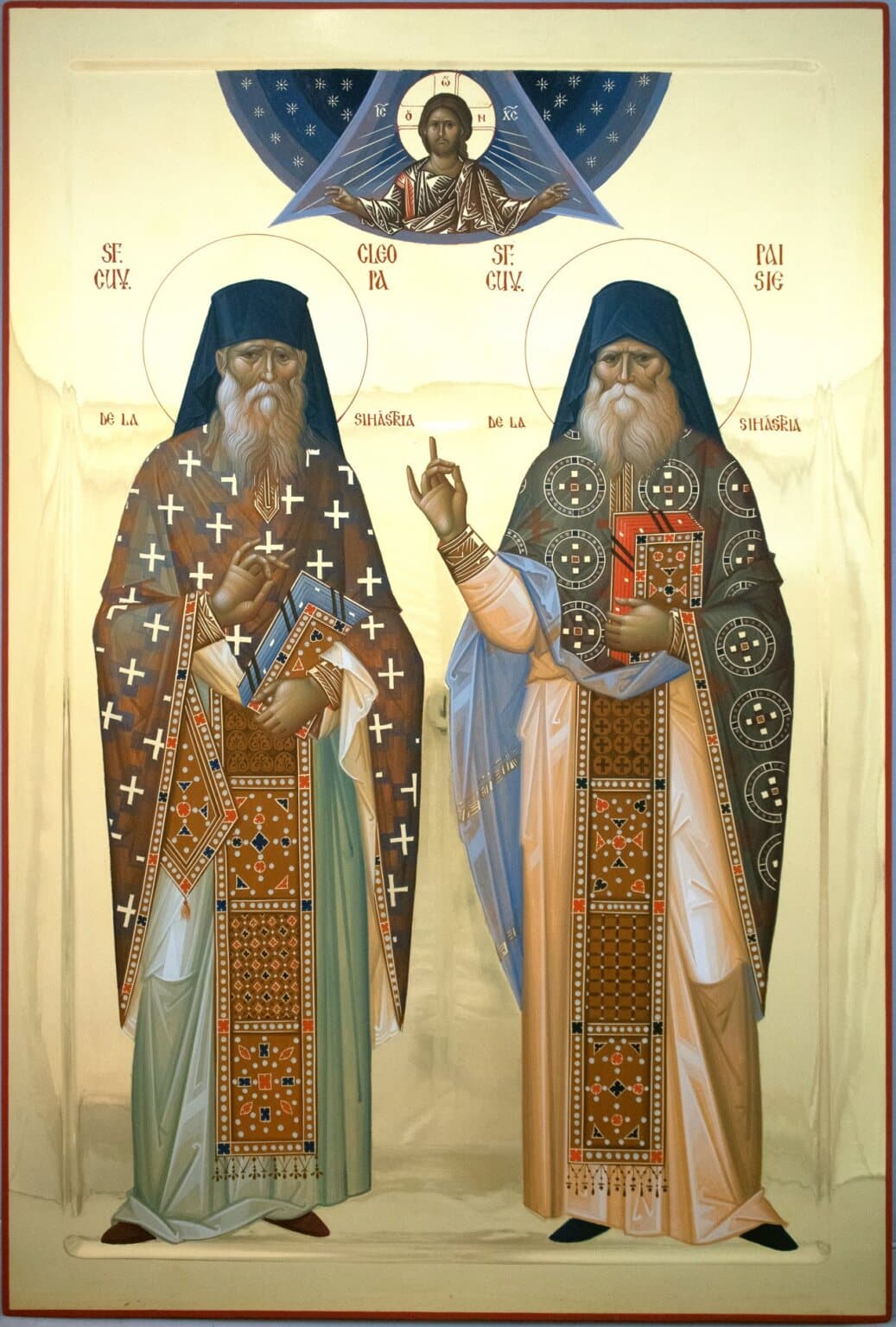
Saints Cleopas and Paisius of Sihăstria
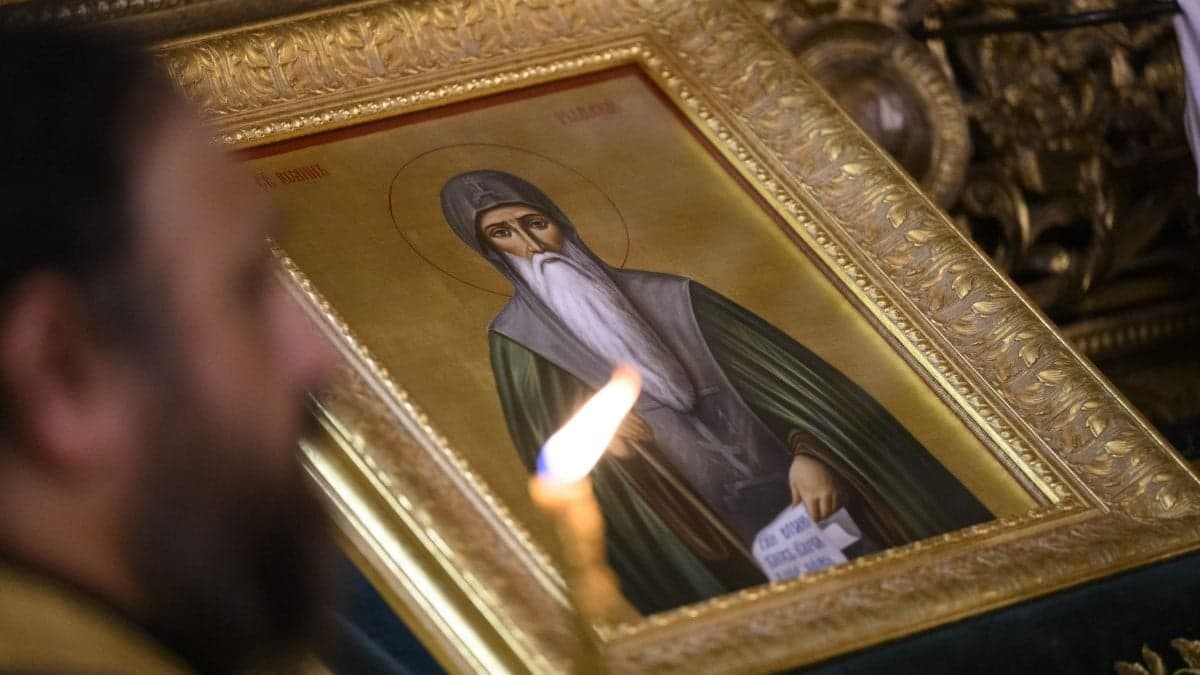
Venerable and God-bearing Father Paisie of Sihăstria was born on 20 June 1897 in the village of Stroești, Botoșani County, into the Christian family of Ioan and Ecaterina Olaru, who were blessed by God with ten children.
Born near the feast of the Holy Apostles Peter and Paul, he received at Baptism the name Peter. He attended the village primary school, always ranking first in his class and receiving as prizes books on the Lives of the Saints, which nurtured in him a love for monastic life.
In October 1921, at the age of twenty four, he entered the community of Cozancea Skete, not far from his native village. Here he learned prayer, obedience, humility, and love for his neighbour. From the beginning he stood out through his eagerness to help both the brethren and the pilgrims who came to the skete.
Not long after, he was found worthy to receive the monastic schema. He was tonsured on 9 June 1922 and received the name Paisie. From his early years in the monastery he became known as a wise spiritual guide, sought by many believers. Some of these became his disciples and advanced greatly in spiritual life, among them the young Constantin Ilie, later Archimandrite Cleopa.
In 1931, loving the life of solitude, Father Paisie built a small cell with a wooden chapel in the forest near the skete. He often withdrew there to pray and fast. From that time he became known as Father Hermit.
In 1933 he embraced an even stricter way of life by taking the great schema. On 14 October 1943 he was ordained hierodeacon, and on 4 April 1947 hieromonk. Shortly afterwards he was appointed abbot of Cozancea Skete, which he led for almost a year. In 1948 he received the blessing to move to Sihăstria Monastery, a more secluded place of ascetic struggle, where his disciple Archimandrite Cleopa Ilie was abbot and where the spiritual traditions passed down from Saint Paisius of Neamț were well preserved.
Gentle and humble in all things, Hieroschemamonk Paisie was entrusted with counselling the growing number of faithful drawn to Sihăstria by his holy life. In 1949 he followed his disciple Cleopa to Slatina Monastery in Suceava County, where the latter had been appointed abbot.
In the spring of 1954 he returned to Sihăstria, where the atmosphere was quieter. For more than thirty five years he served as confessor of the community and of countless believers from all over the country. Through unceasing prayer, strict fasting, and the daily confession of monks and laypeople, he became one of the most loved spiritual fathers in Romania, known for his ascetic labours and sacrificial love for others and for the many spiritual gifts bestowed on him.
He was renowned for his spiritual insight, through which he could reach the heart and conscience of people, and for the compassion and love with which he received everyone at any hour. His humility and gentleness moved many to repentance. He did not speak grand words to those who sought him. Instead, he prayed, and his prayer and love brought people joy and renewed them spiritually.
Often the spiritual state of those who came to him, as well as that of his disciples scattered throughout the country, was revealed to him. He knew their needs and struggles from afar and helped them through prayer and wise counsel. Some he guided, through the gift of spiritual foresight, to avoid dangers that threatened them, while to others he revealed the will of God.
He also received from God the gift of healing and of casting out unclean spirits. Many found both spiritual and physical health through his blessings and prayers. During the monastic persecutions after the 1959 decree, which forced many young monks to leave their monasteries, Father Paisie strengthened them spiritually like a true shepherd, encouraging them until they were able to return to their monastic homes.
Thus Father Paisie played an important role during one of the hardest periods of the twentieth century, when atheistic communism openly fought against faith. Through his wisdom and God inspired counsel he became a skilled spiritual guide. Between 1972 and 1985, loving solitude, he lived in greater seclusion at Sihla Skete, near the Cave of Saint Theodora. Even there, many sought him, knowing that his blessing gave them peace and strength to overcome life’s temptations.
In the brief moments when he was not visited by pilgrims, Father Paisie found time to write pages filled with spiritual grace and many verses of repentance. He also worked in the garden, giving an example of diligence and humble service. In the last years of his earthly life he endured many bodily sufferings with deep faith and showed great patience to his disciples.
In 1985 he returned to Sihăstria, where he continued to care for his spiritual children, counselling them until the final days of his life.
On 18 October 1990, at the age of ninety three, Father Paisie gave his soul into the hands of Christ, joining the choir of the Venerable Fathers.
Venerable Father Cleopa of Sihăstria was born on 10 April 1912 in the village of Sulița, Botoșani County, to Alexandru and Ana Ilie, faithful peasants blessed with ten children. Their home resembled a small church, filled with reverence for the holy things. The mother and five of the children later embraced monastic life.
He was the fifth child and received the name Constantin at Baptism. Shortly after his birth he fell gravely ill. Following the advice of an elder, his mother dedicated him to the Mother of God before her wonderworking icon at Cozancea Skete, not far from their village.
The child recovered in a miraculous way and kept all his life a deep devotion to the Most Pure Virgin, who had saved him. From early childhood he tended sheep with his older brothers Vasile and Gheorghe.
Filled with zeal for God, they often visited Cozancea Skete, where they met Venerable Paisie Olaru, who later guided them toward monastic life.
In 1929, at the age of seventeen, Constantin entered Sihăstria Skete under the guidance of Father Ioanichie Moroi, an experienced abbot and ascetic. He laboured there with his brothers Vasile and Gheorghe, the latter becoming monk Gherasim.
Both brothers passed to the Lord at the age of twenty six, fulfilling the words of the Wisdom of Solomon: “Having become perfect in a short time, he reached the fullness of long life. His soul was pleasing to God, so He hastened to take him from the midst of wickedness.”
Growing in monastic life, Constantin served in many obediences, but he laboured most as shepherd of the skete’s sheep. This became his true school, where he learned to pray from the hermits he met in the surrounding forests and gained a deep knowledge of the writings of the Holy Fathers.
Blessed with an outstanding memory, he retained easily the Holy Scripture and many spiritual books. Father Dumitru Stăniloae, translator of the Philokalia, said that Father Cleopa knew it better than he did.
In 1937, under the hands of Abbot Ioanichie Moroi, he received the angelic habit. In a few years he learned from the elders the art of spiritual warfare and humility in obedience, disciplining his nature through fasting and lifting his mind to the heavenly Bridegroom through unceasing prayer.
In 1942, when the abbot Ioanichie fell ill, he appointed Brother Constantin as his successor. Thus he passed from shepherding animals to shepherding people, becoming a true spiritual father for the brotherhood and the many pilgrims who visited him. Under his care, the name of Sihăstria Skete became known throughout the country.
Drawn by his words and exemplary life, many young men joined the community, which soon numbered more than fifty monks. In 1947 the skete was elevated to the rank of monastery, and the young abbot was made archimandrite. In 1949 Patriarch Justinian Marina, seeing the gifts God had bestowed upon him, appointed him abbot of Slatina Monastery and entrusted to him seven other monasteries and sketes.
At Slatina, Father Cleopa proved himself a man called by God, transforming an almost deserted monastery into an example for the whole country. His gifts as preacher and spiritual guide drew crowds to the Church. For this he began to be persecuted by the enemies of faith. He was questioned and threatened many times, and his life was in danger.
This was followed by a difficult period in which he withdrew several times into the forests to avoid imprisonment. There he lived like the ancient hermits, praying without ceasing, enduring temptations and demonic visions, yet receiving even greater gifts from God. In 1954 Patriarch Justinian called him from the wilderness and sent him to strengthen monastic life in several monasteries.
He returned to Sihăstria in 1956, staying until 1959, when a harsh persecution of monks began. He again took refuge in the mountains and forests, living five years away from his persecutors. During that time he lived a life of pure prayer and wrote some of his most important books.
In 1964, after almost ten years of hermitage and when communist persecution had eased, he returned to the monastery at the plea of the Sihăstria fathers. From then until the end of his life he lived a fruitful period of preaching, spiritual counsel, and writing. His love, generosity, patience, prayer, and his ability to offer clear answers drew constant streams of pilgrims to his cell. Through his disciples his name soon became known beyond the borders of the country.
He spent his time between prayer and serving those who sought him. With wisdom and gentle words born of unceasing prayer, he nourished thirsty souls. He preached, counselled, and heard confessions for hours, yet still found time to write works beneficial to believers, such as A Guide to the Orthodox Faith, Sermons for Sundays, Sermons for Major Feasts and Saints, Ascent to the Resurrection, The Value of the Soul, On Dreams and Visions, and On Holy Communion.
Through his writings he sought to strengthen right faith and bring back those who had gone astray. These books spread widely and helped preserve Orthodox faith and practice both in peaceful times and under communist persecution. Later they were printed by his disciple Father Ioanichie Bălan and reached other countries, where they were also much sought after.
One of the great virtues that adorned Father Cleopa was his zeal for defending the Orthodox faith. With wisdom and firmness he exposed erroneous teachings and was recognized as a great missionary and defender of Orthodoxy.
After a holy life of ascetic struggle and service to God and people, and knowing beforehand the time of his repose, Father Cleopa departed to the eternal dwellings on 2 December 1998. Receiving great grace from God, Saint Cleopa continues to help countless people throughout the world. His tomb and his cell have become places of constant pilgrimage, where many who ask for his intercession with faith and humility find healing of soul and body.
Through the prayers of our holy fathers, Lord Jesus Christ our God, have mercy on us. Amen
Holy Prophet Habakkuk
The eighth of the Twelve Minor Prophets was descended from the Tribe of Simeon, and he prophesied around 650 B.C.
The Prophet Habakkuk foresaw the destruction of the Jerusalem Temple, the Babylonian Captivity and the later return of the captives to their native land. During the war with the Babylonians the prophet withdrew to Arabia, where the following miracle occurred.
When he was bringing dinner to the reapers, he met an angel of the Lord, and instantly by the strength of his spirit he was transported to Babylon, where at the time the Prophet Daniel was languishing in prison. The food intended for the reapers assuaged the hunger of the exhausted Prophet Daniel (Dan. 14:33-37).
After the end of the war with the Babylonians, the Prophet Habakkuk returned to his homeland and died at a great old age. His relics were found at the time of Emperor Theodosius he Younger (408-450), together with the relics of the Prophet Micah (August 14).
The Fourth Ode of the Psalter (“O Lord, I have heard thy report, and was afraid…”) is based on Habakkuk 3:2-19.
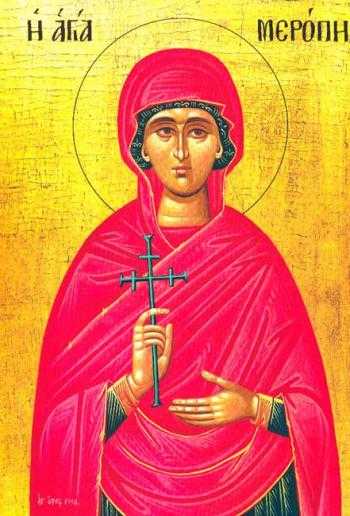
Holy Martyr Myrope
She was born in the city of Ephesus at the beginning of the third century. She lost her father at an early age, and her mother raised her in the Christian Faith. Saint Myrope frequently visited the grave of the Martyr Hermione (September 4), daughter of the holy Apostle Philip, took myrrh from her relics, and healed the sick with it.
During the persecution by Decius (249-251), Myrope went with her mother to the island of Chios, where they spent their time in fasting and prayer. Once, by order of the cruel governor of the island, the soldier Isidore (May 14), a man of deep faith and great piety, was martyred. Saint Myrope secretly removed the body of the martyr and buried it. The soldiers, who had been ordered not to allow the Christians to take Isidore’s body, were sentenced to death.
Saint Myrope took pity on the condemned, and she told the soldiers and then the governor what she had done. At the trial she confessed herself a Christian. For this they gave her a fierce beating and then threw her in prison. At midnight, while she was praying, a light shone in the prison. Saint Isidore appeared surrounded by angels, and Saint Myrope surrendered her soul to God.
The prison was immediately filled with a sweet fragrance. The pagan guard, trembling at the vision, told this to a priest. Later, he accepted Baptism and a martyric death for his confession of Christ.
Troparion — Tone 4
Your lamb Myrope calls out to You, O Jesus, in a loud voice: / “I love You, my Bridegroom, and in seeking You I endure suffering. / In Baptism I was crucified so that I might reign in You, / and I died so that I might live with You. / Accept me as a pure sacrifice, / for I have offered myself in love.” / Through her prayers, save our souls, since You are merciful.
Saint Porphyrios the Kapsokalyvite
He was born February 7 in the little village of St. John Karystia, in the province of Evoia. His parents, Leonidas and Eleni Bairaktaris (daughter of Antonios Lambrou), christened him Evangelos. He was fourth out of five siblings. Only his youngest sister is still alive and is a nun.
His family was quite poor and so Evangelos left school at an early age, having completed only the second class of primary school, to assist his family to make more money. At some stage, he found a job working at a grocer store in Chalkidiki and also in Piraeus. He was taught to pray the Paraklesis by his father and all other religious matters.
At age 13, he found his way to the skete of the Holy Trinity (Kafsokalyvia). Later tonsured with his monastic name of Nikitas. He became a monk at the age or fourteen of fifteen. He served in the skete of Kafsokalyvia, in the Cell of St. George, under two spiritual fathers: Fr. Panteimon and Fr. Ionnakios for six years. Forced by pleurisy to depart the Holy Mountain, he returned to his birthplace, where he was unexpectedly elevated to the priesthood at the age of 21 by Porphyrios III, Archbishop of Mount Sinai and Raithu, who recognized his spiritual gifts. With the outbreak of World War II he became a hospital chaplain in Athens, serving in the church of Saint Gerasimos, in which post he continued for three decades until his retirement in 1970. He continued to offer his service there until 1973, after which he served in Kallithea and Milesi. His later years were devoted to the construction of the Holy Convent of the Transfiguration of the Savior
In 1984 he sought to return to Mount Athos in order to occupy the same cell which he had earlier in life been forced to abandon. This was in order to fulfil his monastic vows and to avoid any honors by being buried in the world. The request was granted following the repose of the previous occupant of the cell, and so, together with three of his disciples, he returned to Mount Athos.
Having foretold to one of his spiritual children that he would repose when the number of his disciples in the cell had reached five, prepared his tomb. His blessed repose was at 4:31am on December 2, 1991.
Troparion — Tone 2
We celebrate the memory / of Your prophet Habakkuk, O Lord; / through him we entreat You, / save our souls.

We also celebrate today Holy Hierarch Solomon and Archbishop of Ephesus
Tr by oca.org: Orthodox Wiki