Forty-two lost pages from the Epistles of the Holy Apostle Paul have been recovered from an ancient manuscript, in a discovery scholars say sheds new light on how the Pauline writings were read and interpreted in the early centuries of Christianity.
According to the University of Glasgow, the discovery was made by an international team of academics led by the Scottish university.
The identification of the important New Testament manuscript, known as Codex H, offers valuable insight into the reception and interpretation of the Pauline epistles in early Christian tradition.
A Manuscript Fragmented Across the Centuries
Dating to the sixth century, Codex H contains the Epistles of Saint Paul and is considered a major witness for biblical textual scholarship.
The manuscript includes a complex system of notes and textual structures designed to guide the reading and understanding of the sacred text.
In the thirteenth century, the codex was dismantled at the Great Lavra Monastery, and its pages were reused in the bindings of other manuscripts — a common practice at the time, when writing materials were costly.
As a result, fragments of the codex found their way into libraries in Italy, Greece, Russia, Ukraine and France, while some portions had long been considered permanently lost.
Modern Technology Recovers Ancient Texts
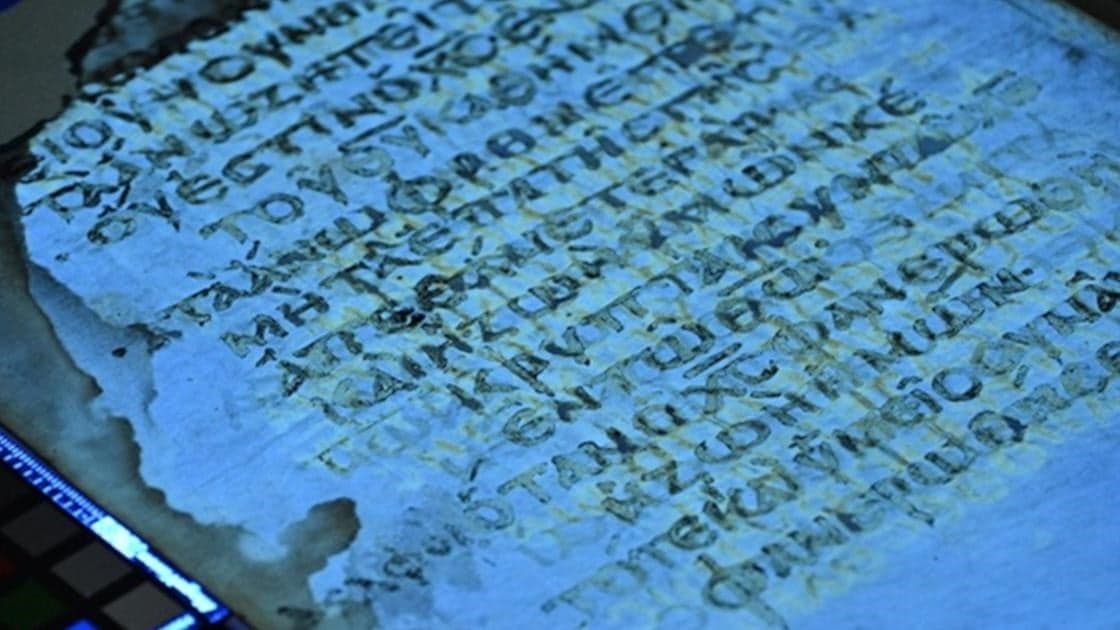
Recovery of the pages was made possible through advanced imaging techniques developed in collaboration with the Early Manuscripts Electronic Library. These methods allow traces of ink invisible to the naked eye to be detected by analysing manuscripts under different light spectra.
“We knew that at one point, the manuscript was re-inked. The chemicals in the new ink caused ‘offset’ damage to facing pages, essentially creating a mirror image of the text on the opposite leaf – sometimes leaving traces several pages deep, barely visible to the naked eye but very clear with latest imaging techniques,” said Professor Garrick Allen.
The recovered fragments contain familiar passages from Saint Paul’s Epistles, but their significance lies in how they reflect the organisation and interpretation of the text in the early Church. Researchers identified some of the oldest known forms of chapter divisions, differing from those used today.
“Given that Codex H is such an important witness to our understanding of Christian scripture, to have discovered any new evidence – let alone this quantity – of what it originally looked like is nothing short of monumental,” Professor Allen added.
Witness to Early Christian Scribal Culture
The discovery also highlights the active way scribes interacted with the sacred text through corrections, annotations and explanatory structures.
The project has led to the creation of a publicly accessible digital edition and to the preparation of new scholarly studies devoted to the manuscript.
Photo: Univerisity of Glasgow / Damianos Kasotakis