The Dormition Fast begins this Friday and lasts for two weeks for Orthodox Christians observing the revised calendar.
This year, the fast will also conclude on a Friday, which means it will be extended by one day, in accordance with the General Liturgics.
“The fast is prolonged to include the feast day itself if it falls on a Wednesday or Friday, in which case there is a permission for oil, fish, and wine,” Rev. Prof. Ene Braniște, a renowned Romanian liturgist, explained.
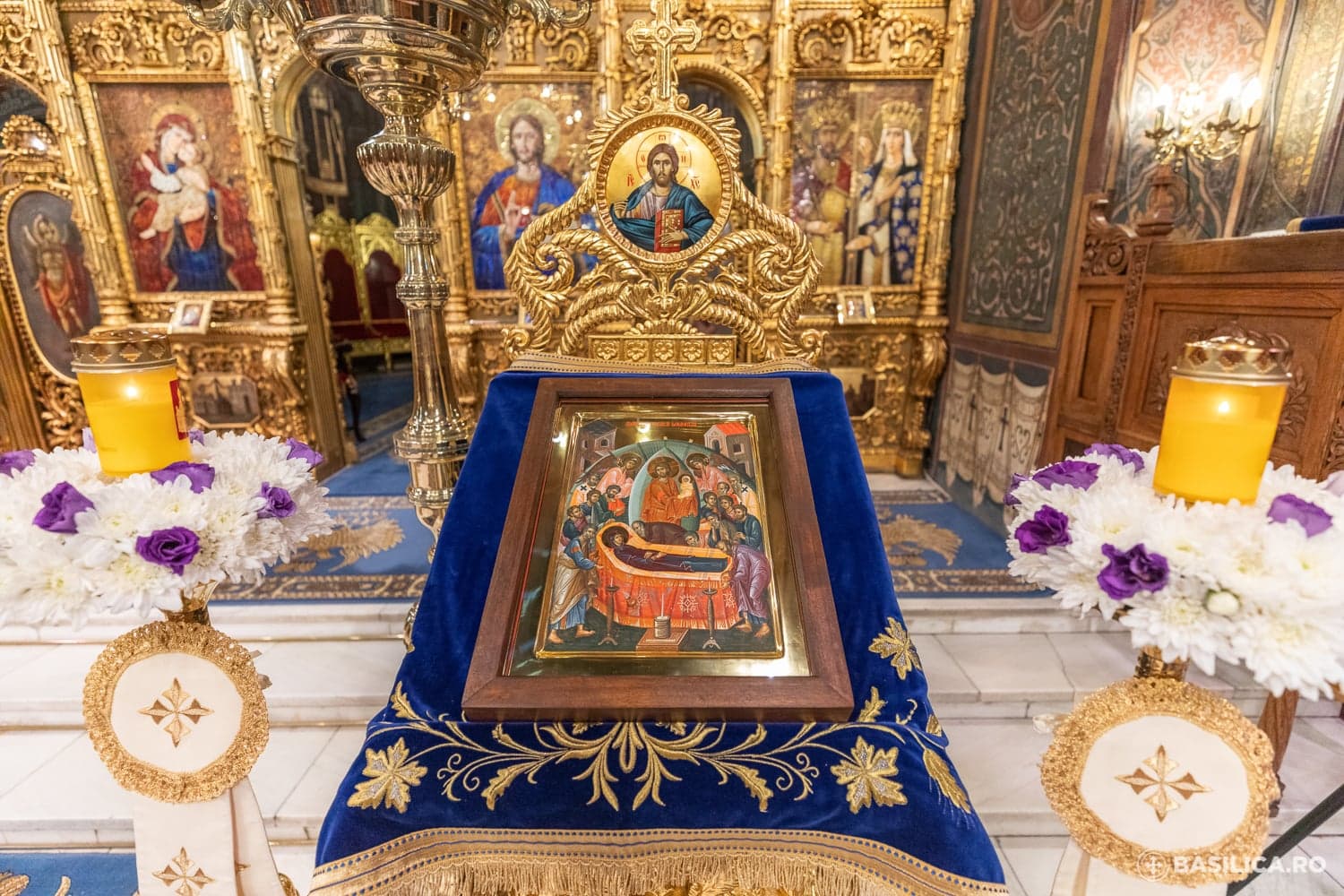
The Church established this fasting period to honour the Mother of God and her virtues. For two weeks, the Church encourages the faithful to read the Paraklesis (Supplicatory Canon) to the Mother of God and other prayers dedicated to the Virgin Mary.
The Dormition Fast is considered lighter in terms of dietary restrictions than Great Lent, but stricter than the Nativity Fast and the Apostles’ Fast.
Dormition Fast according to the unrevised calendar
It is important to note that a portion of Orthodox Christians, particularly those adhering to the unrevised Julian Calendar—commonly referred to as the “Old Calendar”—will begin the Dormition Fast two weeks later, on August 14.
This calendar difference means that for these faithful, the liturgical dates, including the Feast of the Dormition of the Mother of God, fall 13 days behind the revised Julian calendar used by most Orthodox Churches.
As a result, their observance of the fast and associated services will follow the same structure and spiritual significance, but shifted accordingly in time.
Guidelines for Fasting
According to the Great Typikon and Teachings on Fasting from the Horologion, during the Dormition Fast, believers fast strictly on Mondays, Wednesdays, and Fridays, abstaining from food until the Ninth Hour (around 3:00 p.m.), after which they may eat dry food.
On Tuesdays and Thursdays, cooked vegetables without oil are permitted, while on Saturdays and Sundays, oil and wine are allowed.
On the feast of the Transfiguration of the Lord, fish is permitted.
Brief Historical Background
In the early centuries, the Dormition Fast was not observed uniformly in time or manner across all Christian communities. Christians in Antioch fasted only on the Feast of the Transfiguration, while those in Constantinople observed a four-day fast. In Jerusalem, believers fasted for eight days. This inconsistency led to the need for unified guidelines.
In 1166, a synod was held in Constantinople, presided over by Patriarch Luke Chrysoberges, which decreed that “the fast should begin on August 1 and conclude on the morning of August 15, when we begin the celebration of the Dormition of the Mother of God.”
Photo: Basilica.ro / Raluca Ene