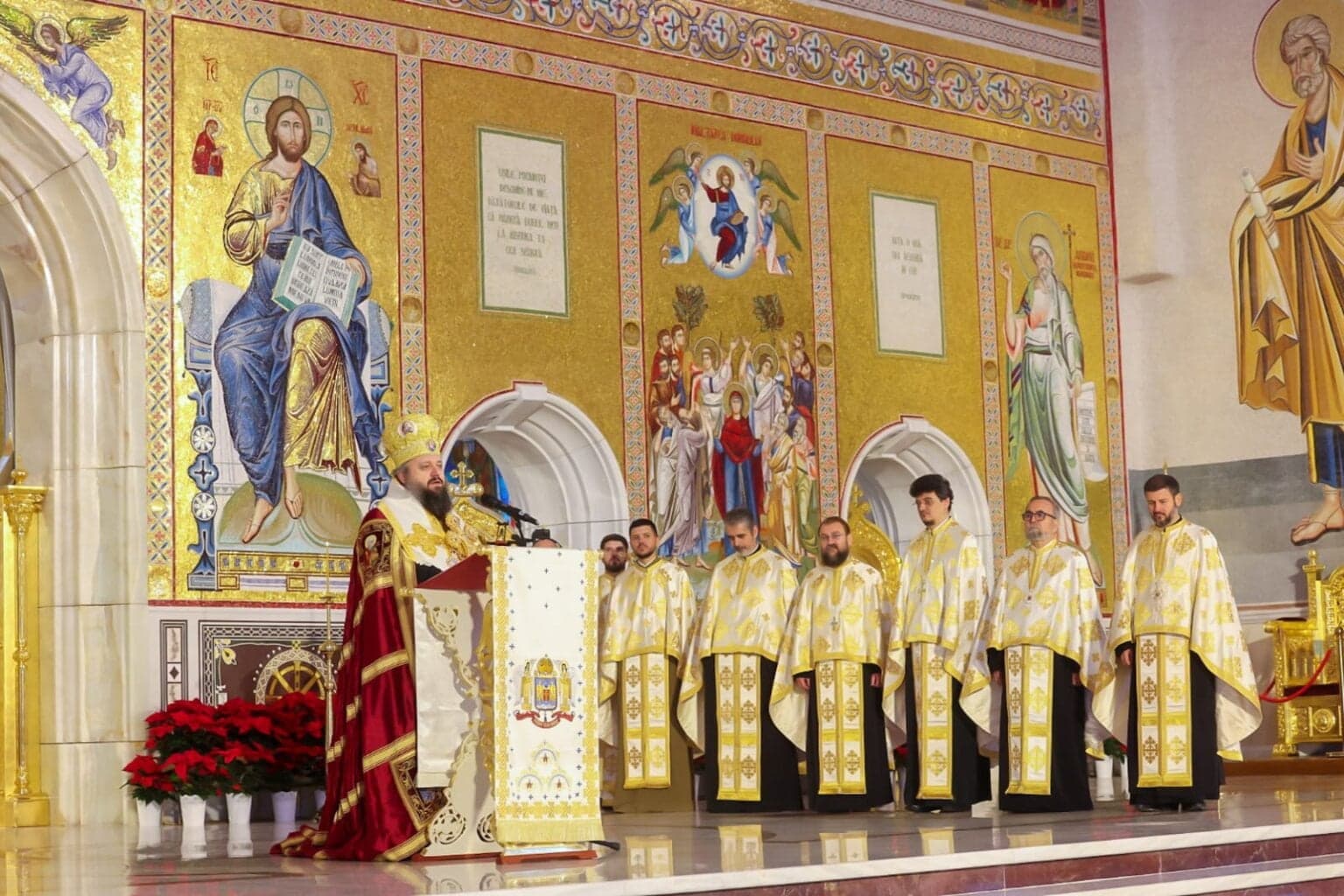
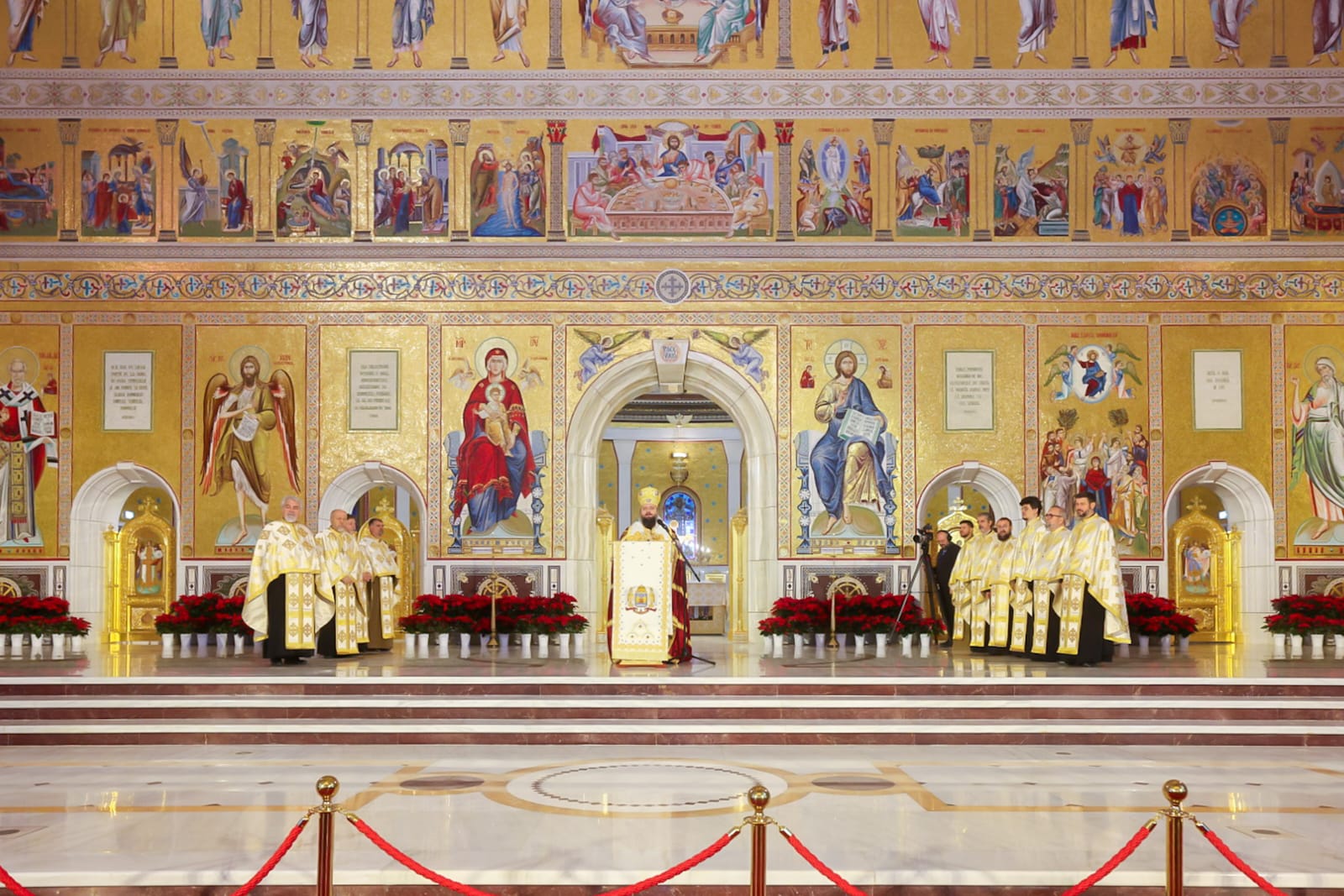
Patriarchal Auxiliary Bishop Paisie of Sinaia said on Monday at the National Cathedral in Bucharest that “the Great Union was not the result of a spontaneous event but an ideal fulfilled through many sacrifices, carefully prepared and long awaited.”
In his address during the Te Deum service for Romania’s National Day at the Romanian People’s Salvation Cathedral, Bishop Paisie emphasised that the 1918 unification was achieved with the essential contribution of the Romanian Orthodox Church.
“The role of the Church and clergy in the achievement of the Great Union was vital, especially in awakening and preserving the national identity of Romanians, and the unity of language and faith.”
“Accompanying the Romanian Army at the front, priests celebrated the Divine Liturgy, heard confessions and offered Holy Communion to soldiers, buried those who fell in battle or died from illness, and encouraged them continually.”
“Priests also taught courses, substituted for doctors, pharmacists and teachers, opened schools and orphanages, explained Romanian history to soldiers and civilians in Transylvania and Bessarabia, and nurtured the memory of the heroes who gave their lives for the liberation of the ancestral land,” the bishop said.
Clergy Shared the Sacrifice
Bishop Paisie stressed that Orthodox priests did not hesitate to offer the supreme sacrifice.
“In Transylvania, in support of the ideal of union even before 1918, Hungarian authorities imprisoned more than 150 Orthodox priests as ‘dangerous elements’, and over 200 were deported to Sopron, near the Austrian border, where harsh and unsanitary conditions led to more than two years of captivity — some never returned home.”
He also cited the tribute paid by General Constantin Prezan, commander of the Romanian Army, who stated at the end of the war of national unification (1916–1919) that priests “did more than their duty and deserve honour, for along with the soldiers they gave more than was asked of them for the Country and the Nation”.
“The Shining Page” of Romanian History
Bishop Paisie said Romania’s National Day reminds citizens that the Great Union remains the most critical achievement in Romanian history, with a significant impact on the Orthodox Church.
“The Great Union of 1918 is and remains the most glorious page of Romanian history. Its greatness lies in the fact that national unity was not the work of a single politician, government or party, but the historic deed of the entire Romanian nation, carried out with strong enthusiasm arising from the profound consciousness of unity.”
“The creation of the unitary Romanian nation-state on 1 December 1918 was also spiritually beneficial, leading to the unified organisation of church structures across all Romanian provinces under the Holy Synod of the Romanian Orthodox Church. At the same time, it created the premises for elevating the Romanian Orthodox Church — autocephalous since 1885 — to the rank of Patriarchate in 1925.”
Gratitude and Strengthening National Unity
He added that the day calls for gratitude to all those who sacrificed for Romania’s freedom and dignity — and for cultivating the gift of national unity.
“For all the blessings of the Great Union, we give thanks today to God, glorified in the Trinity, and commemorate with gratitude all Romanian heroes who sacrificed for the freedom, unity and dignity of our people.”
“On Romania’s National Day, we are called to preserve and strengthen the gift of national unity, to renounce attitudes that sow division and social conflict — behaviours unworthy of the Romanian people and harmful to all.”
“National unity is the most precious symbol of the dignity of the Romanian people, obtained through great sacrifice and spiritual and material effort, for the good of Romania and the benefit of Romanians everywhere,” Bishop Paisie concluded.
Photo: Basilica.ro / Mircea Florescu