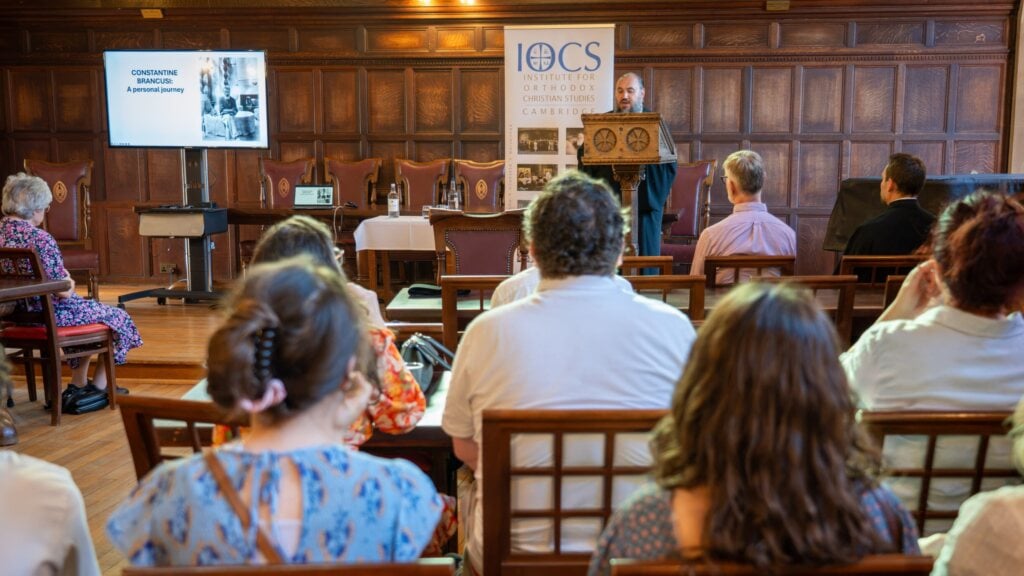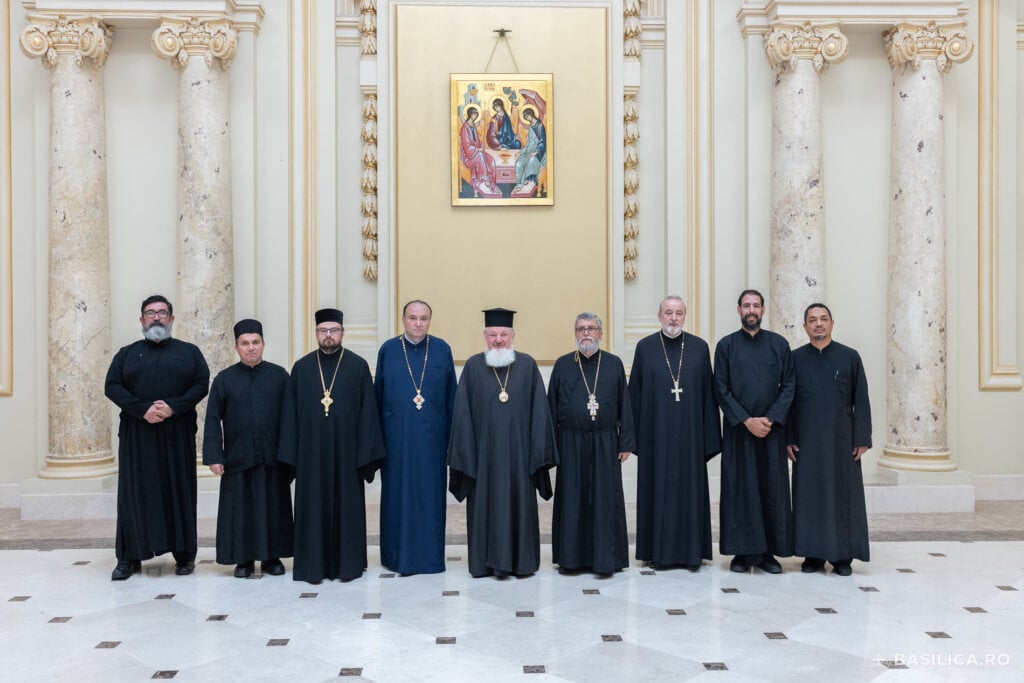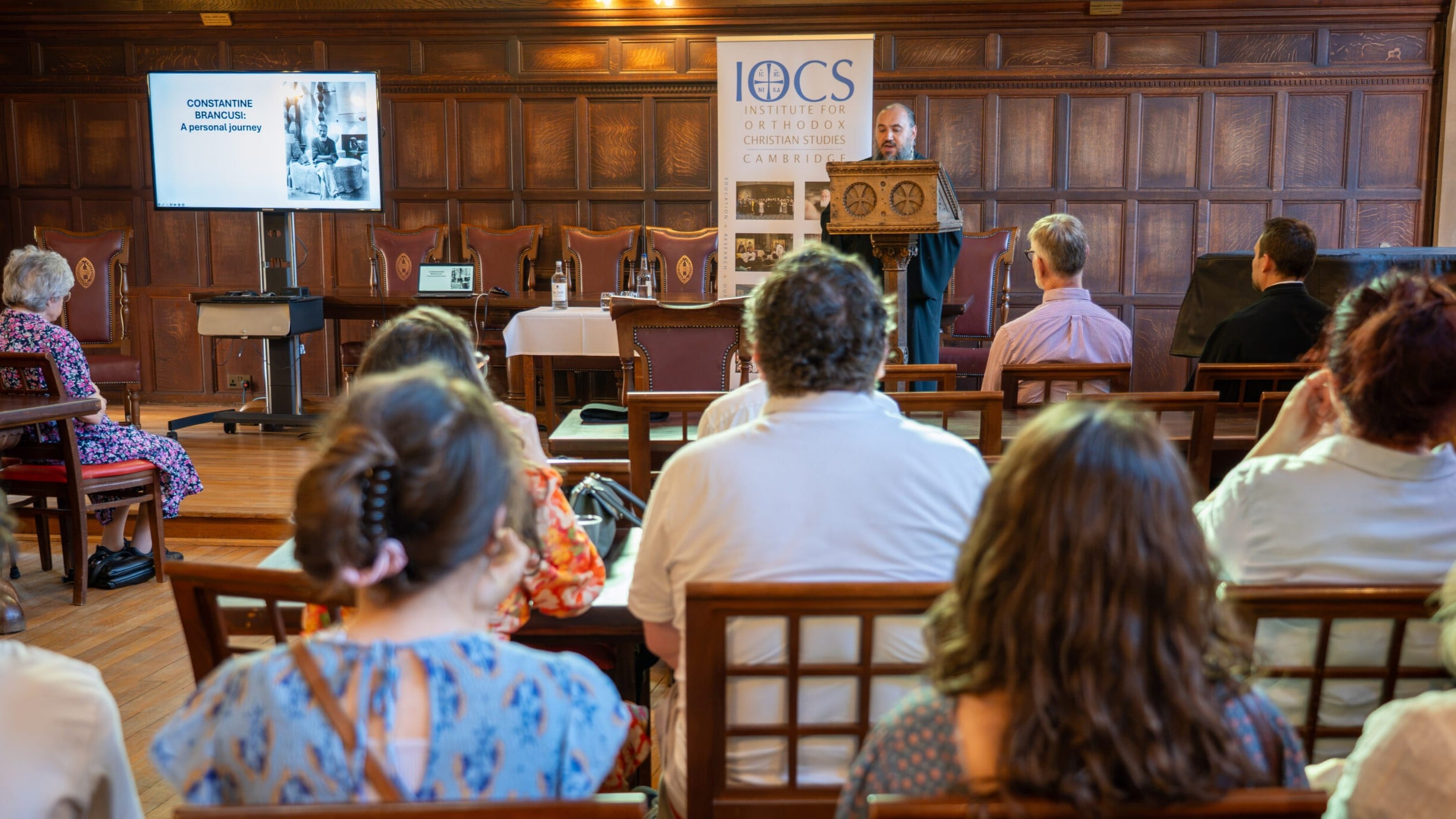
The volume Brâncuși – Orthodox Christian Sculptor, authored by His Beatitude Patriarch Daniel, was launched on Thursday, 16 July, in Cambridge. On the occasion, Archbishop Atanasie of Great Britain and Northern Ireland said that the book “invites us to rediscover the profound bond between faith and culture.”
The event brought together representatives of the academic and ecclesiastical communities, clergy, students, and admirers of Christian art and spirituality.
Opening the event, Fr Dragoș Herescu, Director of the Institute for Orthodox Christian Studies (IOCS) in Cambridge, highlighted the institution’s mission to promote the Orthodox spiritual heritage and foster dialogue between faith, culture and contemporary society.
Culture and spirituality in Brâncuși’s work
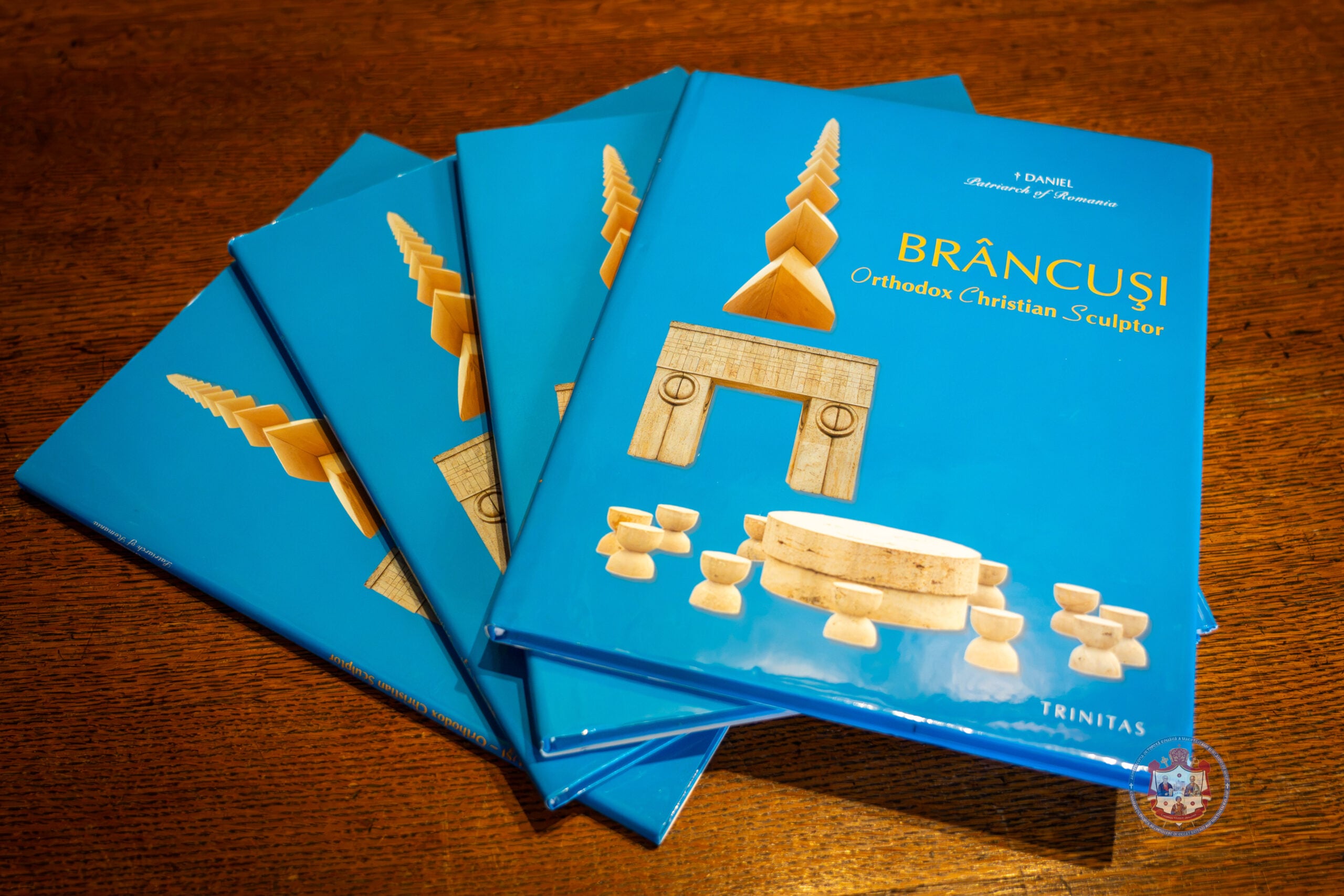
Archbishop Atanasie emphasised that Patriarch Daniel’s book offers a perspective on the work of Constantin Brâncuși through the lens of Orthodox spirituality.
“If there is one fundamental intuition that lies at the heart of His Beatitude Patriarch Daniel’s book, it is that Constantin Brâncuși cannot be understood solely through the categories of modern art, aesthetics or cultural history.”
His Eminence noted that one of the book’s greatest contributions is its renewed emphasis on the sculptor’s spiritual roots.
“Before Brâncuși became a universal artist, he was the son of a Romanian village, formed by the life of the Orthodox Church. “
At the same time, he said, Brâncuși’s creative genius “belongs to the whole world; yet the spiritual life of Orthodox Christianity profoundly shaped the soil from which it grew.”
Reflecting on the relationship between art and faith, Archbishop Athanasie explained that, in the Orthodox tradition, beauty is neither separated from truth nor reduced to mere aesthetics.
“Beauty has a vocation: it leads the human heart beyond appearances and awakens a longing for what is eternal.”
He added that Brâncuși “did not seek simply to represent reality; he sought to reveal its inner meaning.”
Interest in the Romanian sculptor’s legacy
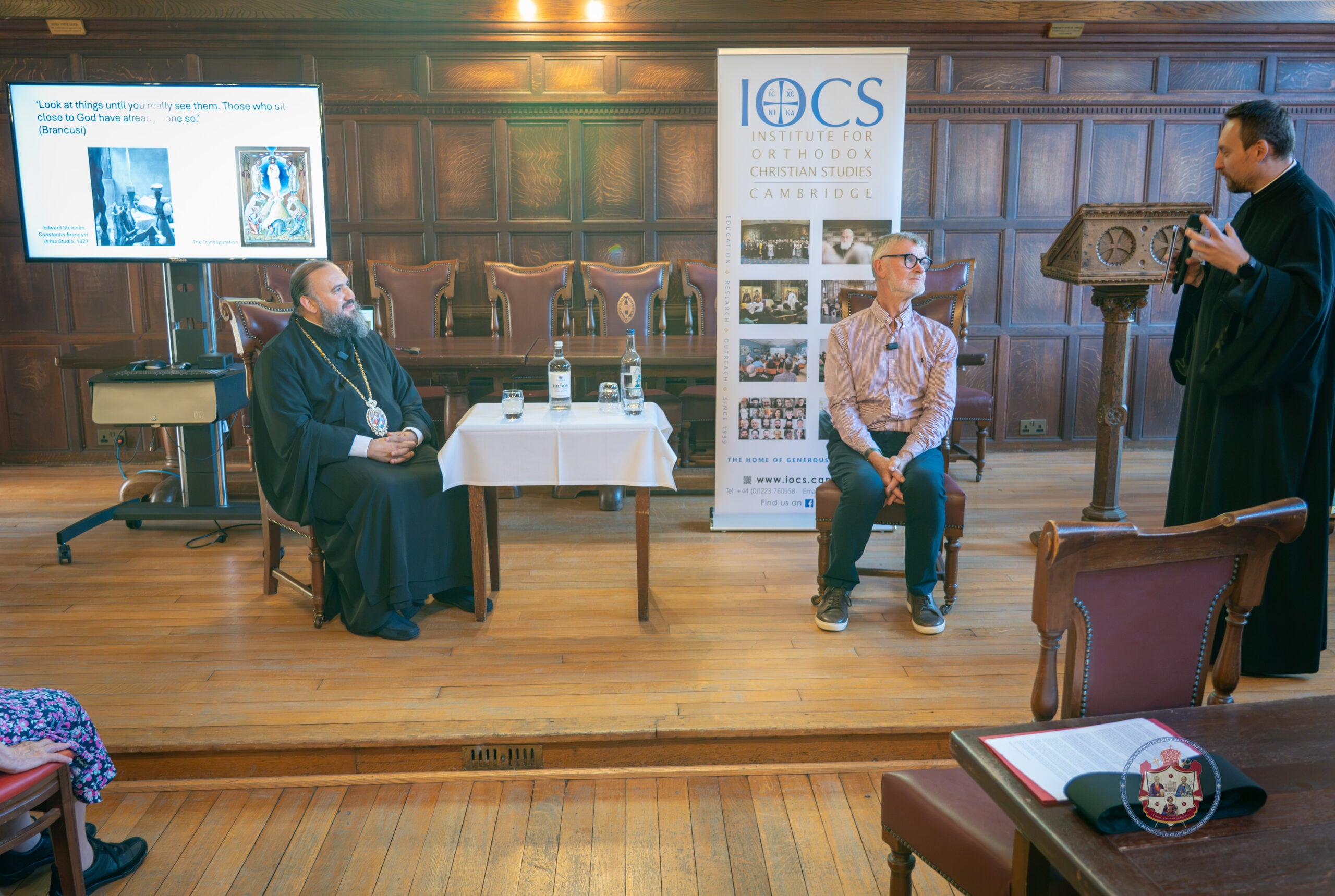
The main presentation of the volume was delivered by Aidan Hart, the British iconographer and sculptor widely recognised as one of today’s leading scholars of Orthodox sacred art. He examined Constantin Brâncuși’s work from the perspective of the spiritual and liturgical influences that shaped his artistic vision.
The event concluded with a discussion between the speakers and the audience, confirming the British public’s growing interest in Orthodox spirituality and in the artistic legacy of Constantin Brâncuși.
The event was organised by the Institute for Orthodox Christian Studies in Cambridge—the only higher education institution in the United Kingdom dedicated exclusively to Orthodox studies—in partnership with the Romanian Orthodox Archdiocese of Great Britain and Northern Ireland.
Photo: roarch.org.uk