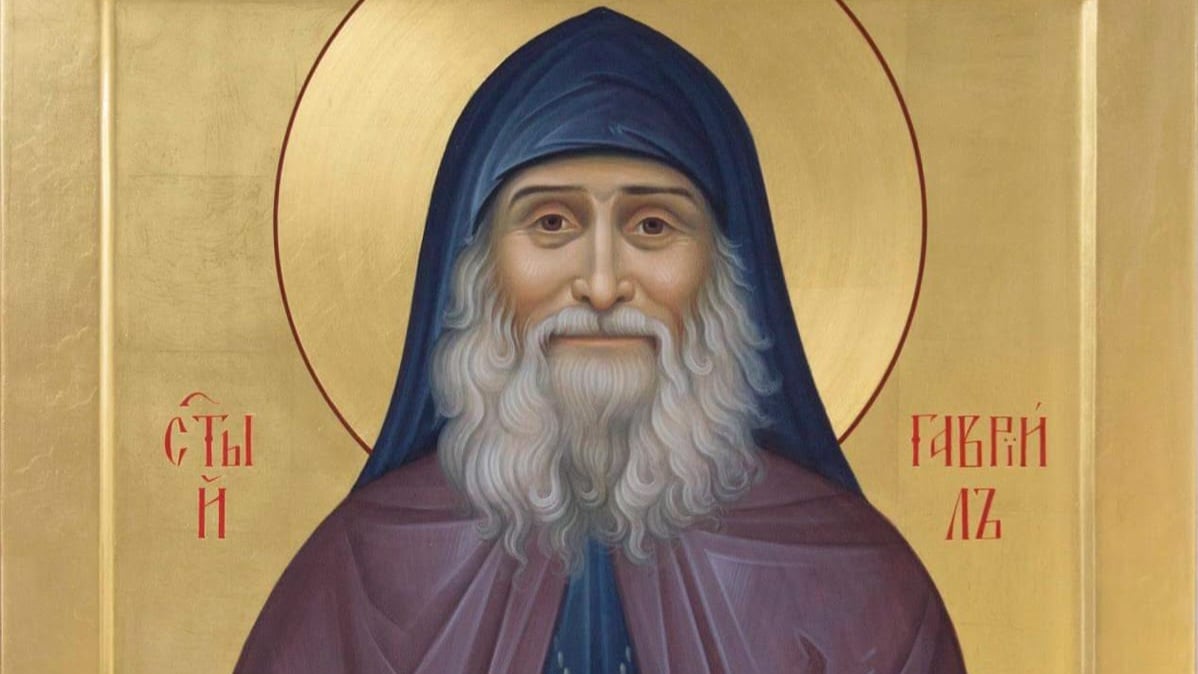
Saint Gabriel the Confessor and Fool for Christ of Georgia has been added to the calendar of the Romanian Orthodox Church, following a decision approved by the Holy Synod during its working session at the Patriarchal Palace in Bucharest last week.
The Synod also approved the liturgical texts dedicated to the saint, who will be commemorated annually on 2 November.
The proposal followed the Romanian Patriarchate’s delegation to participate in the funeral ceremonies of Patriarch Ilia II of Georgia. During the visit, representatives of the Romanian Orthodox Church also travelled to Samtavro Monastery, where St Gabriel spent the final years of his life.
The decision is seen as a gesture of reciprocity toward the Georgian Orthodox Church, which has previously included several Romanian saints in its own calendar.
In 2022, Paltin-Petru Vodă Monastery received a relic of St Gabriel as a gift from Fr Matei Tulcan, the Romanian parish priest in Montecatini Terme, Italy.
Brief Biography
St Gabriel the Confessor of Georgia was born on 26 August 1929 in Tbilisi and baptised as Goderdzi. From an early age, he displayed a strong inclination toward the spiritual life, building a small church in his family’s garden and adorning it with icons that he rescued from destruction during the atheist communist regime.
After completing military service in the Soviet Army, he embraced monastic life and received the name Gabriel.
His witness to the Christian faith became known throughout Georgia in 1965, when he publicly set fire to a giant portrait of Vladimir Lenin during a communist rally organised by the Soviet authorities.
For this act, he was arrested, tried and confined for seven months in a psychiatric hospital. After his release, he continued his ministry, patiently enduring the suffering and persecution he faced because of his faith.
In the final years of his life, he lived at Samtavro Monastery, where he gathered many monks around him and became known for his spiritual insight and pastoral counsel.
He reposed in the Lord on 2 November 1995 and was buried within the monastery grounds.
The Georgian Orthodox Church canonised him in 2012, and two years later, his relics were uncovered and placed for veneration in the Church of the Transfiguration at Samtavro Monastery.