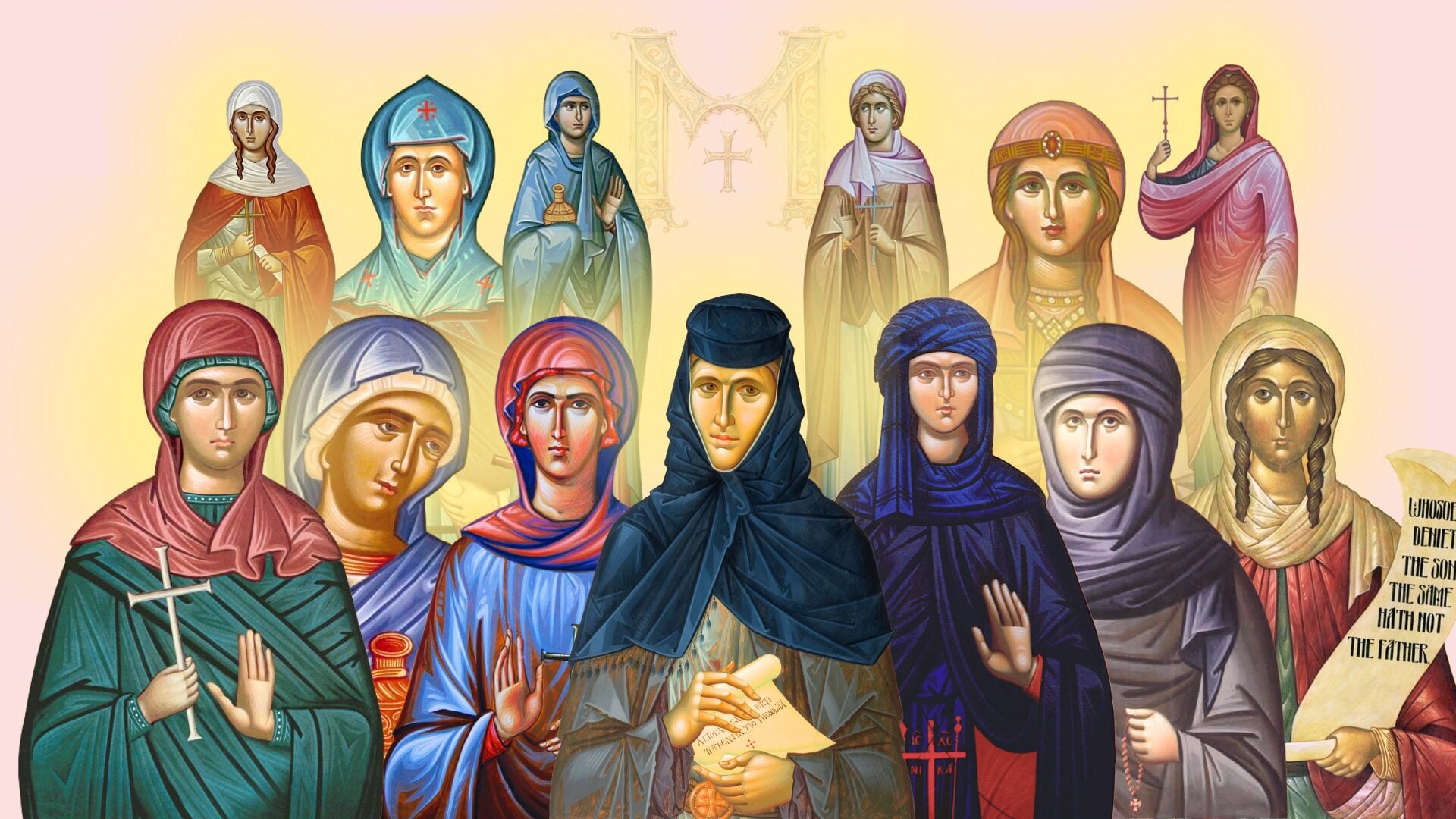
As part of the Romanian Orthodox Church’s Commemorative Year of Holy Women in the Calendar, Basilica.ro continues its Digital Matericon series, a monthly project dedicated to presenting the lives and spiritual legacy of women saints venerated throughout the Christian world.
The June edition brings together a diverse assembly of holy women—from martyrs of the early Church and Myrrh-Bearers who witnessed Christ’s Resurrection to monastics, mothers, queens, ascetics and confessors whose lives spanned nearly two millennia of Christian history. Their stories testify to the many ways in which holiness has been manifested in the lives of women across different cultures, vocations and historical circumstances.
Among the saints commemorated this month are St Blandina of Lyons, one of the most celebrated martyrs of second-century Gaul; St Mary and St Martha of Bethany, close friends of Christ; the newly canonised Romanian saint St Elizabeth of Pasărea; and St Joanna the Myrrh-Bearer, who was among the first witnesses of the Resurrection. They are joined by other remarkable women whose lives were marked by courage, faith, ascetic struggle, charity and unwavering devotion to God.
Through these monthly portraits, Digital Matericon seeks to make better known the spiritual treasures preserved in the Church’s memory, offering contemporary readers examples of holiness, perseverance and Christian witness that continue to inspire believers today.
St Blandina the Martyr – 2 June
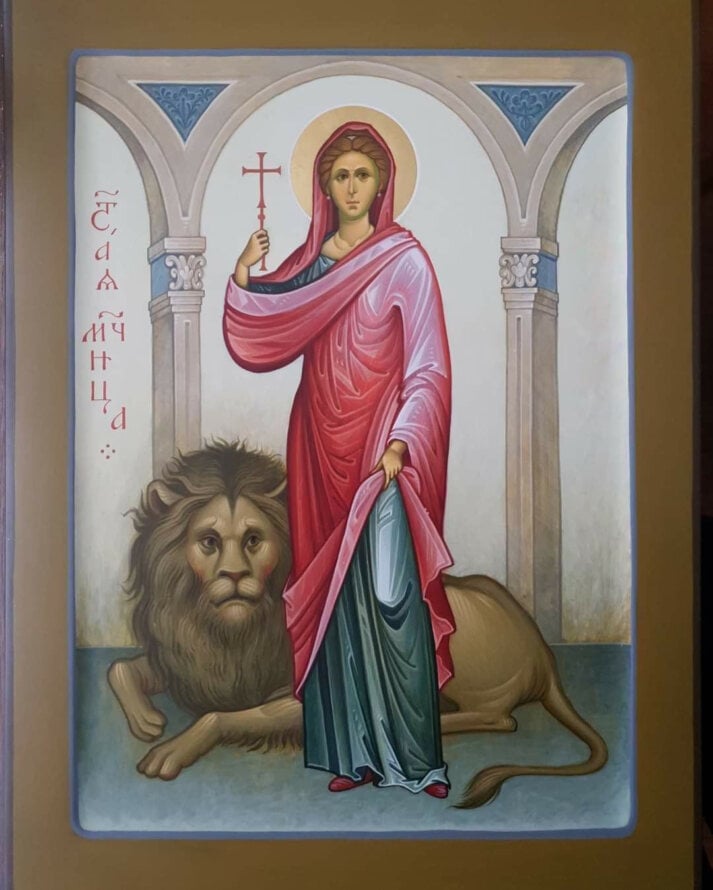
St Blandina is among the martyrs of the early centuries of Christianity, during the reign of Emperor Marcus Aurelius.
Born in what is now France, she was a slave who converted to Christianity.
In 177, during a persecution, she was arrested together with several Christians and tortured in an attempt to make her renounce her faith.
Eusebius of Caesarea described her martyrdom in his Ecclesiastical History and quoted from an epistle of St Irenaeus of Lyons, who commented on St Blandina’s martyrdom and emphasised her extraordinary steadfastness in the face of persecutors and torments.
The climax of her martyrdom took place in the amphitheatre of Lyons, where, according to the letter of St Irenaeus, she was bound to a cross, reminding the spectators of the Saviour’s sacrifice.
The beasts brought forward to attack her did not approach her, and she was eventually executed by the sword.
Some hagiographical sources also mention that St Blandina was a mother who sent her children to martyrdom before suffering martyrdom herself, comparing her to the mother of the Seven Holy Maccabean Martyrs.
Today, the ruins of the amphitheatre where St Blandina suffered martyrdom are preserved in Lyons, and a memorial plaque bears her name.
St Paula the Virgin Martyr – 3 June
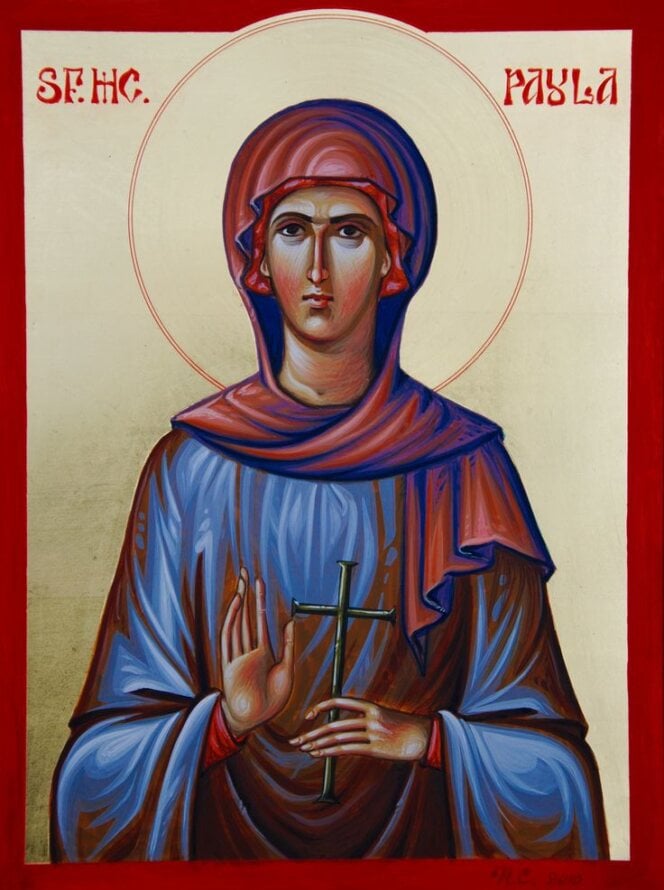
St Paula was born into a Christian family and from her youth resolved to dedicate her entire life to Christ, preserving her virginity and performing works of charity. After becoming an orphan, she used her inheritance to help the poor.
She visited prisons and tended the wounds of imprisoned Christians, bringing them food and clothing and encouraging them.
Among those she cared for were St Lucillian and four young men. After they suffered martyrdom, St Paula gathered their holy relics.
Her actions attracted the attention of pagan authorities, who arrested her and subjected her to torture in an attempt to make her deny Christ.
The virgin remained steadfast in her faith despite being beaten, imprisoned and cast into a fiery furnace.
After enduring numerous torments from which God miraculously delivered her, she was beheaded at the same place where St Lucillian had been martyred.
Their martyrdom took place during the reign of Emperor Aurelian (270–275).
Holy Myrrh-Bearers Mary and Martha – 4 June
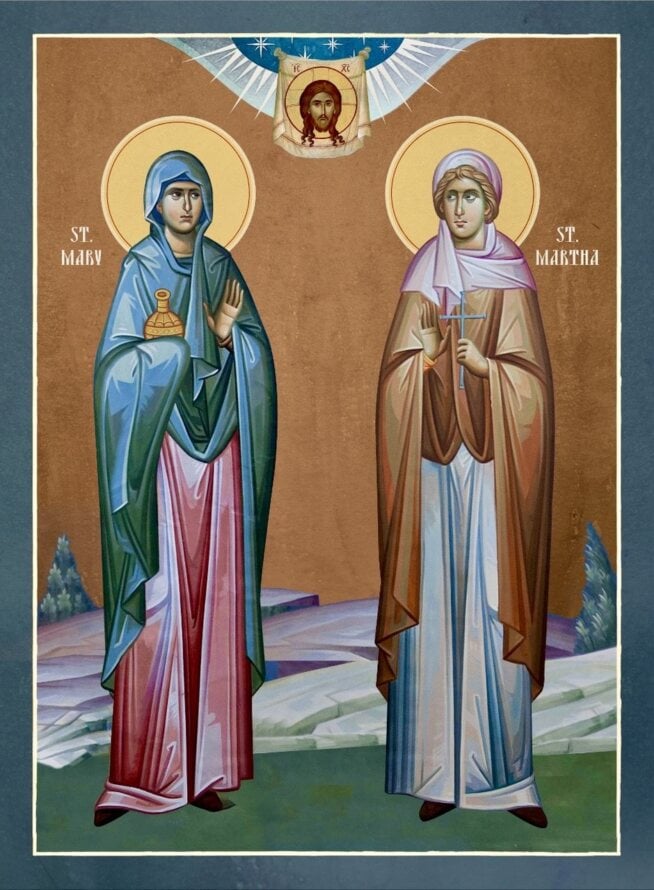
Saints Mary and Martha were natives of Bethany, a village situated on the road between Jerusalem and Jericho. They were the sisters of St Lazarus, whom Christ raised from the dead on the fourth day. The three siblings were close friends of the Saviour.
The best-known Gospel passage mentioning them is found in St Luke, where the sisters welcomed Christ into their home. Mary sat and listened to His teachings, while Martha busied herself serving Him (Luke 10:38–42). Over time, the two saints came to symbolise the contemplative and active Christian life.
The two sisters are also mentioned by St John the Evangelist in connection with the death and resurrection of Lazarus (John 11:1–46), as well as during the event known as the Anointing at Bethany, when Mary anointed Jesus’ feet with precious ointment and wiped them with her hair (John 12:1–8).
After the martyrdom of St Stephen and the outbreak of persecution against the Church in Jerusalem, Lazarus, Mary and Martha endured exile.
St Lazarus was ordained Bishop of Kition, present-day Larnaca, on the island of Cyprus.
Tradition records that before arriving in Cyprus, the two sisters stopped in Marseilles and preached the Gospel to communities in Aix and Avignon.
It is said that St Martha overcame a ferocious beast after sprinkling it with holy water, making the sign of the Cross over it and binding it with her girdle.
The sisters are believed to have spent a period there in fasting and prayer, laying the foundations of a monastery devoted to caring for the poor.
They are also commemorated on the Third Sunday after Pascha, known as the Sunday of the Myrrh-Bearing Women.
St Elizabeth of Pasărea – 5 June
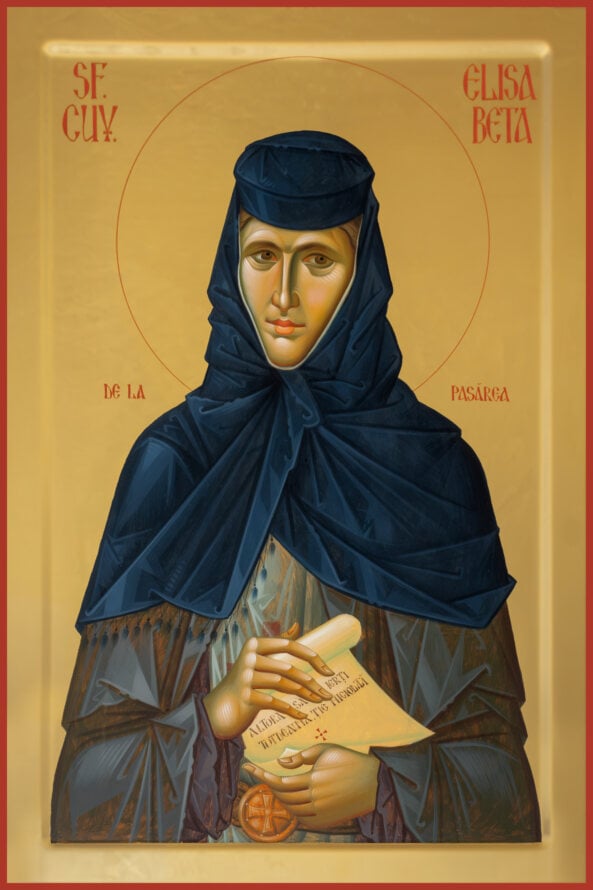
St Elizabeth belongs to the assembly of Romanian holy women and was canonised by the Holy Synod of the Romanian Orthodox Church in 2025, only eleven years after her repose.
The saint, whose baptismal name was Rodica, was born in 1970 into a large family with ten children in the village of Moldova-Sulița, Suceava County, Romania.
Her inclination toward spiritual life was evident from childhood. When taking cows to pasture, she often carried a Horologion. Her father, observing her behaviour, would say: “My daughter wants to become a saint.”
One of her sisters, Nun Nectaria, now a member of the Pasărea Monastery community, described her as “very gentle and attentive to others, always ready to help, possessing a special delicacy toward her neighbour.”
While in the mountains, St Elizabeth heard a mysterious voice urging her to enter a monastery. Thus, at only fifteen years of age, in 1985, she joined the community of Pasărea Monastery near Bucharest. In 1988, she was tonsured a nun and received the name Theodora.
She later served at the Romanian Settlement in Jerusalem, where she lived until she became ill with cancer.
She was miraculously healed by St John Jacob of Neamț. During this period, she also experienced a vision of Heaven and Hell that profoundly shook her and led her to return to Romania, where she chose the solitary life of a hermit in order to devote herself more fully to prayer.
She lived in solitude in the Giumalău Mountains and the Neamț Mountains, where she waged a severe spiritual struggle against the evil one.
People recognised her holiness, and even during her lifetime, she became known as a wonderworker.
In 2007, she received the Great Schema and took the name Elizabeth.
The cancer later returned. For a time, she remained in the wilderness, aided by her spiritual daughters. When her condition worsened, however, she returned to Pasărea, her home monastery, where she soon reposed in the Lord on 5 June 2014.
St Elizabeth is among the first five Orthodox saints to have lived into the twenty-first century and been canonised.
St Zenaida the Martyr – 7 June
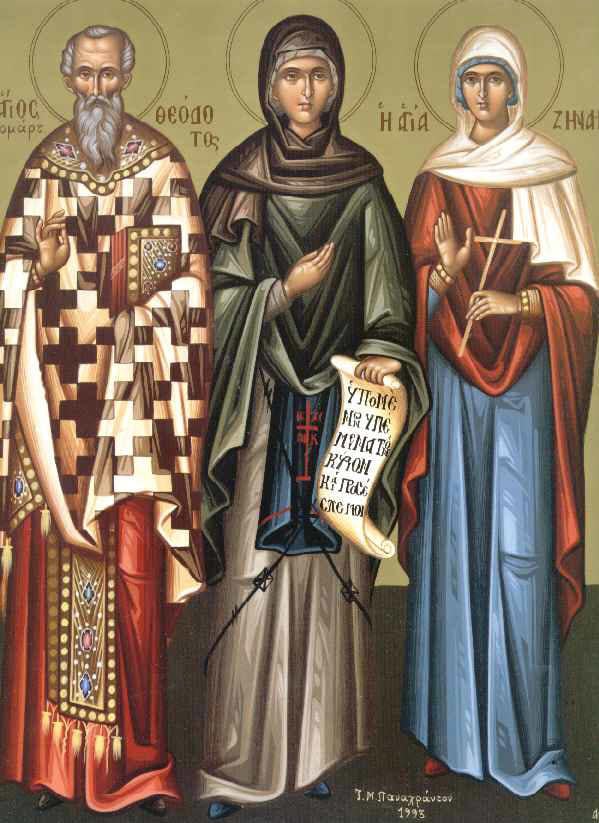
St Zenaida (Zenais) the Martyr is mentioned in the Synaxaria, although relatively little is known about her life.
She was born in 284 in Caesarea, Palestine, was granted the gift of working miracles, and received a martyr’s death.
Hagiographical sources indicate that she was especially venerated in Constantinople, where a church dedicated to her stood.
Virgin Martyr Antonina at Constantinople – 10 June
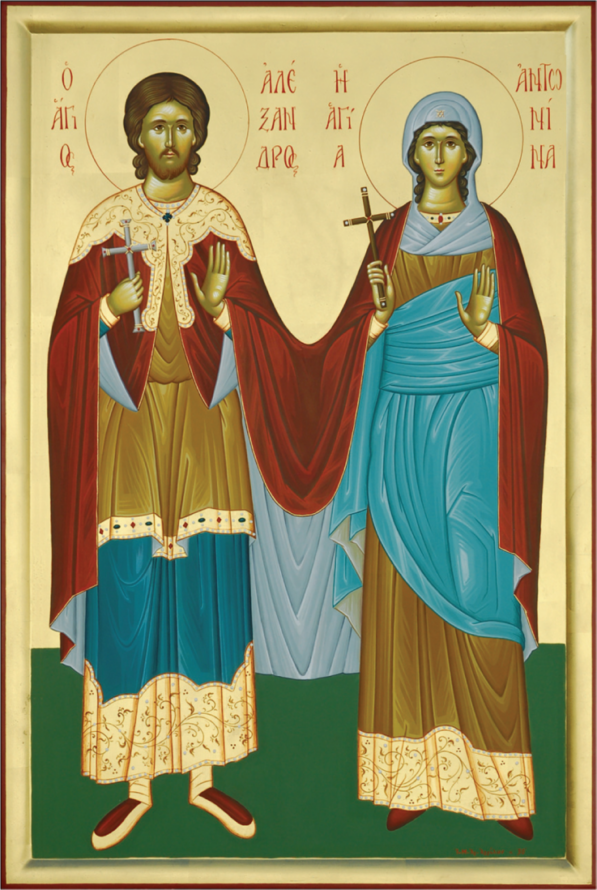
St Antonina was a virgin from Alexandria who lived in the fourth century during the persecutions of Christians.
She was brought before the governor Festus, who tortured her because of her faith in Christ and cast her into prison.
Seeing that the virgin would not renounce her faith, he sent her to a house of prostitution. However, an angel commanded a soldier named Alexander to help her. He found her, gave her his military clothing, and thus enabled her to leave unnoticed.
Alexander was then brought before the governor and likewise confessed his faith in Christ. When St Antonina learned of this, she voluntarily presented herself before Festus. The two young Christians endured many torments before being thrown into a pit of fire and burned alive.
After their martyrdom, the governor was tormented by an unclean spirit for seven days and then died.
The Church commemorates Saints Alexander and Antonina together on 10 June.
St Olivia of Palermo – 10 June
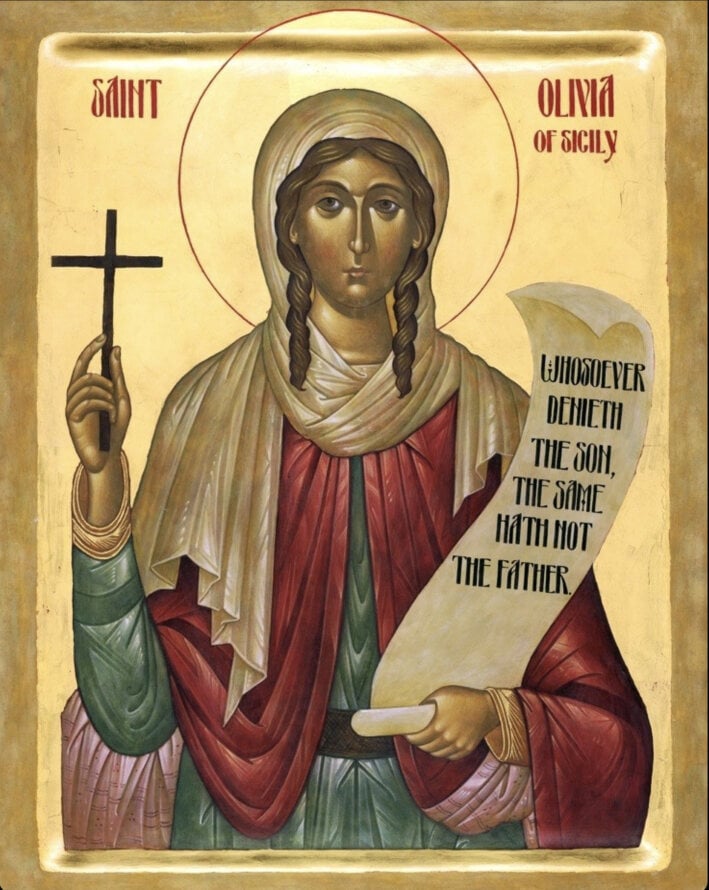
St. Olivia was the daughter of a noble family in Sicily and was born around 448.
By the age of thirteen, she was already renowned for her beauty, but she informed her family that she did not wish to marry. Instead, she desired to dedicate her life to Christ and distribute her wealth to the poor.
At that time, King Genseric of the Vandals conquered Sicily, occupied Palermo, and many Christians suffered martyrdom.
St Olivia was abducted and taken to Tunis in North Africa. She courageously confronted her persecutors, strengthened imprisoned Christians in their faith, and performed many miracles through which she converted pagans.
The governor of the city sent her into the wilderness, hoping that wild beasts would devour her. Hunters later found her unharmed and attempted to violate her, but the young woman succeeded in changing their hearts and converting them.
Brought back to the city, she endured terrible tortures and was eventually beheaded on 10 June 463.
St Aquilina the Martyr – 13 June
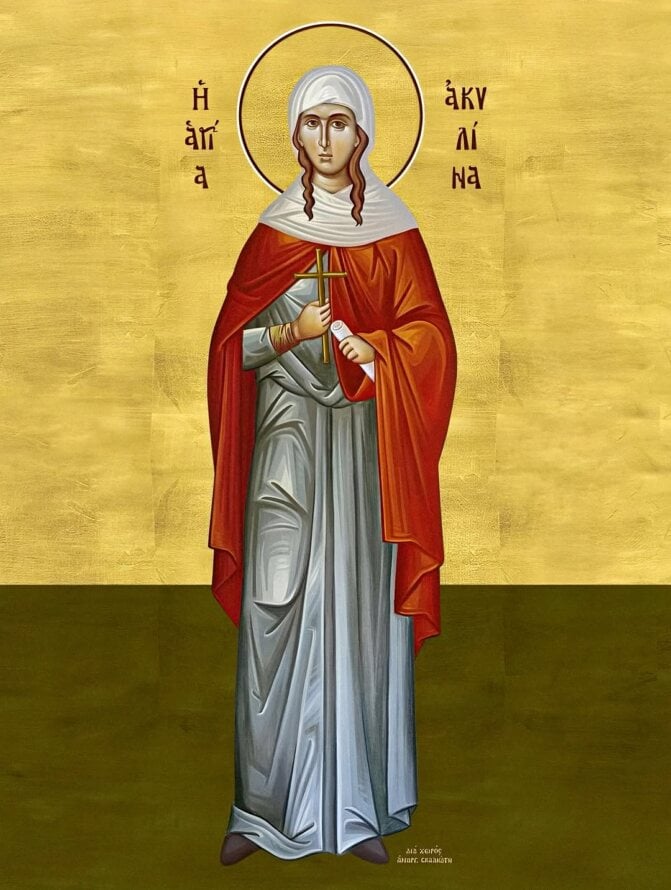
St Aquilina was born in the Phoenician city of Byblos into a respected Christian family.
By the age of ten, she was already filled with the Holy Spirit and zealously spoke to her friends about Christ.
She was denounced to Governor Volusian, who ordered that a red-hot iron rod be driven through her ears and head. Until her final breath, the child never ceased confessing Christ.
After she fell as though dead, Volusian ordered that her body be cast outside the city to be eaten by dogs.
During the night, however, an Angel of the Lord restored her to life and health. The saint gave thanks to God but prayed not to be deprived of the crown of martyrdom.
She returned to the city and appeared beside the governor’s bed. Terrified at the sight of the girl he believed dead, Volusian ordered the next day that she be beheaded.
St Aquilina suffered martyrdom at the age of twelve in the year 293.
St Alexandra, Foundress of Diveyevo Monastery – 13 June
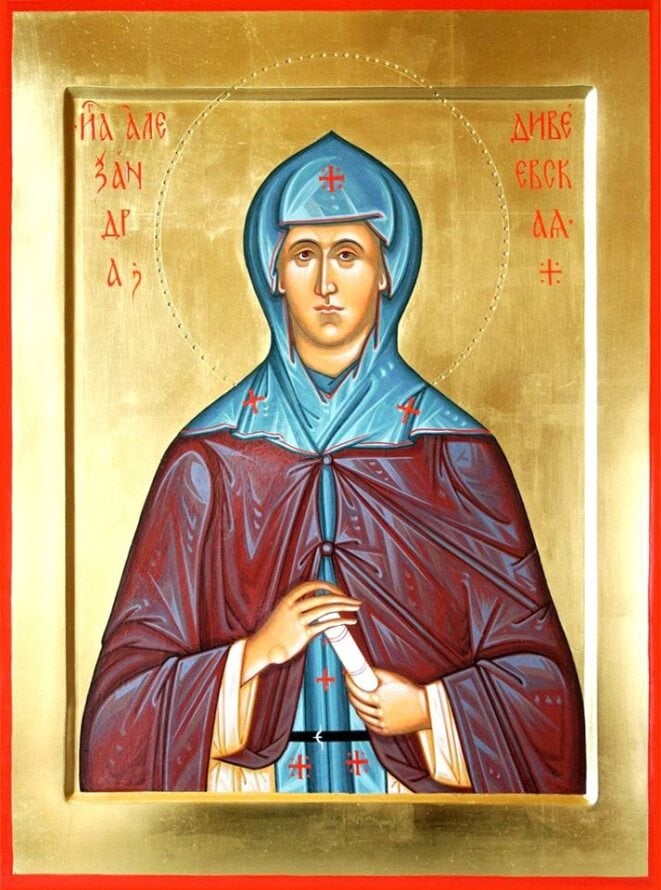
St Alexandra was born in Russia at the beginning of the eighteenth century.
She married, became a wealthy landowner, was later widowed, and decided to enter a monastery in Kyiv, where she embraced a life of ascetic struggle.
The Mother of God appeared to her in a vision and told her that she had been chosen to found a new monastery. After several pilgrimages and under the guidance of the Mother of God, she found the designated place: the village of Diveyevo in the Nizhny Novgorod region.
Nearby stood Sarov Monastery, whose spiritually advanced monks helped her establish the community of nuns.
She donated all her wealth to the monastery and to the support of the poor, widows and orphans. Although she was an abbess, she undertook every kind of labour, washing clothes and cleaning the cattle sheds.
At the same time, her spiritual life deepened, and people from every social class sought her counsel.
She reposed in the Lord in 1739, having received the Great Schema two weeks before her death.
Soon after her repose, the first miracles and healings occurred through prayers offered before her holy relics, from which myrrh flowed.
St Seraphim of Sarov spoke of Mother Alexandra’s holiness even during her lifetime. After her death, he said:
“To this very day, I kiss the footprints of her feet.”
A particle of St Alexandra’s relics is preserved in the main church of Frumoasa Monastery in Iași.
St Alina the Martyr – 18 June
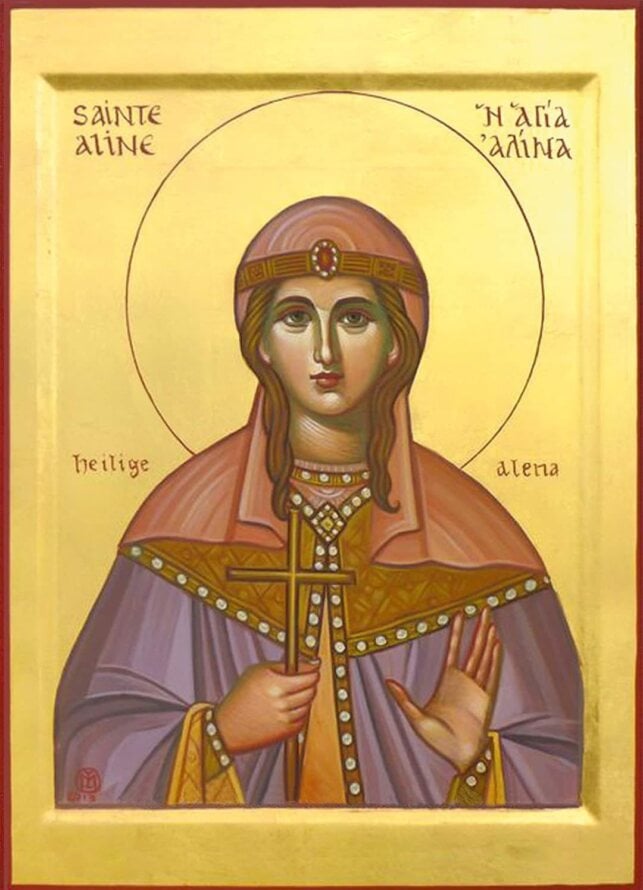
St Alina was born in Dilbeek, near Brussels, Belgium, in the seventh century.
She converted to Christianity in secret, without the knowledge of her pagan parents.
One night, while secretly attending the Divine Liturgy, her father’s guards followed her and saw her entering a chapel in Vorst.
Believing that his daughter had fallen under the supposed spells of Christians, her father ordered her arrest.
The young woman resisted, and during the struggle, one of her arms was severed. She died immediately.
An angel took the severed arm and placed it before the altar of the chapel where she used to pray.
After witnessing these miracles, her parents converted to Christianity.
In icons, she is depicted with a severed arm, healing a blind man, or receiving assistance from an angel.
She is also known as Alena, and many faithful ask for her intercession for toothaches and eye ailments.
St Anastasia of Serbia, Mother of St Sava – 22 June
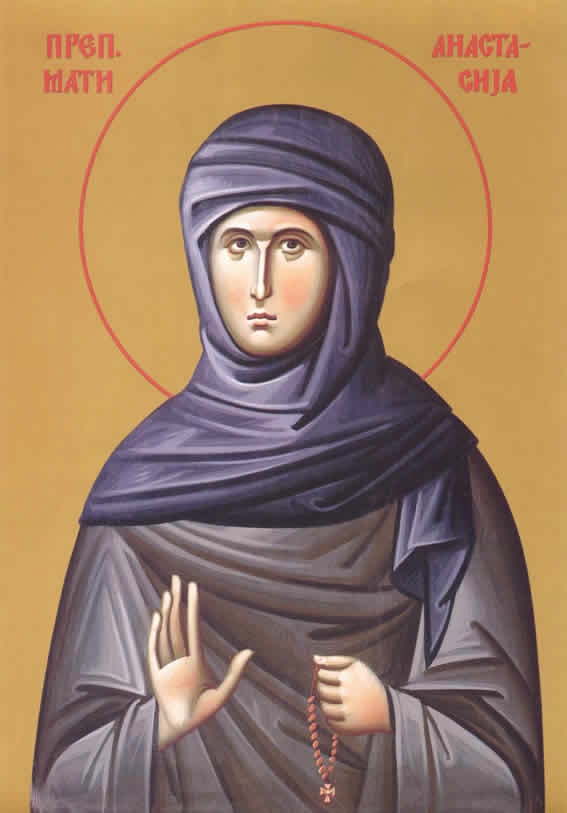
St Anastasia, whose baptismal name was Ana, was born into a noble family in 1125 and became the wife of Stefan Nemanja, ruler of Serbia.
Together they had three sons, including the future St Sava of Serbia, and two daughters.
Both St Anastasia and her husband chose to embrace monastic life. On 25 March 1196, they were both tonsured as monastics. The saint received the monastic name Anastasia in honour of St Anastasia of Sirmium.
Her husband was also canonised and is known as St Simeon the Myrrh-Gusher, founder of Hilandar Monastery on Mount Athos.
Saints Anastasia and Simeon were founders and benefactors of churches and monasteries, building places of worship throughout Serbia and supporting Christian communities in Jerusalem, Thessaloniki and Bari.
Nun Anastasia lived a God-pleasing life at Kuršumlija Monastery, one of her husband’s most important foundations, and reposed in the Lord in 1200.
Her holy relics are venerated at Studenica Monastery, another foundation of St Simeon.
Martyr Agrippina of Rome – 23 June
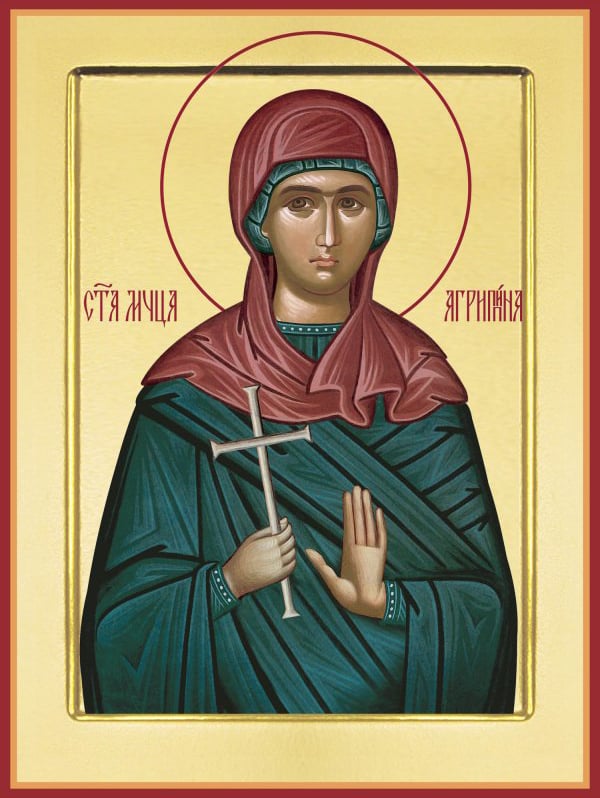
St Agrippina was a native of Rome who dedicated her life to Christ, living in purity and refusing marriage.
She lived in the third century during the reign of Emperor Valerian and boldly appeared before pagan authorities to confess her faith.
After prolonged torture, she surrendered her soul into the hands of God.
Her body was taken by three Christian women—Bassa, Paula and Agathonica—who transported it to Sicily and buried it there.
A church was later built in her honour.
At her tomb, the sick were healed, and through the prayers of St Agrippina, an attack by the Hagarenes was repelled.
St Febronia the Great Martyr – 25 June
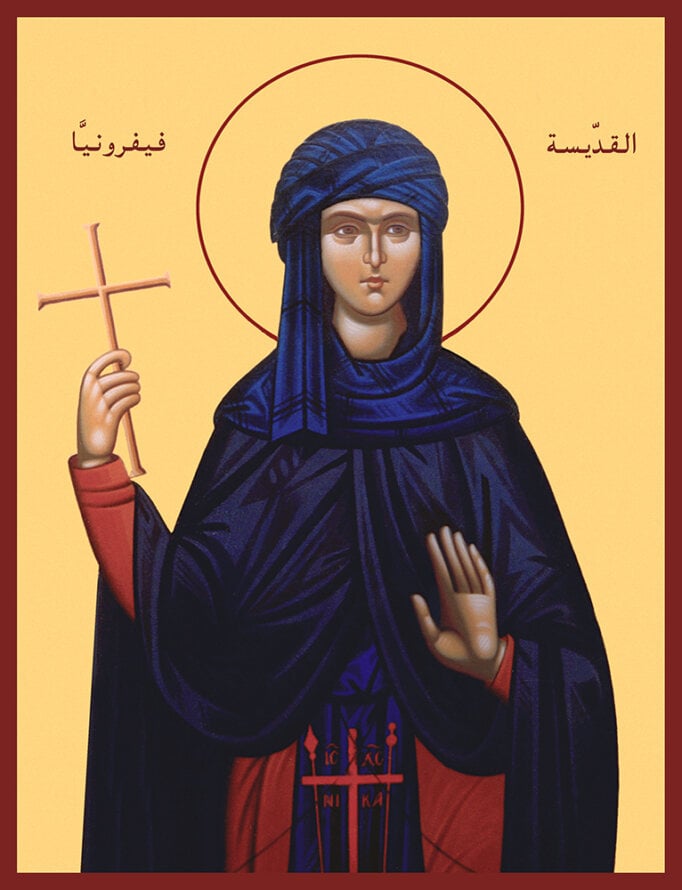
St Febronia suffered martyrdom during the reign of Emperor Diocletian (284–305).
She was raised in a monastery near the city of Nisibis, under the governance of her aunt, Abbess Bryaena.
When news arrived that the emperor’s soldiers were approaching the monastery, the nuns began fleeing and hiding. According to some sources, only the abbess, St Febronia—who was ill at the time—and sister Thomais remained; other sources state that several nuns stayed behind.
St Febronia was brought before Governor Selinus, who wished to marry her to his nephew, Lysimachus.
The saint remained unwavering in her faith and endured horrific tortures that caused those watching to turn away in horror and curse Diocletian and his soldiers.
Eventually, she received the crown of martyrdom, and by order of Lysimachus, her body was returned to the monastery.
Later, Selinus was found dead, while Lysimachus received Holy Baptism and entered a monastery.
Six years after her martyrdom, the bishop of the city built a church in her honour. However, her relics could not be transferred from her monastery to the new church. The saint permitted only one tooth to be taken.
This small relic worked great miracles: the blind received sight, the lame were healed, and paralysed people walked again.
Each year her martyrdom was commemorated with a solemn feast, and St Febronia was said to appear standing in her customary place in the church.
Her life was recorded by Thomais, an eyewitness to her martyrdom.
In 363, the relics of the holy martyr were translated to Constantinople.
The head of St Febronia is preserved today at St Paul’s Monastery on Mount Athos.
St Febronia of Murom – 25 June
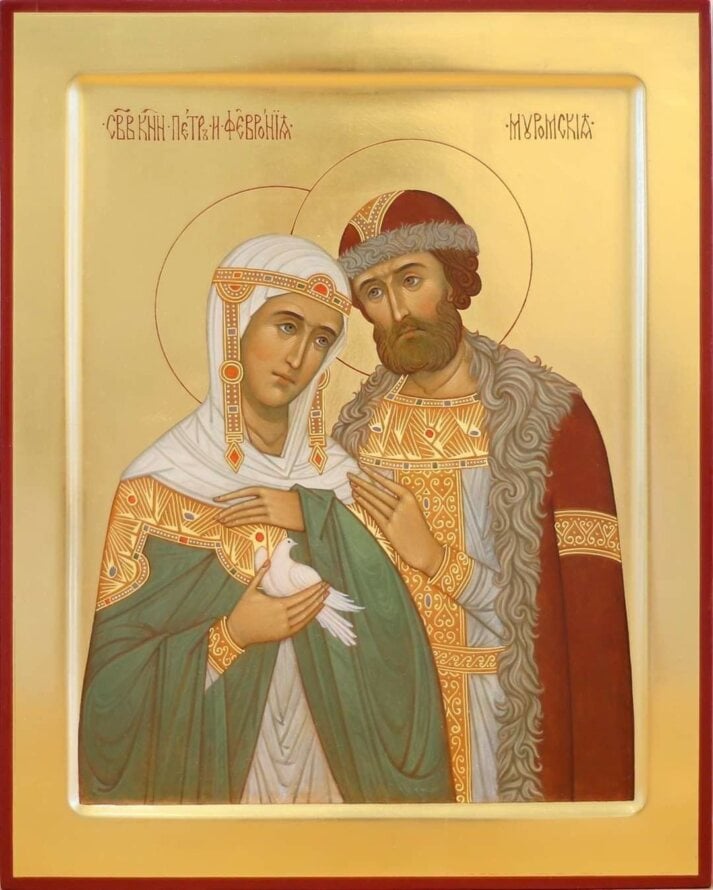
St Febronia was a devout maiden, the daughter of a beekeeper from the Ryazan region of Russia.
She was exceptionally wise and possessed extensive knowledge of medicinal plants, which she used to heal various illnesses.
When Prince Peter of Murom fell gravely ill, Febronia was summoned to cure him.
The young prince recovered his health, and during this time, the two fell in love.
Although she did not belong to the nobility and many boyars opposed the union, the prince married her.
The couple were subsequently exiled and set out together in a boat.
The prince was deeply saddened, but his wise wife continually encouraged him.
Soon, many misfortunes befell the city of Murom, and the people realised that these calamities had come because their prince and his wife had been expelled.
They begged the couple to return, and Peter and Febronia came back to Murom, devoting themselves to works of charity and becoming greatly beloved by the people.
Saints Peter and Febronia prayed that they might depart this life on the same day and requested to be buried in the same coffin.
Their prayer was granted, and they reposed in the Lord on the same day, 25 June 1228.
They were canonised in 1552 and are regarded as patrons of marriage and family life, as well as helpers for those seeking a husband or wife.
St Joanna the Myrrh-Bearer – 27 June
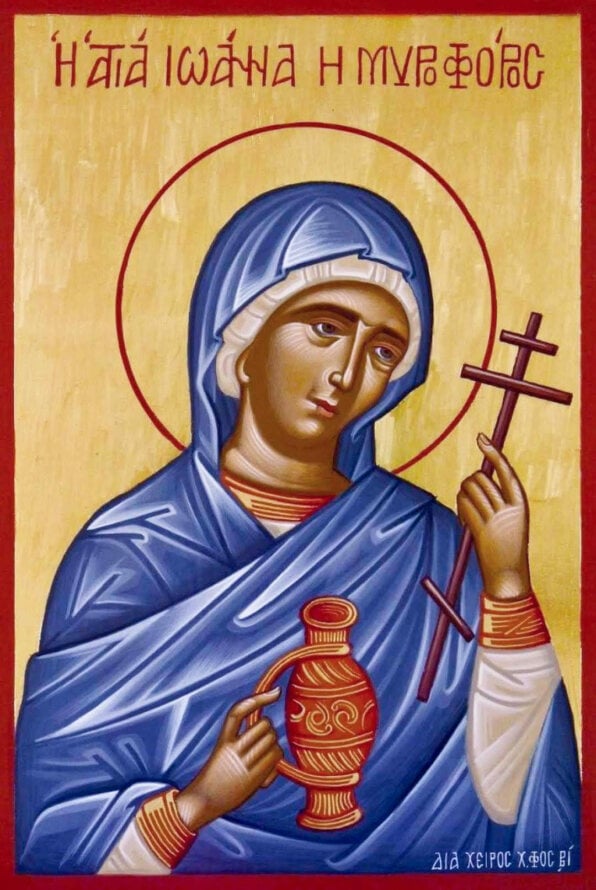
St Joanna was the wife of Chuza, steward of the court of King Herod Antipas. She is numbered among the women whom Christ healed of “evil spirits and infirmities” (Luke 8:2), together with Susanna and Mary Magdalene.
These women accompanied the Saviour and the Apostles, ministering to them out of their own means (Luke 8:3).
St Joanna is one of the Myrrh-Bearing Women to whom the angel announced the Resurrection of the Lord.
Tradition records that she was among the group of one hundred and twenty believers who chose Matthias to replace Judas Iscariot among the Apostles and that she was most likely also a witness of the Descent of the Holy Spirit at Pentecost.
According to the same tradition, St Joanna was the one who recovered the head of St John the Baptist after he had been beheaded at the command of Herod.
The holy Myrrh-Bearer buried the head with honour on the Mount of Olives, where it was later discovered during the reign of St Constantine the Great.