His Beatitude Patriarch Daniel of Romania explained on Sunday that the Saviour Jesus Christ reveals to the Samaritan woman the meaning of true love: “The living water, or divine grace, is a holy, endless and unchanging love, an unfading and unfailing love, in contrast to earthly and worldly love, which is limited, changeable and often deceptive.”
“So here we see that the living water, divine grace, is what makes human life a steadfast relationship of communion with God,” His Beatitude emphasised.
The Patriarch of the Romanian Orthodox Church recalled that although the Samaritan woman possessed a confused spiritual faith and a morally disordered life due to instability in her affections, she changed for the better and came to believe in Christ because she desired to receive the living water of holy, endless, and unchanging love.
“From being a woman unstable in love, she became a faithful woman and a confessor of Christ, a missionary who brought an entire city to Christ, bringing Christ into the city of Sychar in order to transform the lives of others as well,” His Beatitude said.
Grace contains the love of the Holy Trinity
This living water of love, which has its source in God, “is the saving grace revealed to humanity by Jesus Christ and communicated through the Holy Spirit,” Patriarch Daniel explained.
“And the grace which Christ the Lord reveals and grants to us contains within it the merciful love of God the Father and the holiness of the Holy Spirit, bestowed upon people so that they may attain eternal heavenly life.”
“Divine grace is also the love of the Holy Trinity, shared with humanity by the Lord Jesus Christ, risen from the dead and ascended into heaven, through the Holy Spirit, Who descends into the world in order to unite people spiritually with Christ, the Head of the Church, and to grant eternal life to humanity,” His Beatitude explained.
Preparation for Pentecost
In this sense, the Gospel passage is connected with the mystery of the Lord’s Resurrection, the mystery of the Ascension of the Lord into heaven, and especially the mystery of the Descent of the Holy Spirit, which concludes the Paschal period known as the Pentecostarion.
The Gospel account of Christ’s dialogue with the Samaritan woman “is also a preparation of the faithful for the feast of the Lord’s Ascension, because through His ascension into heaven, Christ the Lord raises human nature into the eternal light of the Holy Trinity,” said the Patriarch of Romania.
“And through the descent of the Holy Spirit, celebrated on the eighth Sunday after Pascha, or Pentecost, people are abundantly granted the living water flowing unto eternal life, namely the grace of the Holy Spirit, which we first received at Baptism.”
Worship in spirit and truth is communion with God
His Beatitude also explained the meaning of worshipping in spirit and truth:
“Spirit and truth here mean the life of communion between man and God, accomplished through prayer enlightened by the Holy Spirit and through the confession of the truth of the right faith.”
“Saint Ambrose of Milan says that true worshippers of the Father, being worshippers in spirit and truth, are therefore worshippers of the Holy Trinity. Why? Because the Holy Spirit fully urges and helps man to pray to God the Father and to confess His Son, Jesus Christ, as the Way, the Truth and the Life,” Patriarch Daniel continued.
“In other words, the Lord Jesus Christ says that true faith will be spiritual and universal, a living bond or relationship of love, spiritual life and good deeds between man and God, Who is present everywhere.”
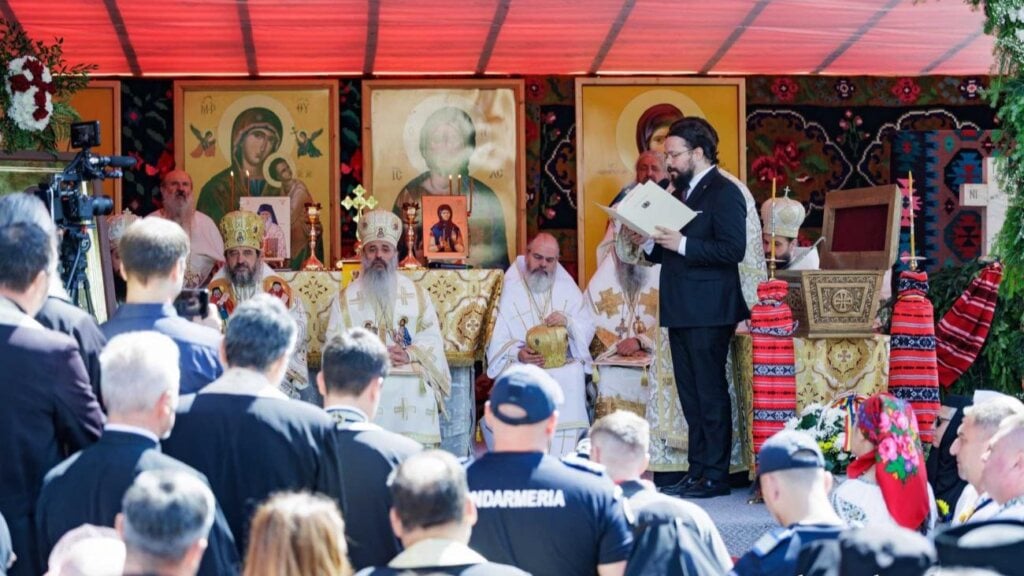
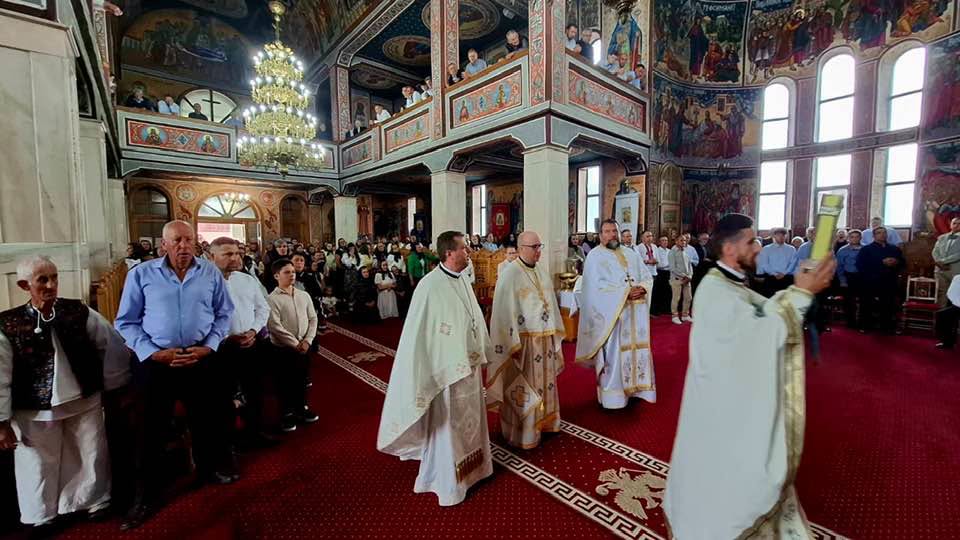
Patriarch Daniel attended the Divine Liturgy celebrated on Sunday at the historic chapel of the Patriarchal Residence in Bucharest.
Photo: Basilica.ro Archive / Raluca Ene