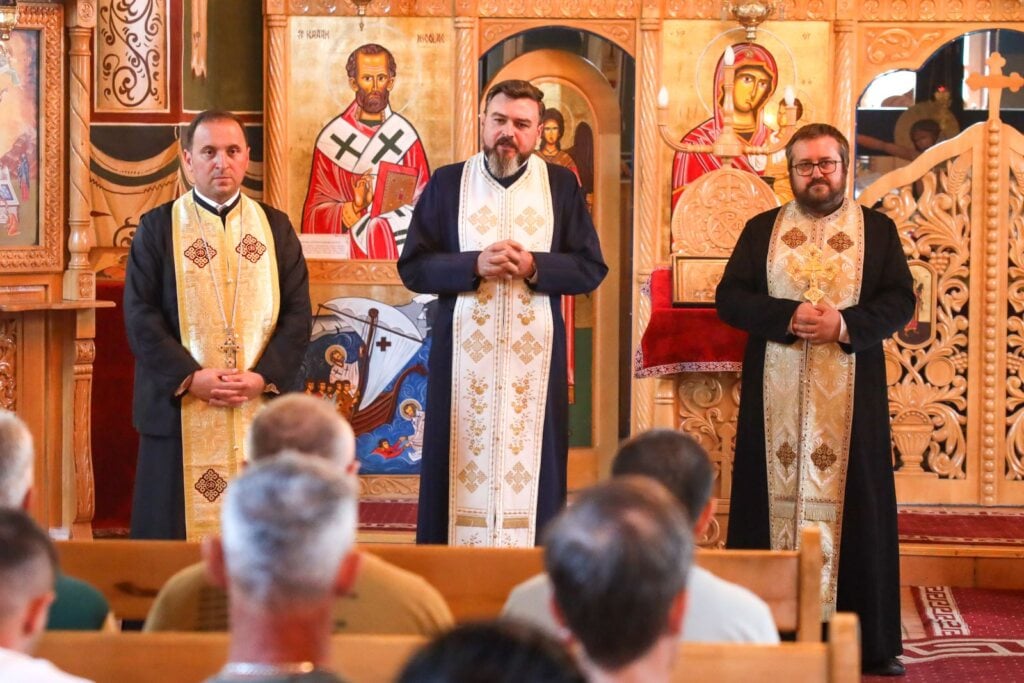
Two sisters from the community of Mull Monastery in Scotland received the monastic tonsure on the Eve of the Annunciation, according to announcements shared on the monastery’s Facebook page and by Archimandrite Serafim Aldea, abbot of the neighbouring monastery on the Isle of Iona.
Sister Teodora received the name Mother Thaney, while Sister Maria became Mother Sunniva.
“This is the greatest joy a monastic community could possibly have: new life, new opportunities for new saints within us. And there is nothing to give one hope and to renew one’s own vows, and determination and desire to be with Christ as new monastic life,” Archimandrite Serafim Aldea said in a reflection published on his YouTube channel.
“I pray that God, and His Most Holy Mother and all the saints of these islands—especially Saint Thaney and Saint Sunniva, the protectors of our newly tonsured mothers—guide them and they guard them, and they take them out of every darkness of this world, coming from the outside or from the inside, and will lead them gently, with love and with patience, into God’s light.”

Two Western Saints
Saint Thaney became pregnant after being abused in her youth, and her family cast her off a cliff. She survived and reached the community of Saint Serf in Culross by boat, where she gave birth to her son, Mungo, who would also become a saint.
Saint Sunniva was a 10th-century Irish princess who became Norway’s first saint and died as a martyr on the island of Selja.
About Mull and Iona Monasteries
The Orthodox communities on the islands of Iona (for monks) and Mull (for nuns) are international in character and belong to the Romanian Orthodox Archdiocese of Great Britain and Northern Ireland.
Mull Monastery was re-established as an Orthodox monastic community in 2010, becoming the only Orthodox monastery in the Scottish Isles in the last millennium. A permanent Orthodox presence on the island of Iona was established in the summer of 2022 with the acquisition of the historic Iona Cottage building.
Monastic life at Kilninian (Mull) continues a centuries-old tradition dating back to the late 6th century, centred around the spring known as Saint Ninian’s Well, a site associated with miraculous healings.
Photo: Facebook / Mull Monastery of All Celtic Saints