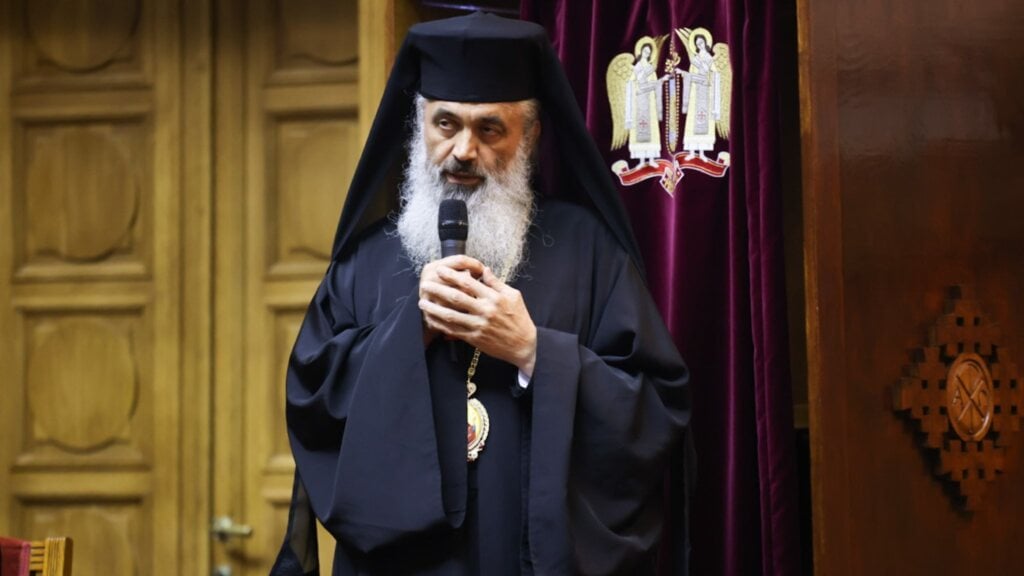
Archbishop Casian Crăciun of Lower Danube on Monday commemorated the martyrs of the Salcia labour camp in the Great Brăila Island, where hundreds of anti-communist political prisoners died in suffering.
The memorial service was held in connection with the feast of the Forty Martyrs of Sebaste and Romania’s National Day of Remembrance for anti-communist political prisoners from the period 1944–1989.
So far, a team of archaeologists has uncovered the remains of 16 political prisoners from the communist era in a mass grave in the village of Agaua, Brăila County.
Archbishop Casian highlighted the sacrifice of those who died for the Orthodox faith. Thousands of people were forced to work in the camp located on a branch of the Danube River.
“As in Sighet Prison Memorial and in other places, here at Salcia, on the Great Island where we are on pilgrimage, more than 500 heroes and martyrs became one with the welcoming earth, like the grain of wheat, so that the Orthodox faith and the confession of the Lord might continually flourish anew, as He taught us: ‘Everyone who acknowledges Me before others, I also will acknowledge before My Father in heaven’ (Matthew 10:32),” the archbishop said.
“We were deeply moved in Frecăței, Brăila County, by meeting pupils from the local school. We then continued the pilgrimage to the 24 stone crosses where the Ossuary Altar of Gratitude will be established, once the church programme blessed by Patriarch Daniel of Romania is completed, according to the decisions of the Holy Synod of the Romanian Orthodox Church and Romanian law, welcoming the specialists led by Professor Marius Oprea,” Archbishop Casian added.
A memorial service was also held at the cemetery in Agaua, where a monument stands in memory of those buried without a priest, a name, or a cross.
Photo: Facebook / Archdiocese of Lower Danube