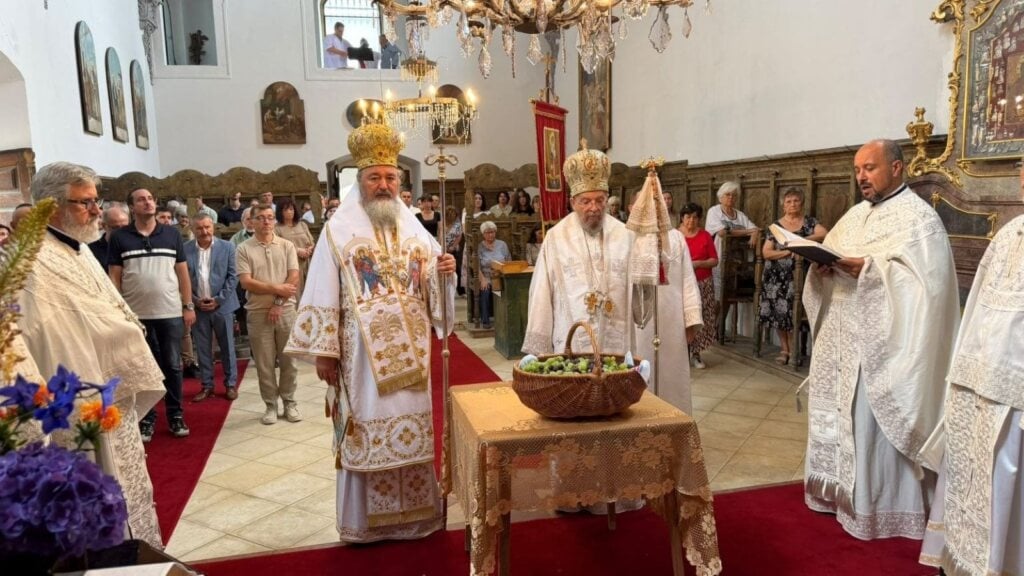
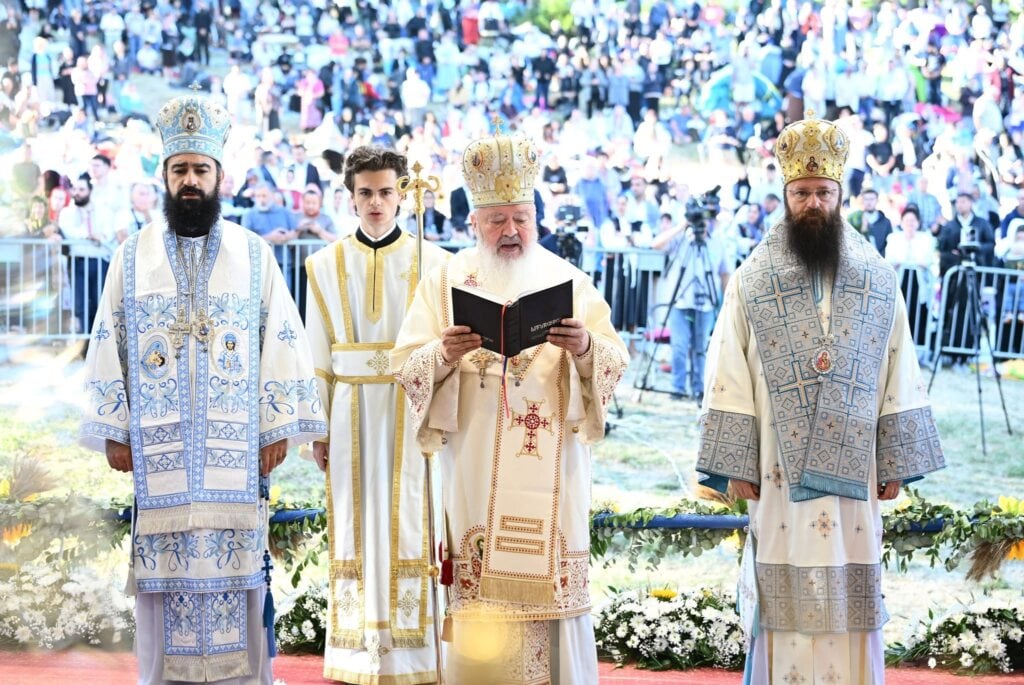
Speaking on Sunday at the Patriarchal Cathedral in Bucharest, Patriarchal Auxiliary Bishop Paisie of Sinaia said that the father in the Parable of the Prodigal Son does not reproach his child, does not humiliate him and does not demand explanations.
“His gaze does not fall on the sin, but on the suffering that needs healing. It is God’s love that heals and restores,” the bishop explained.
He pointed out where each of the father’s sons went wrong in the parable: one is the rebel who broke communion, while the other served his father in order to earn his inheritance, thus becoming “the image of the Christian who lives faith as an obligation rather than as joy.”
“The father’s love, however, is not proportional to the sons’ merits, because that would be a limited love. His love is not measured by a young goat. There is no calculation involved. It is much more than that: Everything that is mine is yours as well. This father is not merely just – he is more than justice: he is love,” the patriarchal auxiliary bishop said.
“This Gospel is not about a father of long ago, but about our Father, who even today waits for us – whether we have visibly gone away or whether we have remained at home with a cold heart.”
A parable about humanity estranged from God
The parable is a metaphor for humanity estranged from God and returning to the Father, the bishop said, because it contains a longing for God.
“The story of the prodigal son is everyone’s story, and that is why the prodigal son is dear to all of us. We have all lived through, or still live through, this crisis of the rebellious son in different ways. Often, the act of rebellion is only the beginning of becoming aware of and accepting God’s parental love,” he noted.
“The young man does not leave empty-handed. He claims and takes his share of the inheritance, as if, for him, his father were already dead,” the bishop added. “In reality, we know that rebellious attitudes often hide a need to be loved and to be validated.”
Love and freedom define the relationship with the father
The father in the parable, he continued, “does not want a house filled with obedient, correct but unhappy servants. He wants a house of free, joyful and loving sons.” That is why he does not stop the son who leaves “in search of happiness.”
The son’s return comes after a spiritual turning point, when he comes to himself – a moment that, according to St Ambrose of Milan, explains sin as a departure of the human person from his own true nature.
“We see that the father never stops loving the son who left home, but continues to wait for him. When the son returns from the distant land, the father sees him from far away, because he was waiting for him,” the bishop said.
“And he does not simply wait – he runs joyfully to meet the lost son and hastens to drive away his pain through an embrace. For him, losing a son is an immeasurable sorrow.”
God restores the human person fully
Quoting St John Chrysostom, the patriarchal auxiliary bishop noted that the father does not wait for the son to finish his confession, nor does he first examine the sin, but goes out to meet him – showing that God hastens to welcome a person’s return even more quickly than the person dares to approach Him.
He also referred to St Cyril of Alexandria, who teaches that through the first robe, the ring and the banquet, the father does not merely receive the son back into the house, but fully restores his dignity as a son, because God does not repair a person halfway – He restores the human being completely.
“Let us learn to return to God without fear, because we are not met by a judge, but by a Father. And let us come more often to confession and to Holy Communion, for the renewal of our lives and for our salvation,” Bishop Paisie of Sinaia concluded.
Photo: Basilica.ro Files / Mircea Florescu