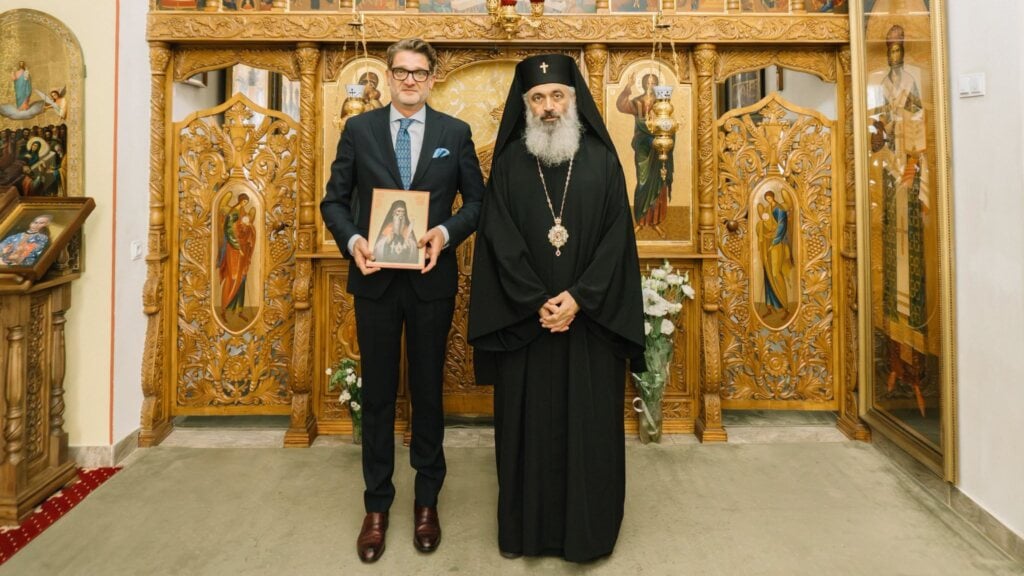
On Sunday, at Bogdănița Monastery in Vaslui County, His Grace Bishop Ignatie of Huși addressed what he called a growing phenomenon in today’s society — a culture of entitlement, which he referred to as “I-deserve-it-ism”, in stark contrast to the teachings of Christ.
Reflecting on the Gospel reading for the Seventh Sunday after Pentecost, Bishop Ignatie stated at the conclusion of the Divine Liturgy that Christ does not teach us to seek gratitude in return for our good deeds. Instead, He teaches the opposite.
“The Lord Christ does not teach us to beg for gratitude or to believe that we, who do good, are entitled to recognition,” the bishop explained. “On the contrary — it is the one who benefits from the good act, not the one who performs it, who has the duty and right to be grateful.”
He continued:
“In other words, whenever we do good or help someone, we should remain in a state of discretion. This virtue is so foreign to many of us. Our tendency is to beg for gratitude. We become sulky when we are not thanked, when we do not receive the praise we expect — praise that, in a way, strokes our ego and pride.”
Discretion Replaced by Entitlement
Bishop Ignatie warned that discretion and humility are being replaced by a new social trend — what he labelled “I-deserve-it-ism”.
“The society we live in — of which we are all part — tends to enshrine, both in private and public life, the idea that everything is owed to us. I have called this attitude by a compounded word: I-deserve-it-sm.”
He stressed that this mindset reveals a “devastating lack of discretion.”
“How beautiful is the discreet person — the one who knows when to speak, what to say, and what to share,” His Grace noted.
He further observed that this attitude is often found among those closest to us:
“You’ll notice that those to whom we give the most — our whole being, selflessly, without hidden agendas — are often the ones who end up behaving with this very sense of entitlement.”
A Crisis of Moral Nobility
According to the bishop, this shift is rooted in a lack of moral refinement.
“This happens because we are not delicate, noble souls, full of moral aristocracy — the kind that would help us realise that nothing in this world, neither the good we receive nor the love shared with us, is something we actually deserve. In truth, we deserve nothing from this world.”
He concluded with a strong critique of contemporary social dynamics:
“That is why we live in confusion and a collapse of values — both socially and in the workplace. Everyone believes they are superior, entitled only to rights but unwilling to accept the responsibilities that come with them.”
“This is why some people rebel, resorting to dishonest tricks to undermine their superiors — and vice versa: some superiors act like dictators, thinking they hold everything in their hands, including the lives of those under their authority.”
Photo: Diocese of Huși