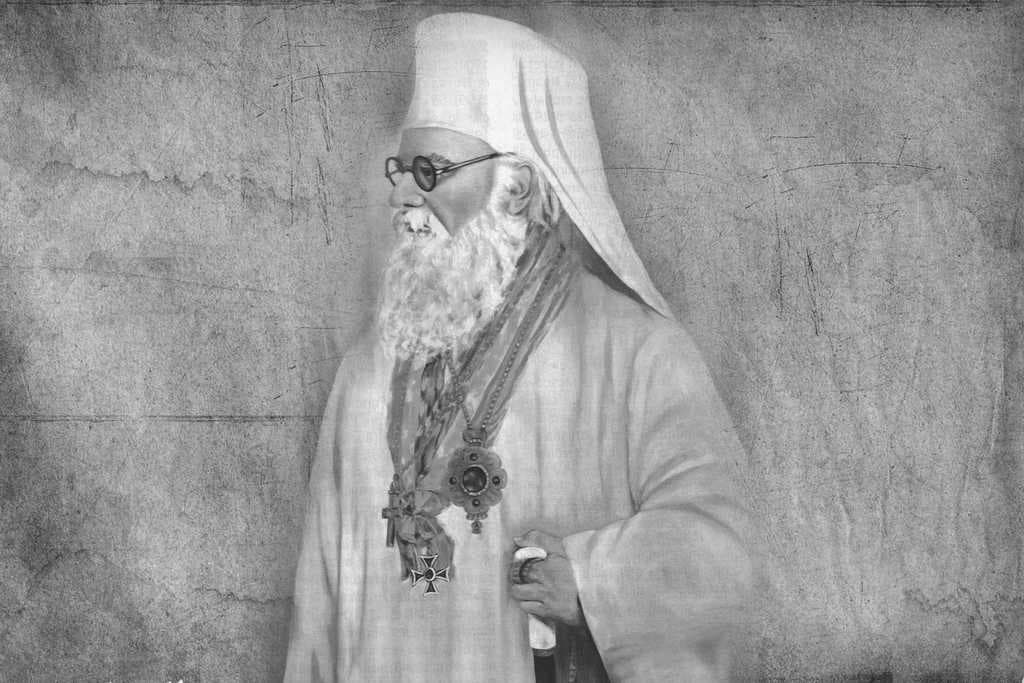
Eighty-seven years ago today, Metropolitan Nicodim Munteanu was elected Patriarch of the Romanian Orthodox Church, succeeding Patriarch Miron Cristea.
Nicodim Munteanu was born Nicolae on 6 December 1864 in the village of Pipirig, Neamț County, into a devout farming family.
At the age of fourteen, he entered the monastic community of Pocrov Skete near Neamț Monastery, where one of his uncles served as abbot. His parents also embraced the monastic life in their later years.
In 1894, he was tonsured a monk at Neamț Monastery, receiving the name Nicodim (Nicodemus). He was ordained to the diaconate at Iași and, in 1896, to the priesthood as hieromonk.
That same year, he was appointed Great Ecclesiarch and preacher of the Metropolitan Cathedral in Iași, and in 1898, he was elevated to the rank of Archimandrite and appointed Administrative Vicar of the Metropolis.
Between 1902 and 1909, he served as Administrative Vicar of the Diocese of the Lower Danube before becoming Rector of St Andrew’s Theological Seminary in Galați. In 1909, he was elected Auxiliary Bishop of the Metropolis of Moldavia with the title Bishop of Băcău. From 1912 to 1923, he served as Bishop of Huși, resigning from the diocese on 31 December 1923.
From 1924 to 1935, he was Abbot of Neamț Monastery, and in 1935, he was elected Metropolitan of Moldavia.
Second Patriarch of Romania
On 30 June 1939, he was elected Patriarch of the Romanian Orthodox Church and was enthroned five days later, on 5 July.
Patriarch Nicodim was responsible for almost the entire translation of the Romanian Bible published in 1944, alongside dozens of other translations and theological works.
Working directly from the Greek text of the Septuagint, he translated fifty-one books of Holy Scripture into Romanian—twenty-four Old Testament books and the entire New Testament. He also published five editions of the New Testament and four editions of the Psalter, all translated by himself.
As Patriarch, he maintained the Church’s institutions during a period of profound political upheaval. He supported clergy and faithful affected by the Second World War, coordinating relief efforts for the wounded, refugees and victims of war, as well as for military chaplains and their families.
Following the establishment of the communist regime, Patriarch Nicodim worked to defend the Church’s autonomy amid mounting political pressure.
He fell asleep in the Lord on 27 February 1948 and was buried in the Patriarchal Cathedral in Bucharest beside his predecessor, Patriarch Miron Cristea.
Photo source: Doxologia