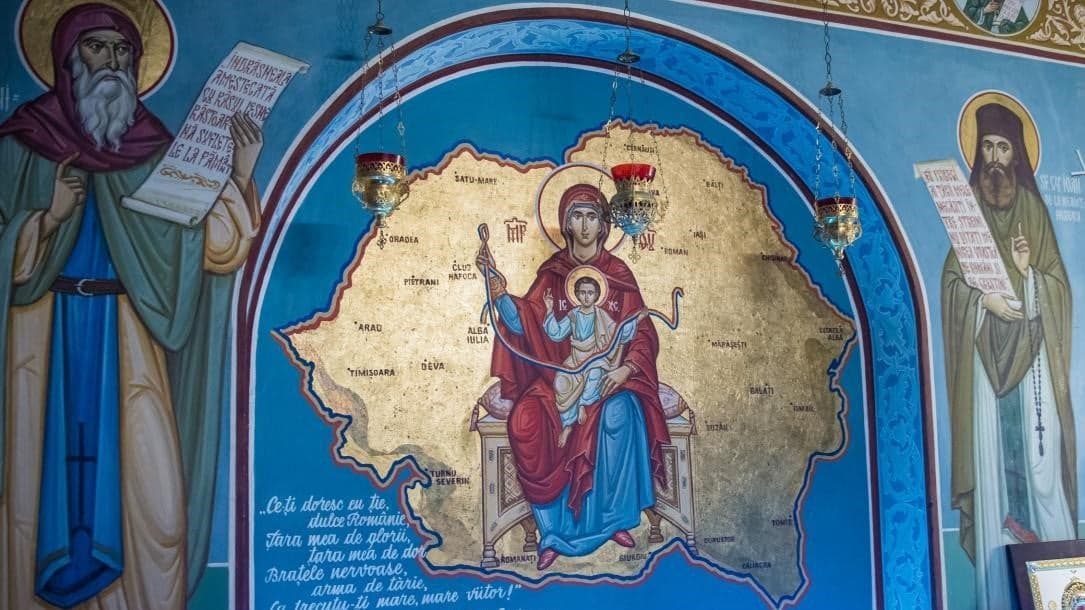
Pope Francis in 2019 and Pope John Paul II in 1999 reaffirmed a belief deeply rooted in Romanian tradition since the 15th century: that Romania is the “Garden of the Mother of God.”
Few, however, know the origin of this title. It is based on a miraculous event that took place in Neamț County, at Bisericani Monastery, during the time of Saint Joseph of Bisericani.
The term “Garden of the Mother of God” is typically associated by Orthodox Christians with the monastic republic of Mount Athos, which is dedicated exclusively to the Virgin Mary.
The Miracle at Bisericani
In 1499, Saint Joseph of Bisericani and his disciples began building a church. Due to wars and the unstable conditions of the time, they abandoned the construction and planned to leave for Mount Athos, known as the Garden of the Mother of God.
However, as they prepared to depart, the Virgin Mary appeared to them in an oak tree and stopped them.
From that oak, where the monks often placed an icon of the Theotokos, she spoke to them:
“Do not go to Mount Athos, for this too is My garden.”
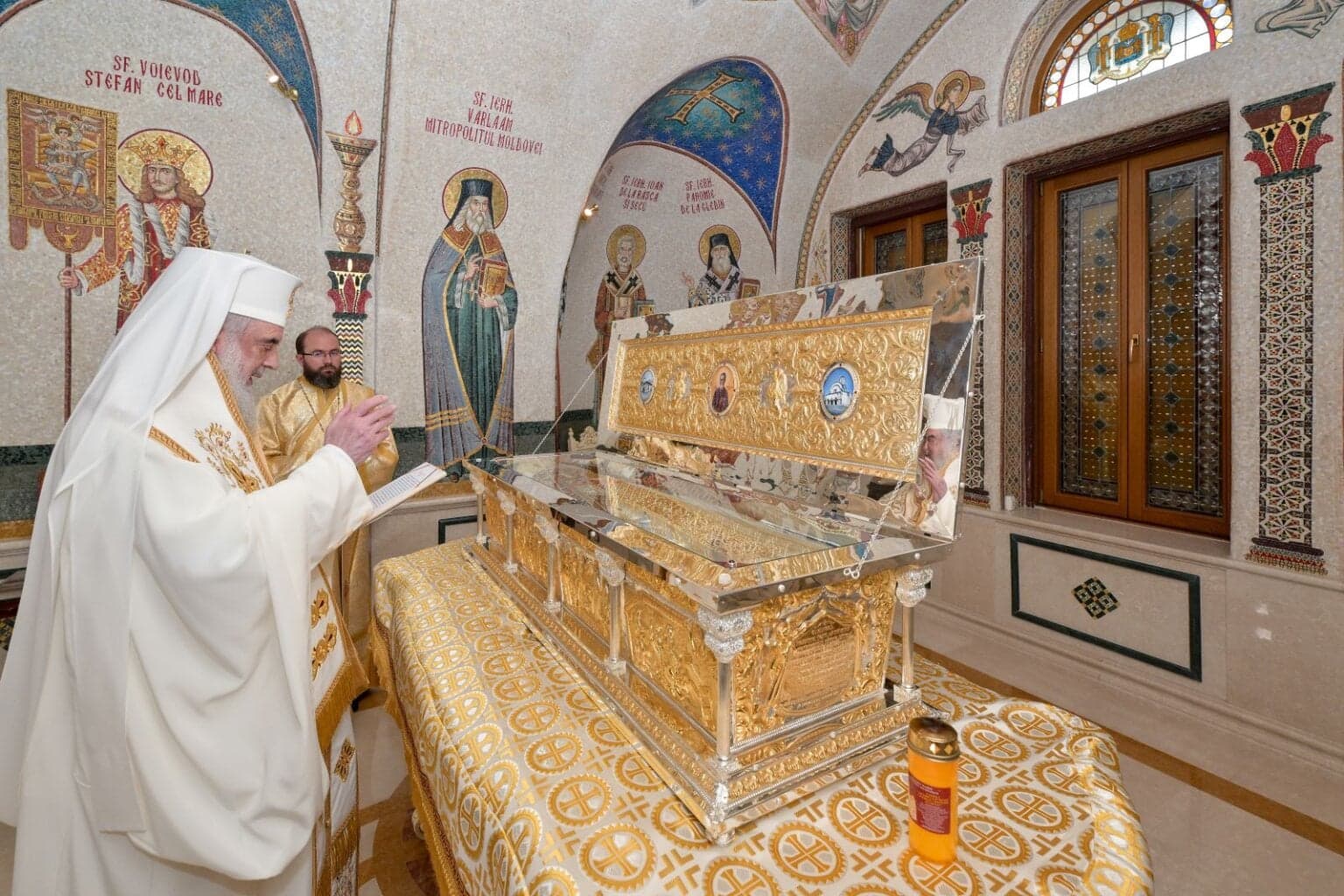
Patriarch Daniel of Romania recalled this event in a sermon, noting that since then, Romania has been called the Garden of the Mother of God.
The monks found a miracle-working icon in the hollow of the oak tree from which the Virgin Mary spoke, and on that site, they built a small wooden chapel.
Legacy Preserved
The roots of that oak tree still remain at Bisericani, preserved within a new church consecrated by Patriarch Daniel during his time as Metropolitan of Moldavia and Bukovina on October 3, 1999, marking 500 years since the apparition.
Thus, the Virgin Mary herself was the first to declare that Romania is her garden.
Photo: Iconographic depiction of “Romania – Garden of the Mother of God” in the Romanian Settlement Church in Jerusalem © Doxologia