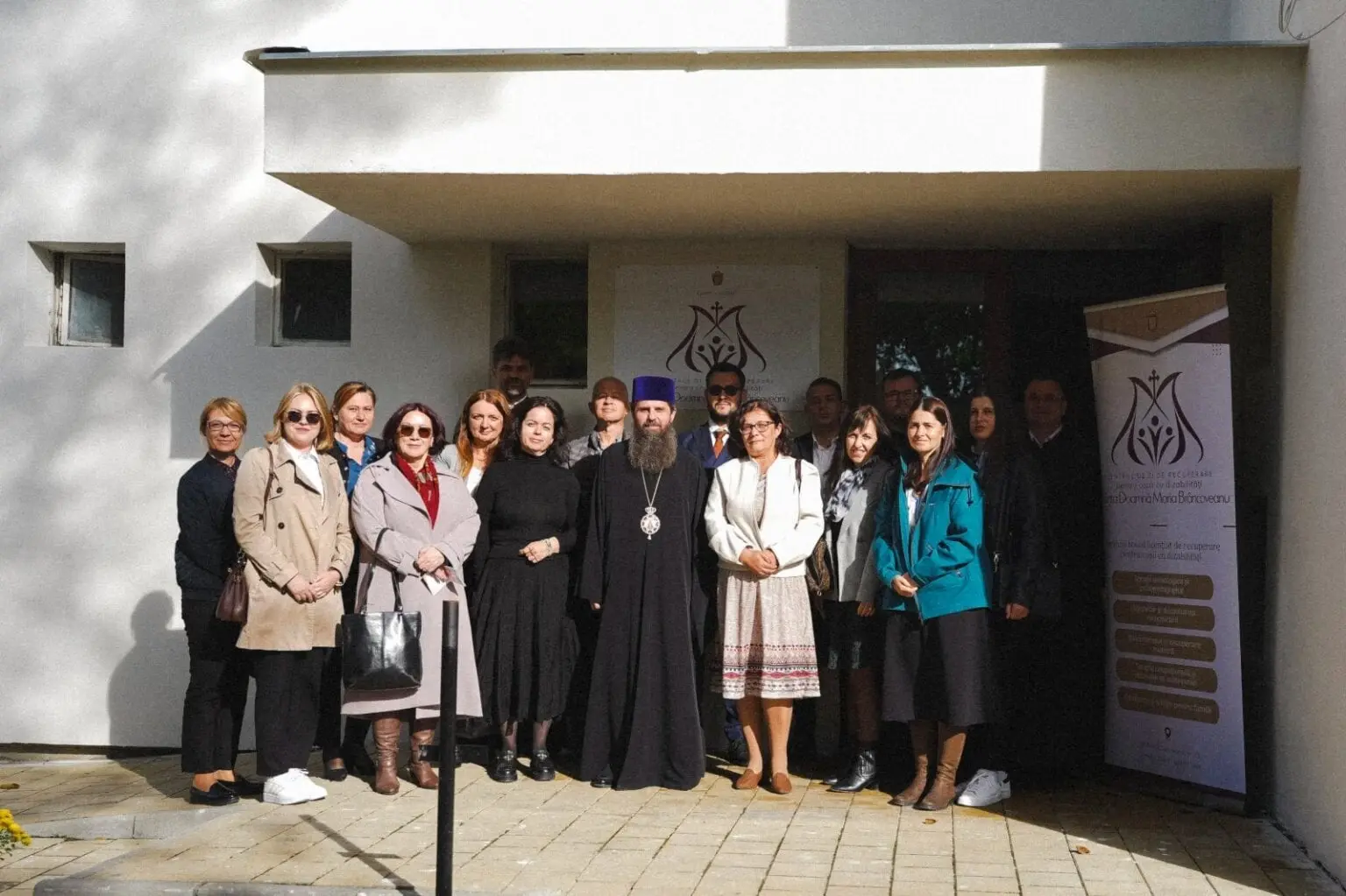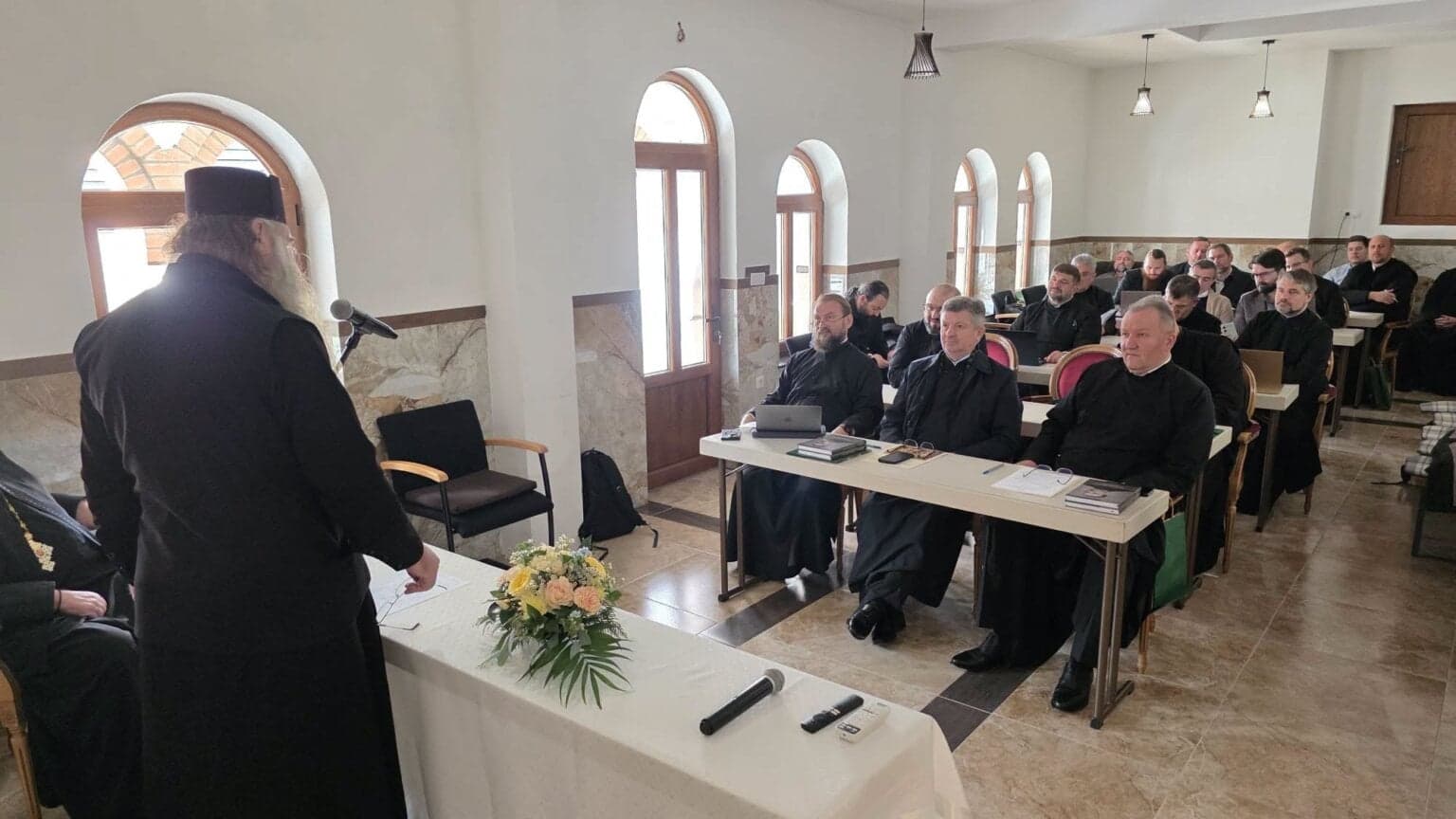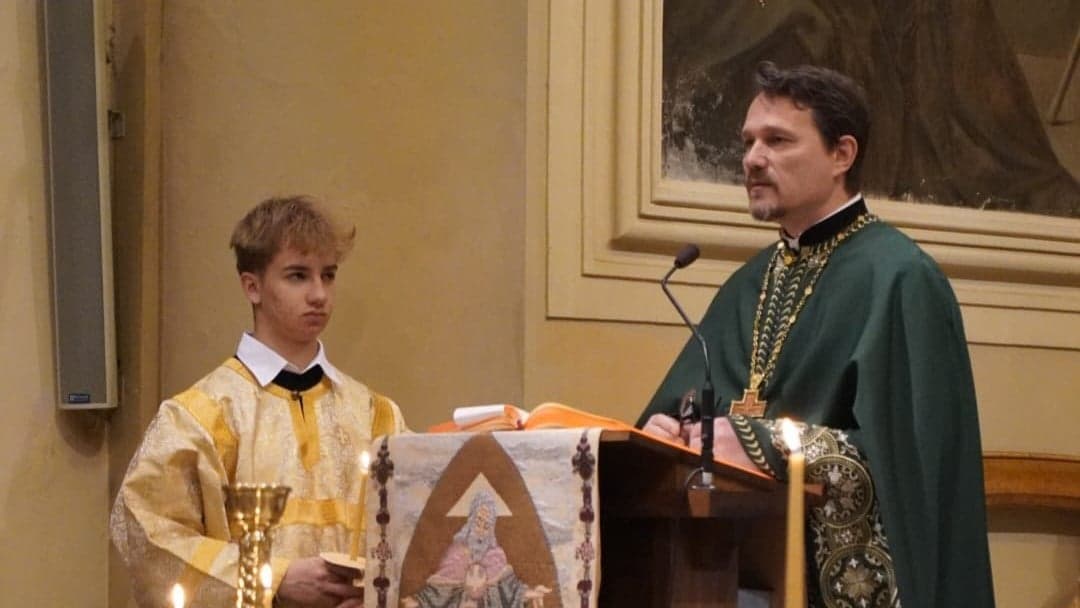
Fr Florin Haniș, parish priest of the Romanian Orthodox community in Forlì, Italy, spoke in an interview with the Romanian publication Formula AS about the beginnings and development of the Romanian community in the Emilia-Romagna region.
“The Romanian Orthodox Parish of Saint Gregory the Theologian in Forlì, Emilia-Romagna, was born only around 2006, after we arrived there. The faithful from Forlì used to attend services in Ravenna; that is where I first met my parishioners,” Fr Florin Haniș recounted.
The first Divine Liturgy was celebrated in an office of the Forlì City Hall on the Feast of the Nativity in 2006.
“There were only about 20 Christians, and I was very sad, thinking of Christmas back home and asking myself: What am I doing here? Who sent me here? A few minutes later, when I turned toward them for the first time, there were already around 200. Thank You, Lord, for showing me why I am here!” the priest recalled.
After several requests, the community was eventually granted a place of worship by the Municipality of Forlì.
Fr Haniș described the experience as miraculous: “For ten years we kept asking for an invoice so we could pay rent, something at least—but we never received anything. I can only understand all this as God’s work. True miracles! I tremble and keep saying we are not worthy, but I know that God gives us everything we need—and more—so that our souls may not lose their way.”
Over 1,000 Children Baptised
Fr Haniș said that in the two decades he has served in Forlì, he has baptised more than 1,000 children, a fact he considers a blessing from God.
“I am blessed, because God says that one sows and another reaps. I have been here for 20 years and have seen the first generation with whom I held catechism classes grow up. Now they are teaching catechism to the younger ones. I just stand by and my heart grows when I see them.”
The priest underlined the essential role of Christian education within the family: “It is not enough for the seed to be good; it must also find the right soil to bear fruit, and that comes from the family. More people attend church now, but not all get involved in activities with the children.”
Speaking about preserving Romanian culture and identity, Fr Haniș noted that Romanians settled in Italy gradually abandon the Romanian language.
“It is sad that Romanian is not spoken at home—that is one of our pains. Children of the current generation speak very little Romanian, and the young people at the parish school make great efforts, because the struggle is to preserve our identity. That is the cultural goal; the spiritual goal is salvation.”
Photo: Facebook / Romanian parish in Forli