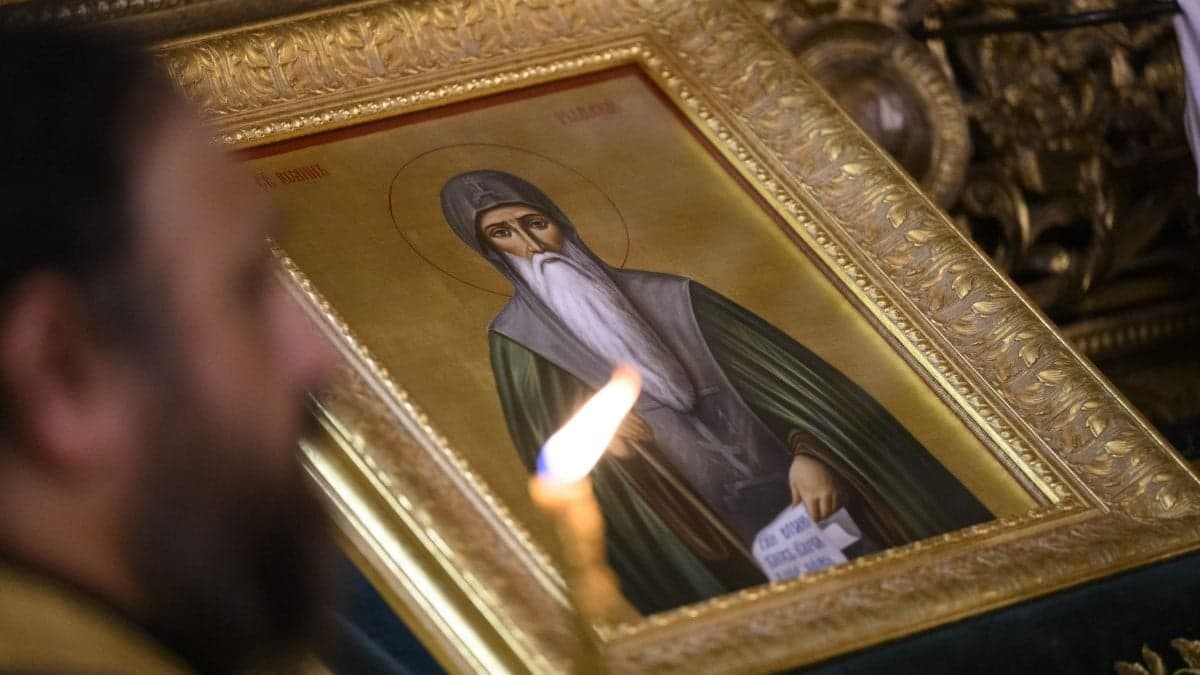
The Holy Synod of the Romanian Orthodox Church has added the Icon of the Mother of God “The Burning Bush” to the Church’s liturgical calendar, establishing 4 September as its annual feast day. The decision was adopted during the Synod’s meeting on 2 July.
The feast was set for 4 September because the Church also commemorates the Holy Prophet Moses on that day, whose encounter with the Burning Bush on Mount Sinai inspired the iconographic theme.
The icon is preserved at St Anthimos Monastery in Bucharest. It was brought from Russia by a group of monks who withdrew to Mount Athos at the beginning of the twentieth century.
In 1929, the icon came into the possession of the future Hieroschemamonk Daniil Sandu Tudor, who later brought it to Antim Monastery.
Following his arrest in 1958, the icon was entrusted to St Petronius (Tănase) of Prodromos Skete on Mount Athos. He later gave it to Archimandrite Benedict Ghiuș, who bequeathed it in his will to St Sofian of Antim.
Miraculous events
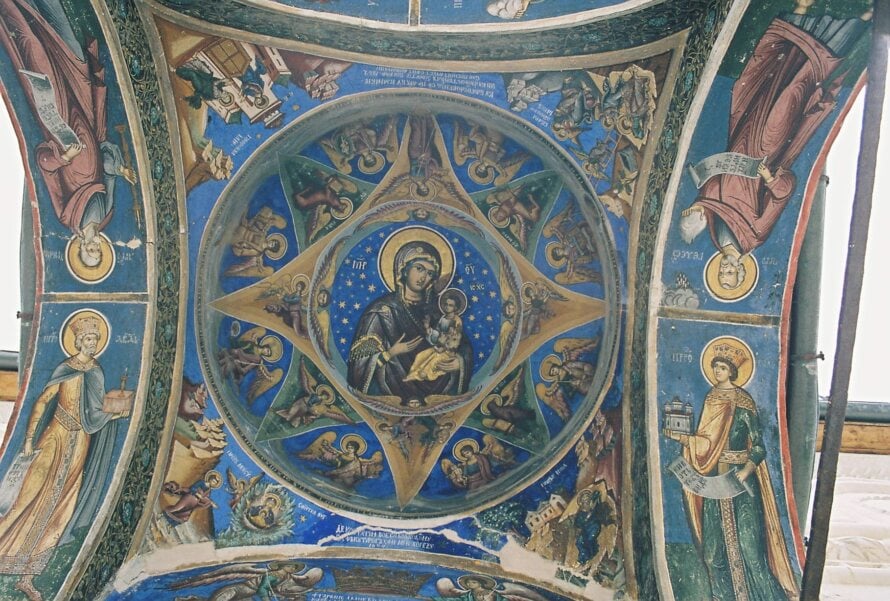
Archimandrite Antipa Burghelea of St Anthimos Monastery shared details with the Basilica News Agency about the icon’s history, miracles and symbolism.
“While still a layman, in 1941 Sandu Tudor worked as a supervisor at a technical school in Vălenii de Munte. Seeking to correct certain injustices, he incurred the anger of wrongdoers who learned where he slept and planned to shoot him through the window during the night. The icon of the Burning Bush was also in the room, however, and one evening Sandu Tudor unexpectedly felt inspired to move his bed directly beneath the icon.”
“Three men fired a total of sixteen bullets through the window towards the place where they believed the bed to be, yet he escaped unharmed through the miraculous protection of the Mother of God,” the archimandrite explained.
The iconographic type
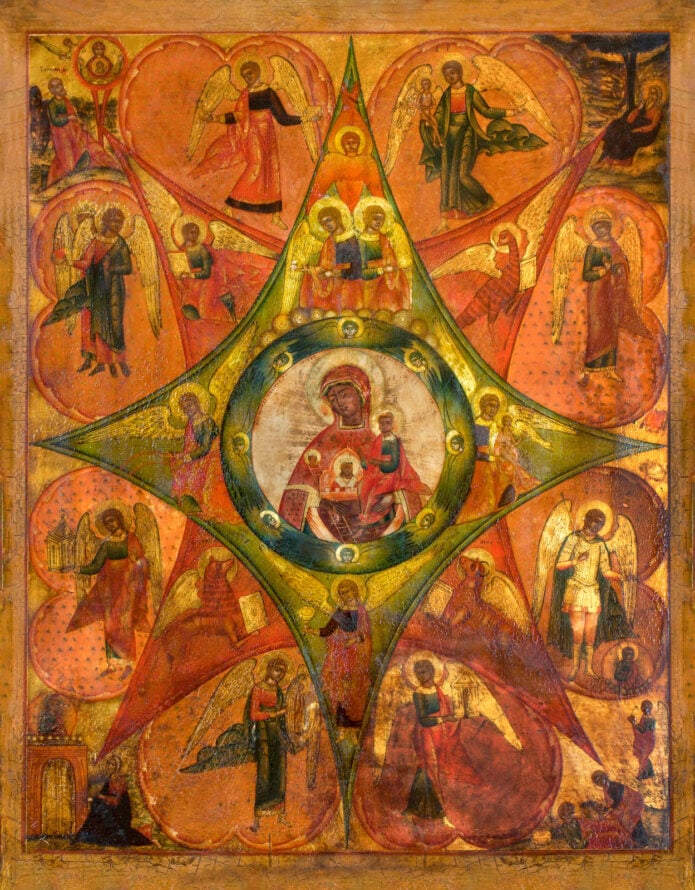
According to Fr Antipa, the icon’s imagery is inspired by the biblical account of the Prophet Moses, who, while at the foot of Mount Sinai, saw a bush engulfed in flames that was not consumed.
“The most prominent feature of the icon is an eight-pointed star, at the centre of which is the image of the Virgin Mary, surrounded by angels. In the four corners are depicted Old Testament Marian prefigurations: Moses before the Burning Bush (upper left), Ezekiel before the Shut Gate (lower left), Jacob’s Ladder (lower right), and the Tree of Jesse (upper right).”
Over the centuries, the icon has been regarded as offering protection against fires and other natural disasters.
“The central theme of the icon is, on the one hand, the veneration of the Mother of God and, on the other, the divinity of Christ. The angels bearing the forces of nature show that they govern these elements by God’s command and according to His will, which may direct them either for blessing or for chastisement.”
Archimandrite Antipa concluded:
“The central message of the icon is that the whole of the visible and invisible creation is subject to its Creator, as well as to the Mother of God, who has also received from God the ability to intervene in governing these natural forces for the benefit of humanity.”
The icon’s symbolism
Following the establishment of the Burning Bush hesychast movement at Antim Monastery, the icon became closely associated with prayer.
“Just as the bush burned without being consumed, so human beings are called to cultivate within themselves the prayer of fire, while not necessarily withdrawing from the world or from their daily responsibilities. The icon, therefore, became a symbol of urban or communal hesychasm, calling monks, clergy and laypeople alike to interior prayer, to remain in the world without being consumed by it, and to embrace witness, dialogue and a committed Christian life.”
Hieroschemamonk Daniil Sandu Tudor dedicated an Akathist Hymn to the icon, expressing through its verses humanity’s longing for God.
Photo: Basilica.ro