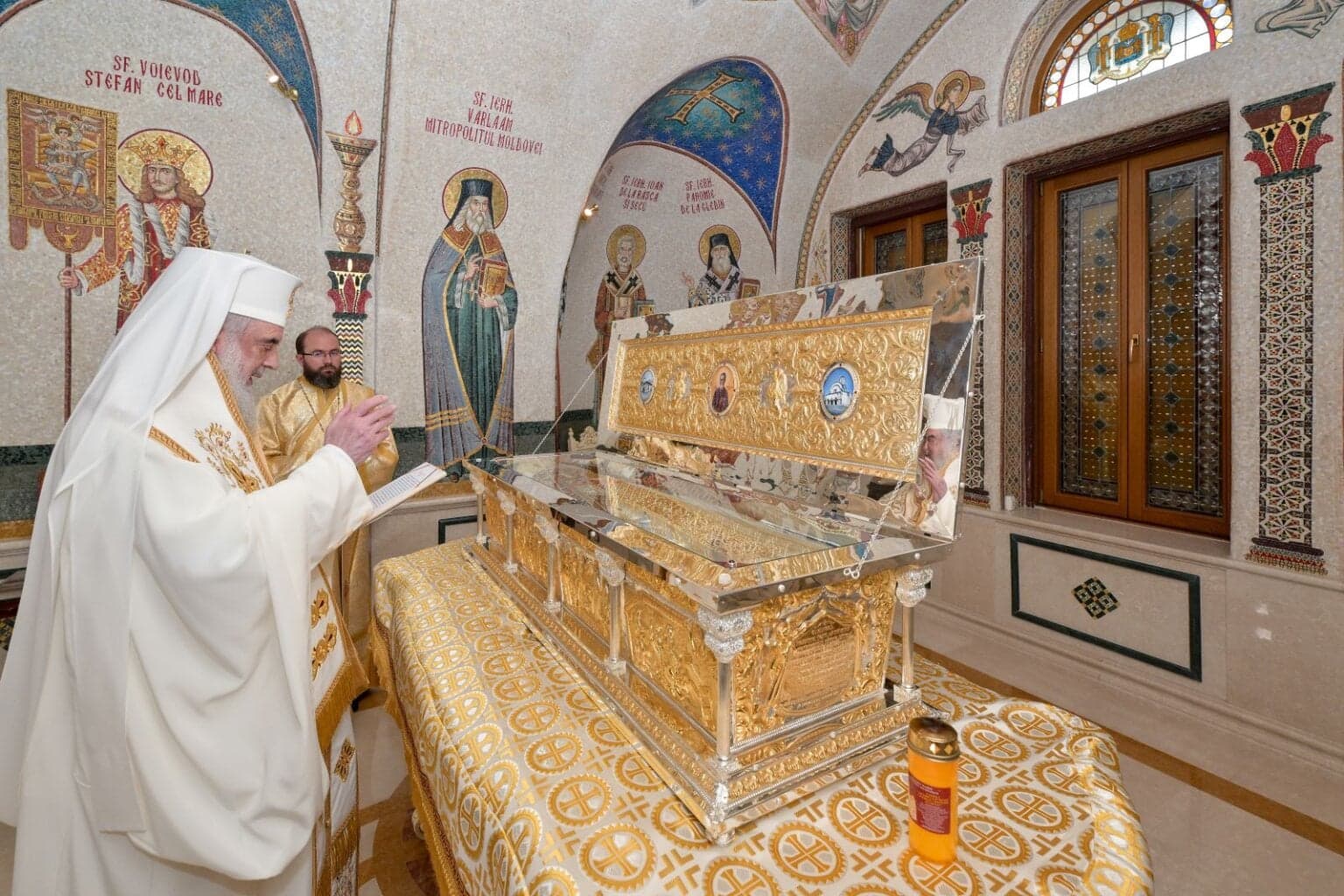
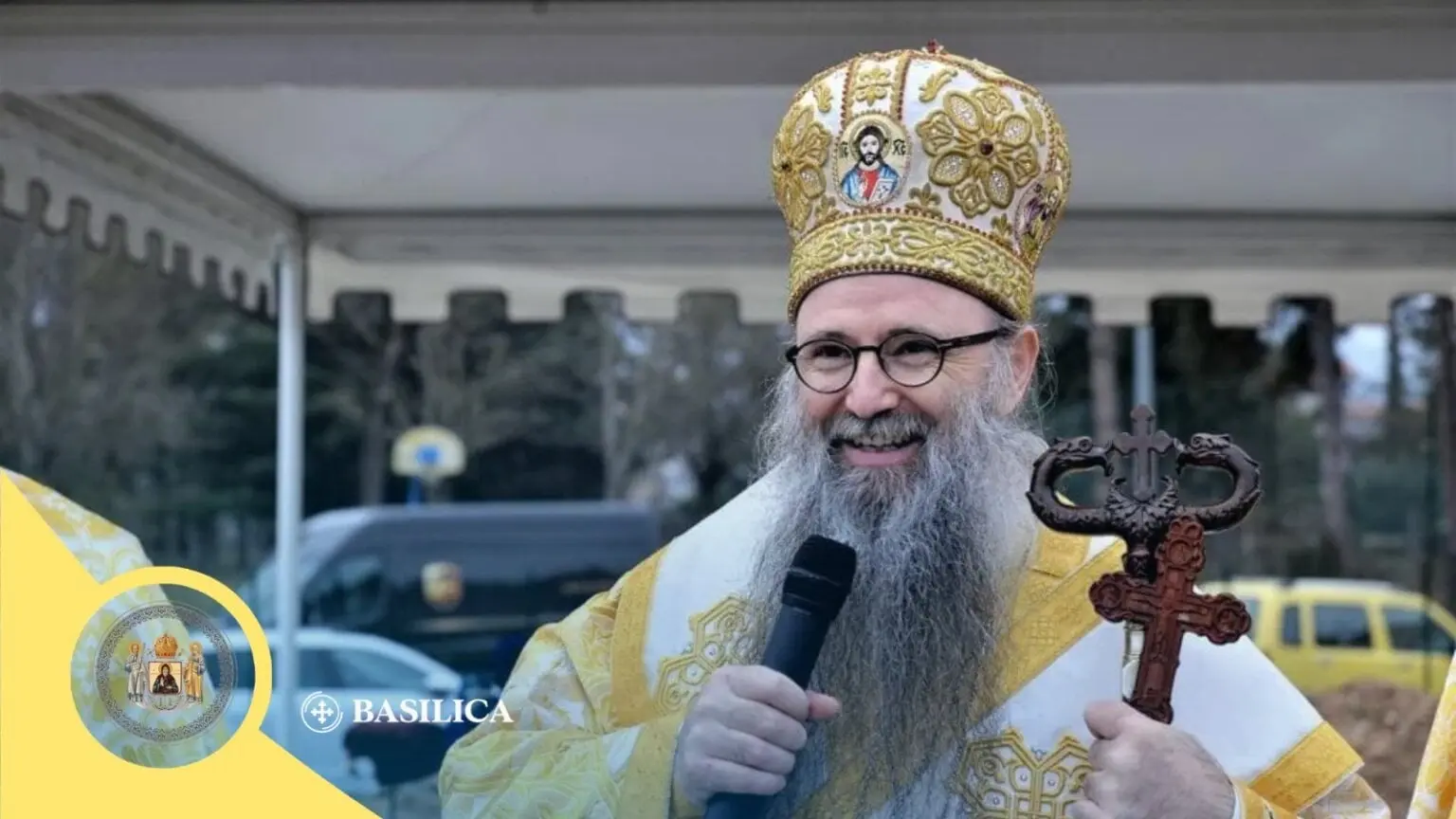
Venerable Evloghia Țârlea is, for the nuns of this monastery and for nuns throughout the Orthodox Church—especially within the Romanian Orthodox Church—“an example of service,” Assistant Bishop Timotei of Prahova said last Thursday as the relics of St Eulogia were exhumed at Samurcășești-Ciorogârla Monastery in Ilfov County.
The saint, canonised last year by the Holy Synod of the Romanian Orthodox Church, was an example “in word, in deed, and in her final witness, since, following a brutal beating, her death was caused,” Assistant Bishop Timotei recalled.
“Samurcășești-Ciorogârla Monastery now receives, in one of its churches and then, with God’s help, in the main church—after the other rites have been fulfilled—the relics of a confessor nun, of a person who devoted herself to serving her neighbour, of someone who prayed much, of a nun who, as all sources say, was truly a bride of Christ,” the hierarch said.

“We pray to St Eulogia and to all the striving nuns of this place, whose deeds have remained unknown and who, perhaps one day, will also be brought into the light, to help us follow this beautiful journey of their lives, which they fulfilled with abundant fruit and with blessing from Christ the Lord, the Saviour of our souls,” he added.
Written testimonies are of crucial importance
The bishop particularly stressed the importance of recording good deeds by those who lived around the saints.

“We see how important it is to record certain events, even those which, at first glance, seem insignificant,” the assistant bishop said.
“There are a few cases—some individuals—who saved such heroes of the faith from being forgotten. And in our case, the one to whom we owe thanks is Father Nicodim Bujor.”
Protosyncellys Nicodim Bujor of Cernica Monastery recorded, over several pages, the miracles performed by Mother Eulogia for others and for himself.
Commemorative year of holy women

Those attending the exhumation included Archimandrite Nectarie Șofelea, Exarch of Monasteries of the Archdiocese of Bucharest; Protosyncellus Simeon Cuțui, cultural exarch of the archdiocese; Fr Ștefan Zară, diocesan adviser in the Culture and Media Communications Department; Răzvan Mihai Clipici, patriarchal adviser in the Culture, Painting and Restoration Department of the Patriarchal Administration; as well as the nuns and spiritual fathers of the Samurcășești-Ciorogârla community.
Last year, the Holy Synod of the Romanian Orthodox Church announced the canonisation of 16 holy women—nuns, wives and mothers (martyrs, monastics, wives of rulers, mothers of saints and confessors).
Their canonisation will be proclaimed this year, designated by the Romanian Patriarchate as the Commemorative Year of Holy Women in the Church calendar (myrrh-bearing women, martyrs, monastics, wives and mothers).
The life of St Eulogia of Samurcășești

The Venerable Martyr Eulogia of Samurcășești (December 19) was born on 24 November 1908 in Nimfeo, within a historic Vlach community in northern Greece, receiving the baptismal name Ecaterina.
She soon became motherless and endured many hardships at the hands of her stepmother, who one day pushed her off a haystack. The child fractured her spine and was left disabled for nine years.
Sent to relatives in Bucharest, she went through difficult years of suffering and illness. In 1927, when she fell ill with peritonitis and all her relatives believed she would die, the Mother of God and St Catherine the Great Martyr appeared to her and healed her.
Later, she responded to the Saviour’s calling, heard in a dream, and began missionary work, preaching the faith. In 1939, she entered the monastic community at Samurcășești, where she helped restore the monastery after the 1940 earthquake.
She continued her preaching during the persecution of the atheistic communist regime, which ultimately led to her martyrdom. Beaten savagely for preaching goodness in a village in Călărași County, she fell asleep in the Lord at her monastery on 19 December 1949.
See also:
- In pictures: Exhumation of the relics of the Holy Venerable Martyr Eulogia of Samurcășești Monastery
Photo: Basilica.ro / Raluca Ene