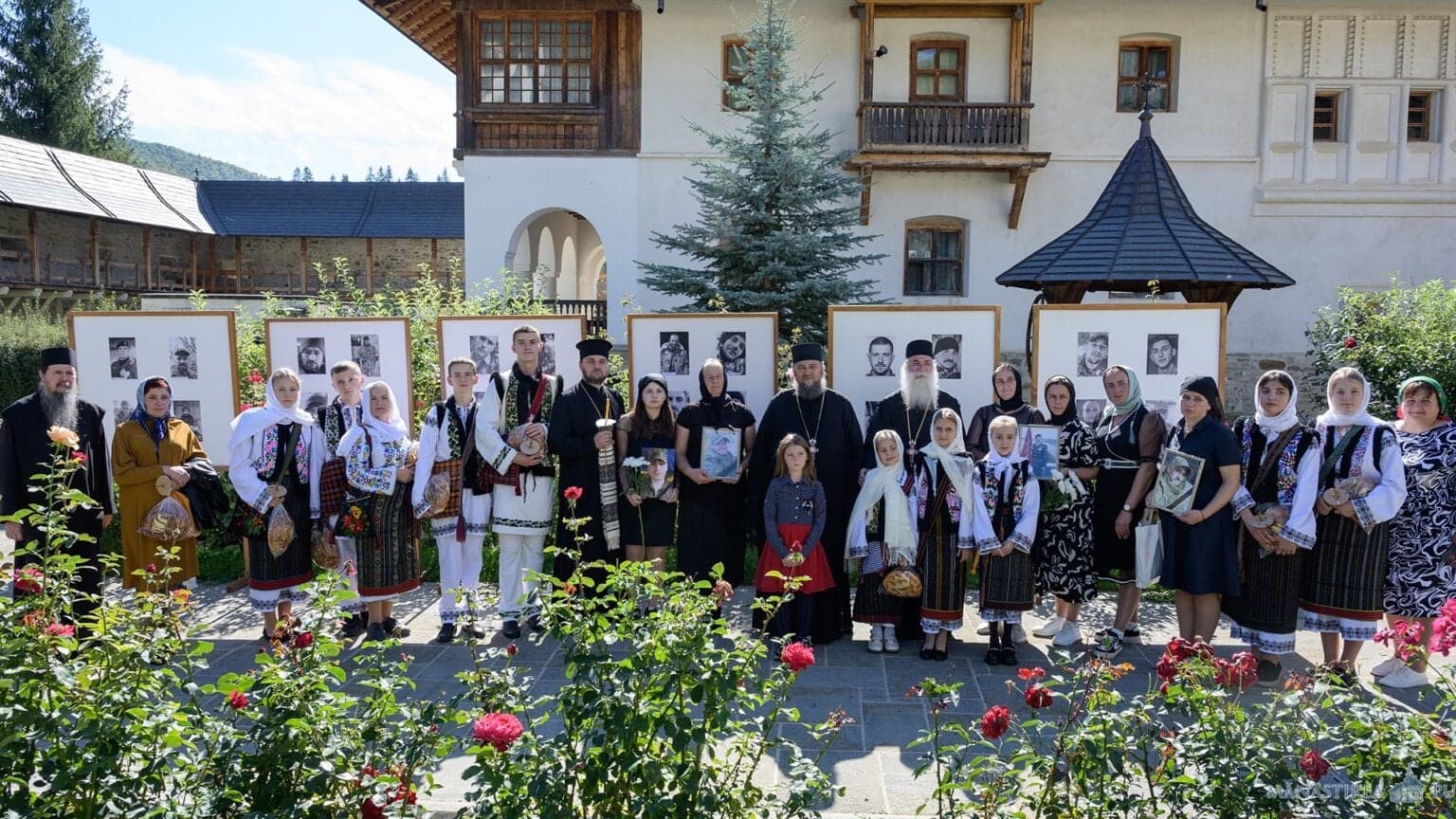
Several Romanian associations from the Chernivtsi region, Ukraine, organised last Saturday a commemoration service at Putna Monastery, Romania, in memory of more than 130 ethnic Romanians who died in the Ukraine war.
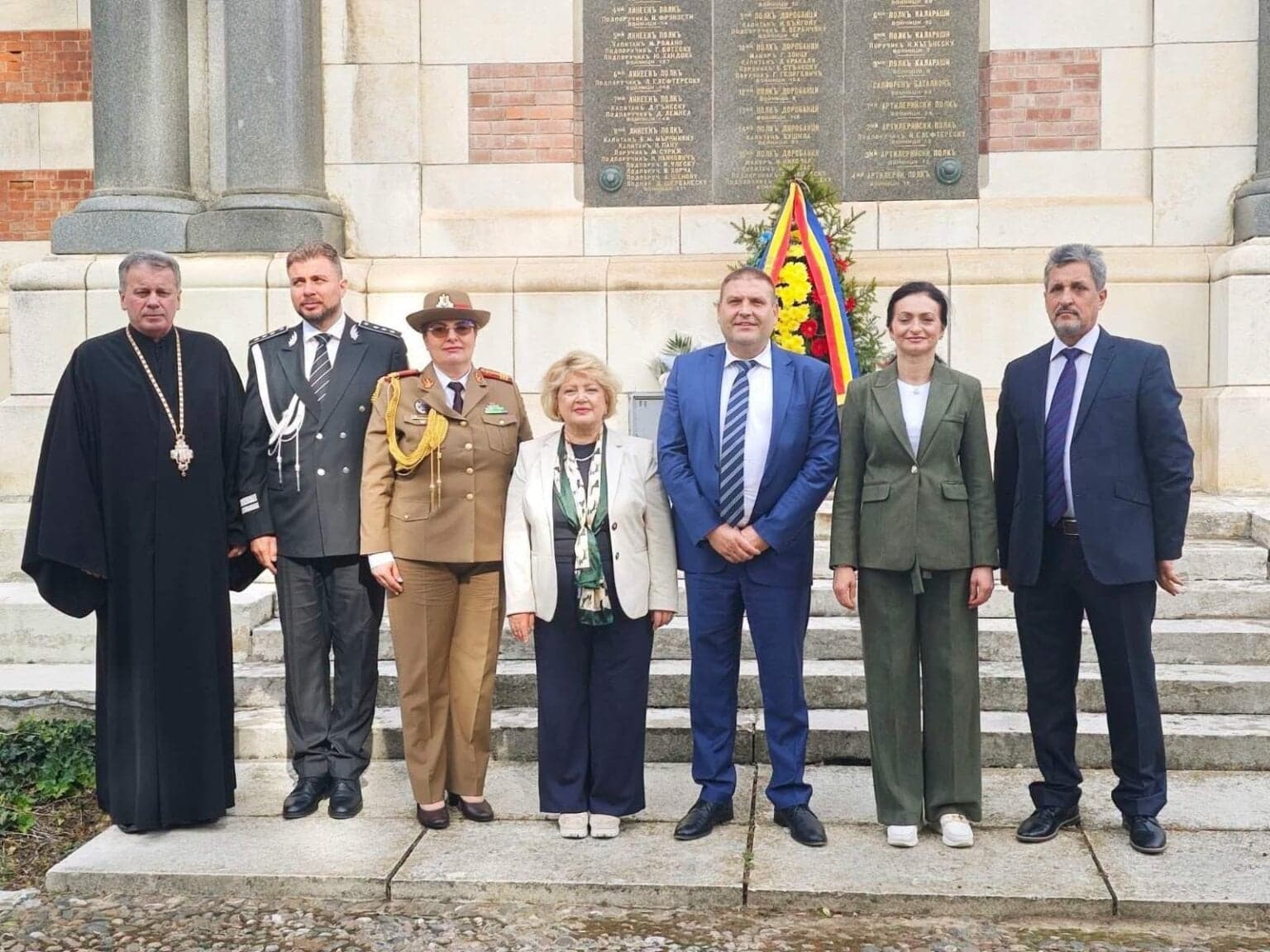
Irina-Loredana Stănculescu, General Consul of Romania in Chernivtsi, priests and members of the associations of Romanians from Ukraine, as well as the families of the deceased attended the event.
The photos of the departed were put on panels in the monastery precincts, while relatives held in their arms, throughout the service, framed pictures of the loved ones that they lost in the war.
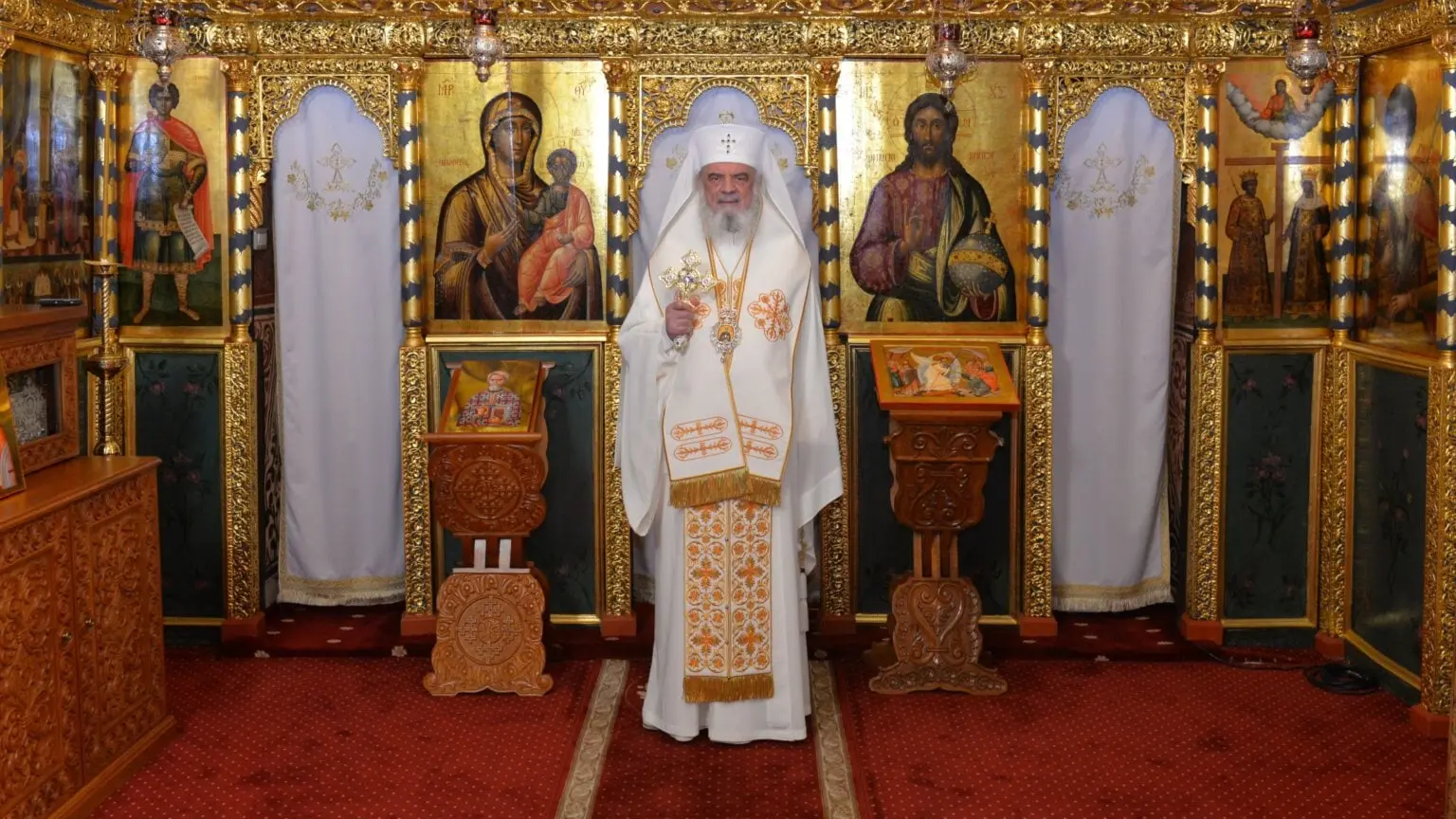
At the end, Archim. Melchisedec Velnic, the abbot, spoke about the importance of commemorating the departed, about the hardships and suffering of the Romanians from Northern Bukovina and about their relationship with the Putna Monastery.
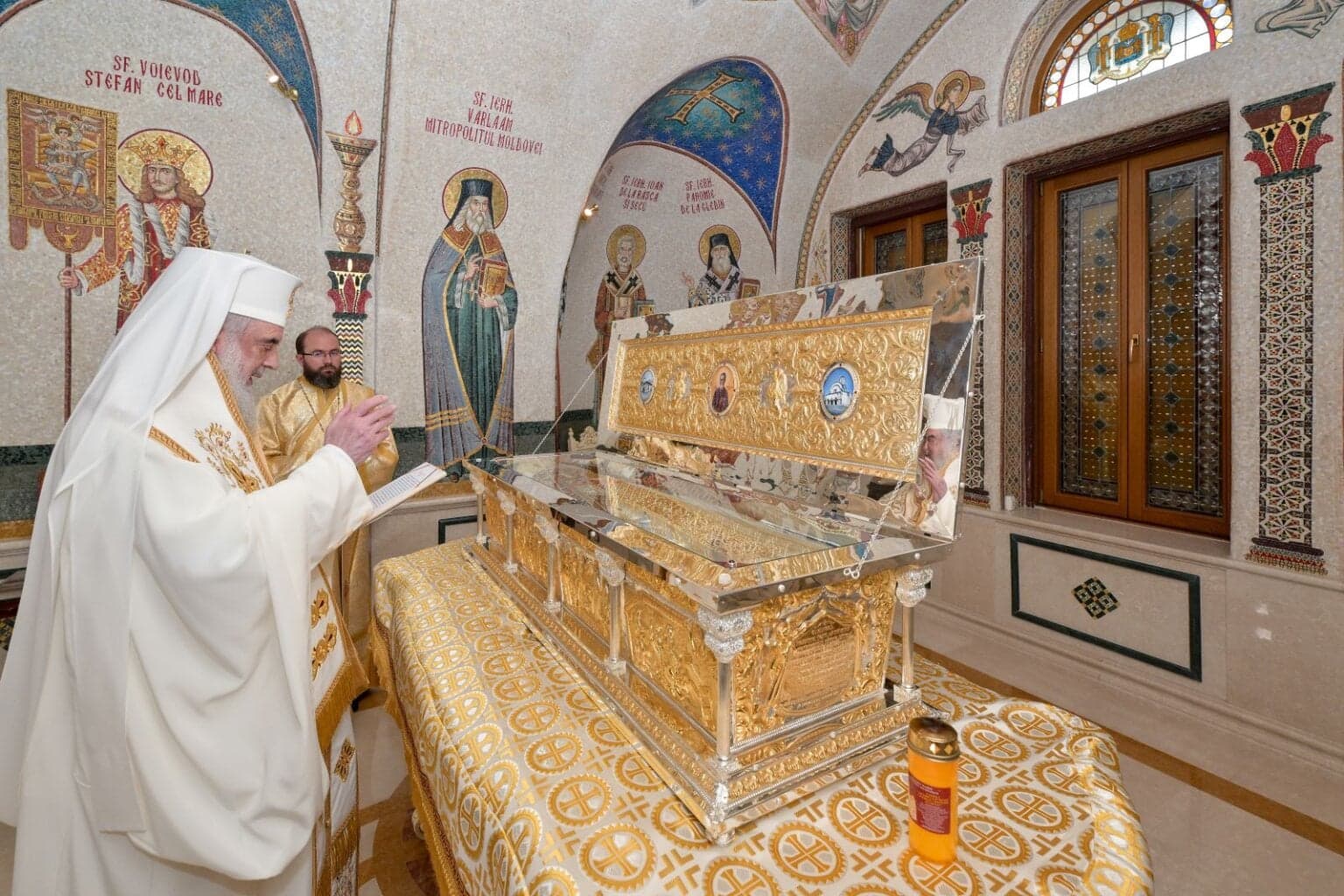
The monastery is the resting place of Holy Prince Stephen the Great. At his time, Romanians from Bessarabia (today’s Moldova) and Bukovina (in today’s Ukraine) were part of the Principality of Moldavia, which he ruled for many decades.
Romanians on the Cross

“The Bukovinians’ cross has been heavy since 1774 (when the region was occupied by the Austrian Empire – ed. note). That is why Doxachi Hurmuzachi wrote in his Testament, published in the Romanian Telegraph newspaper in 1857, that he was leaving three legacies to his seven children, duties for whom they will answer before God, before the people and before their descendants. These three legacies were: the Fatherland, the Language and the Church,” said the archimandrite.
“St. Stephen the Great knew what it meant to care for the souls of the dead. He placed headstones on the graves of seven of his ancestors in the church of St. Nicholas in Rădăuți. He also built Războieni Monastery on the bones of those who died in battle in that place.”
“Because we love our departed, we commemorate them and so we bring them closer to Christ. We pray for them and give alms, as St. John Chrysostom exhorts us,” explained the abbot of Putna.

“A man from Northern Bukovina asked one of our monks a few years ago: My grandparents were born in the Austrian Empire; my parents were born in Greater Romania; I was born in the Soviet Union; my children were born in Ukraine; and my grandchildren are now born in Italy or other places; so what are we? There is only one answer: they are Romanians. Romanians on the cross”, said Archim. Melchisedec Velnic.
“Nevertheless, no matter where we are, God is above us. A text entitled The Testament of Stephen the Great, written in the 18th century, puts these words into the mind of the voivode: Lord, Thou alone knowth what was in my heart. And he goes on to say that neither heresies nor the fire of youth could have weakened his heart. What heart is Holy Prince Stephen speaking about? Not about the heart of flesh.”
Christ in their hearts
“From a spiritual point of view, man’s heart is our deepest humanity, the centre of our lives. There, in the depth of our life and existence, lies Christ, Whom we received at our Baptism. He took shape inside us,” added the abbot of the Putna Monastery.
“We hope that those we commemorate today followed their hearts, where Christ lies. Being with Christ in eternity, in the Kingdom of the Holy Trinity – this is man’s purpose on earth. It is everyone’s purpose.”

“It is our holy and beautiful duty to commemorate those who have departed. Feeling their grief and the grief of their parents, wives, children, relatives, friends, we pray for peace and for a good order of things in the world. Let us pray that God may grant us humility. For in the soul where humility dwells, Christ dwells as well. And where Christ is, there is peace,” Archim. Melchisedec Velnic said.
Prayer transcends boundaries
Father Vasile Covalciuc, Dean of Storojineț, in Northern Bukovina (Ukraine), thanked the monastery for the Commemoration service and for its activity in support of the refugees from Ukraine.
Irina-Loredana Stănculescu, General Consul of Romania in Chernivtsi, appreciated the initiative and all the support granted by the Archdiocese of Suceava și Rădăuți and by the monastery.

“We appreciate the initiative of Romanian societies Golgota, Mihai Eminescu, and Valea Prutului and of the Bucpress Media Centre to organize the commemoration of the Romanian men killed in the Russian-Ukrainian war and we extend our gratitude to the grieving families,” the Romanian diplomat said.
„By supporting the Romanian community in Chernivtsi, the Archdiocese of Suceava and Rădăuți and Putna Monastery demonstrate their solidarity with the entire society affected by this war and with the sorrows of our ethnic group.”
„My condolences to the families of those who have been commemorated today. May God comfort your souls and help you carry on the memory of these brave men!” concluded General Consulul Irina-Loredana Stănculescu.

“Today’s Memorial service is proof that grief knows no borders. And the grieving families who have lost their children, fathers, brothers, husbands, cannot be left alone and forgotten,” said Nicolae Șapcă, president of the Society of Romanian Writers in Chernivtsi, Ukraine, one of the organizers.
“We try to be there for them, to comfort them as best we can, but we don’t know if we will ever understand, if we will ever feel the pain in their hearts.”
“Today’s service is proof that prayer knows no boundaries. And if today, here, at Putna Monastery, prayers were raised for the fallen soldiers in the Ukraine war, this is proof of what I have said”, Nicolae Șapcă added.

“We come to Putna to rejoice, but we also come when we are sad. And behold now the day when we commemorate the children who gave their lives so that we can be together today,” said the writer.
American officials estimated last year that 70,000 Ukrainians died in the first 18 months of the Ukraine war. The Romanian-language media from Chernivtsi announces almost daily more and more names of recruits from the area who have lost their lives in the war. Many of them are Romanian.


Photo credit: Putna Monastery