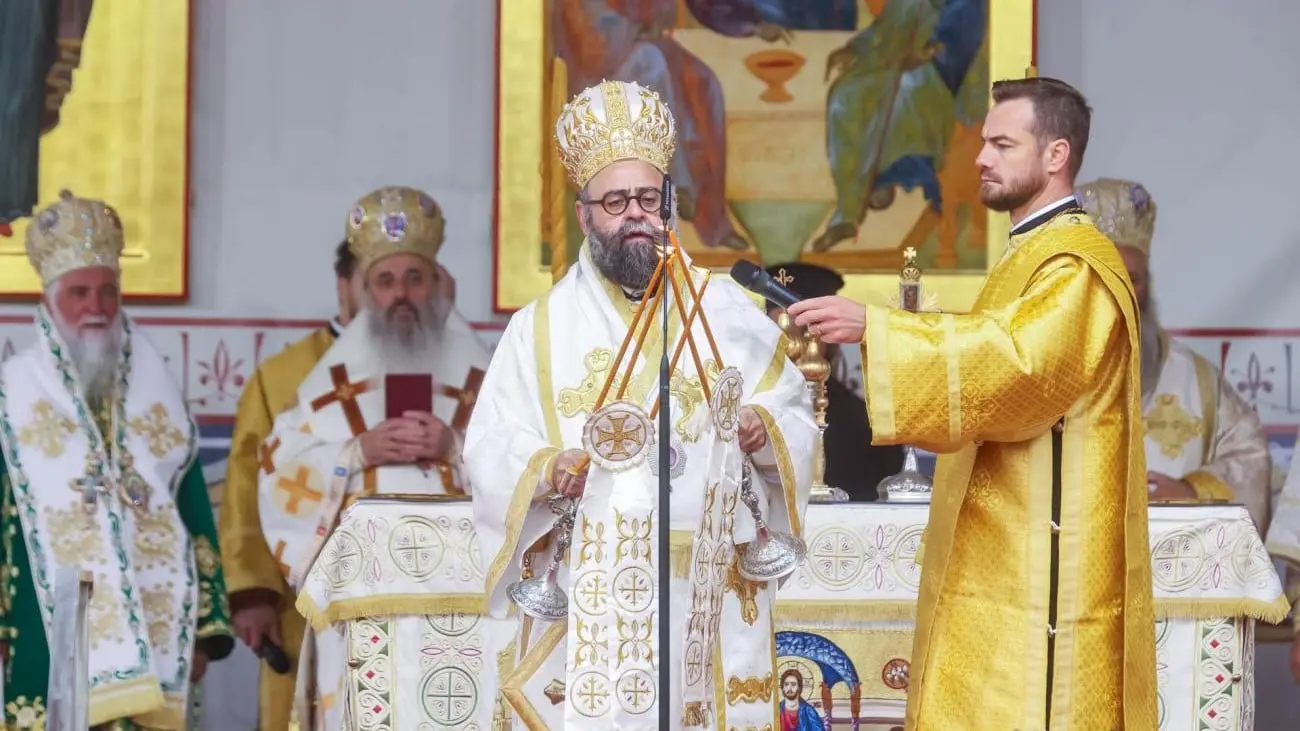
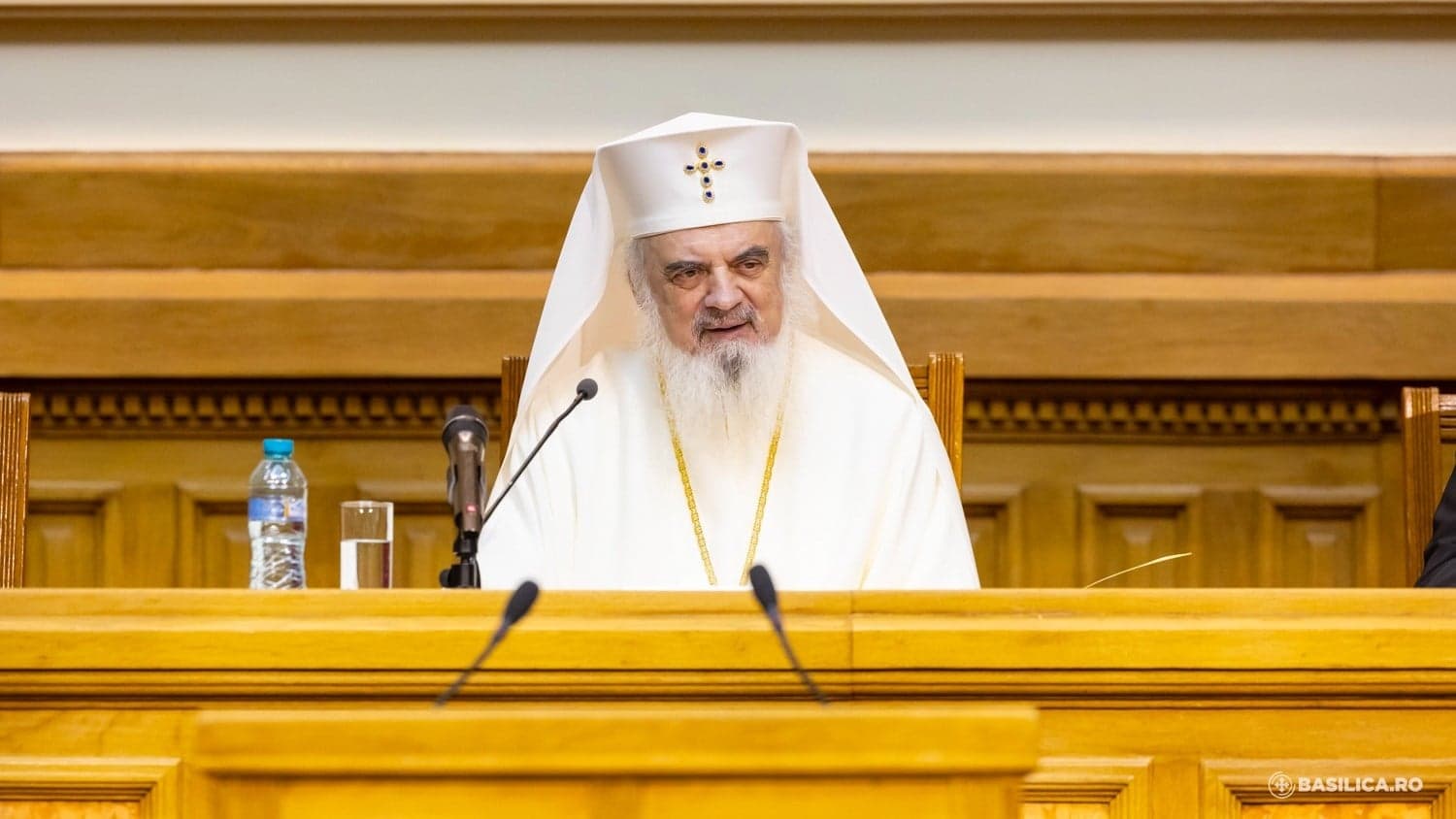
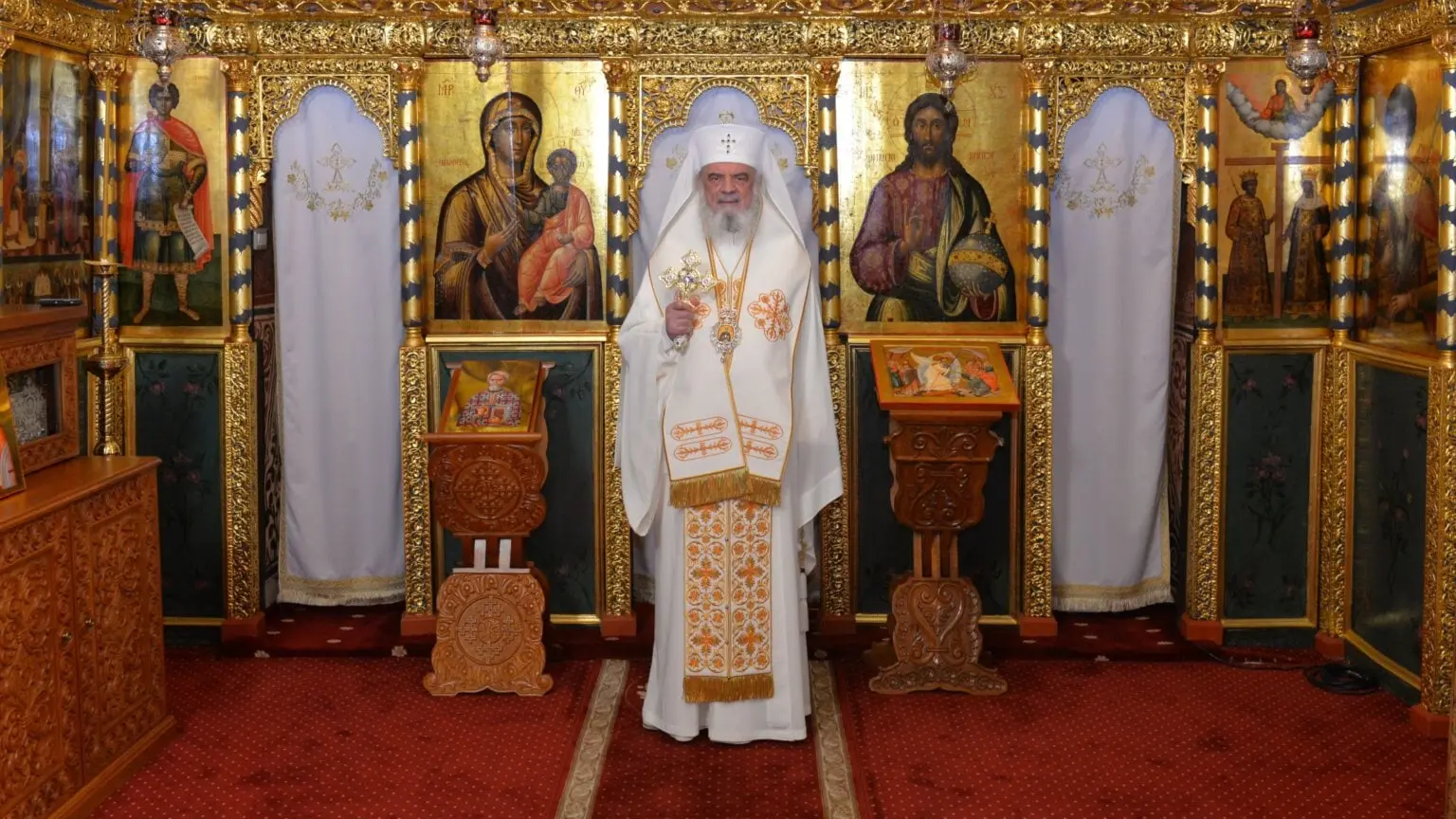
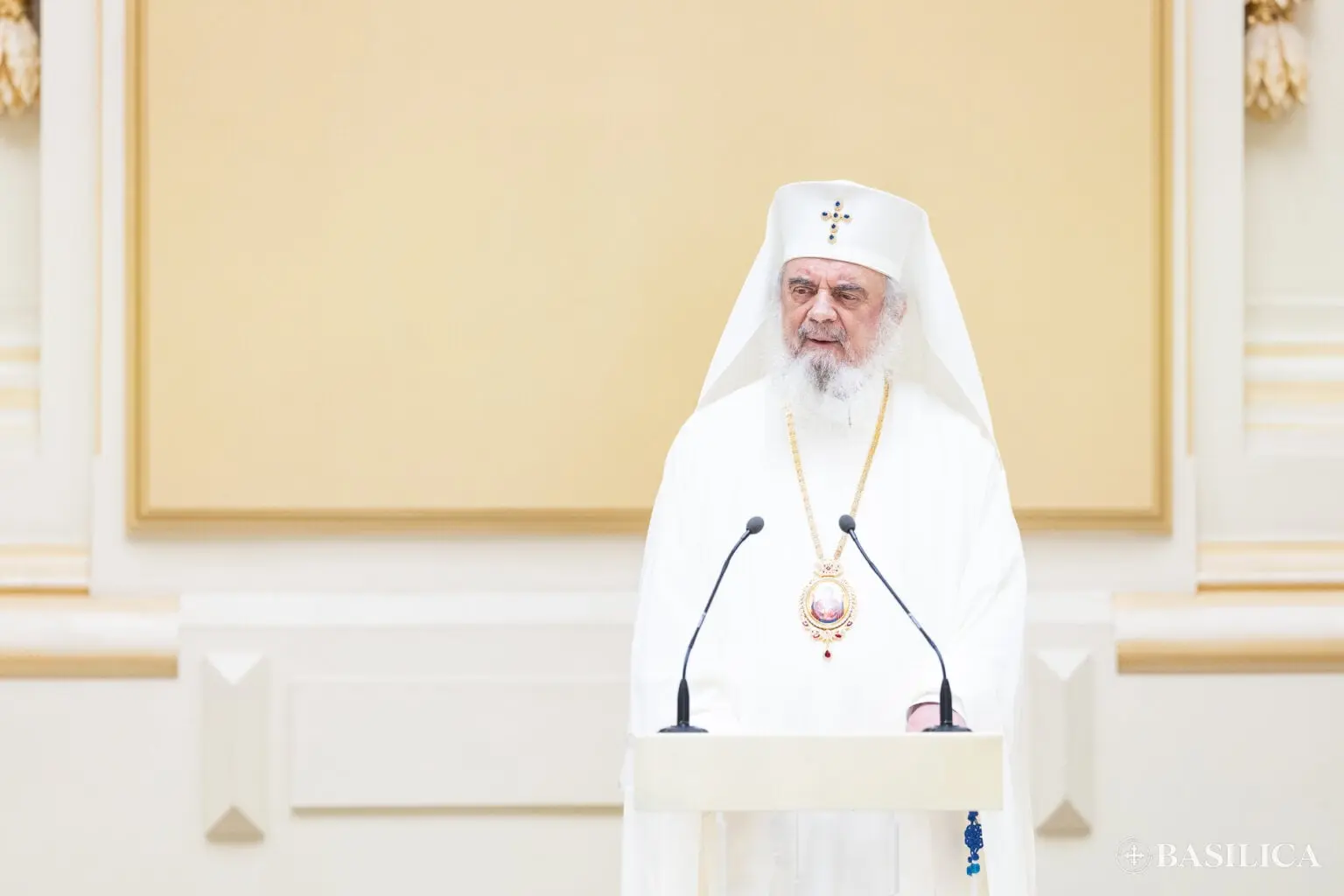
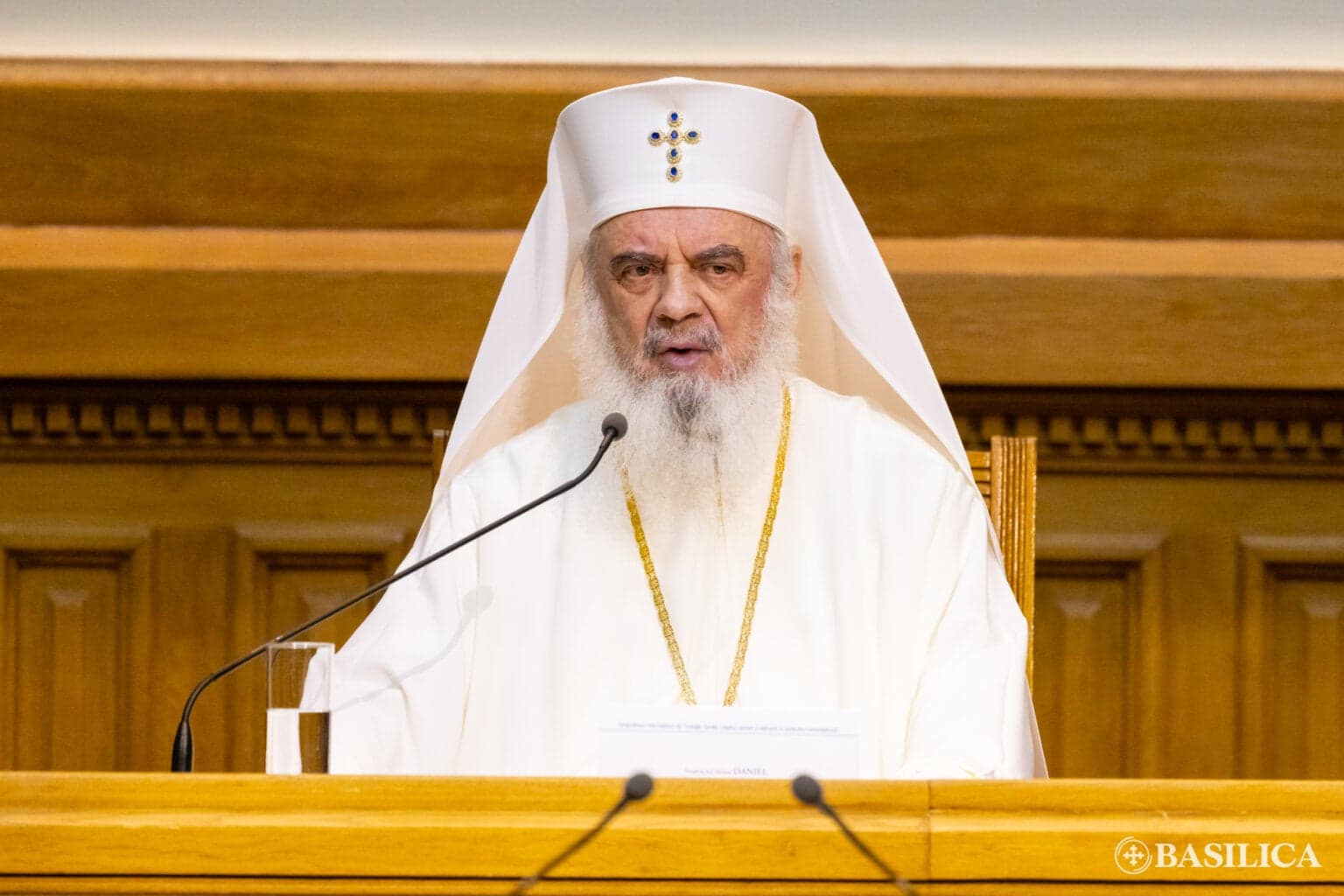
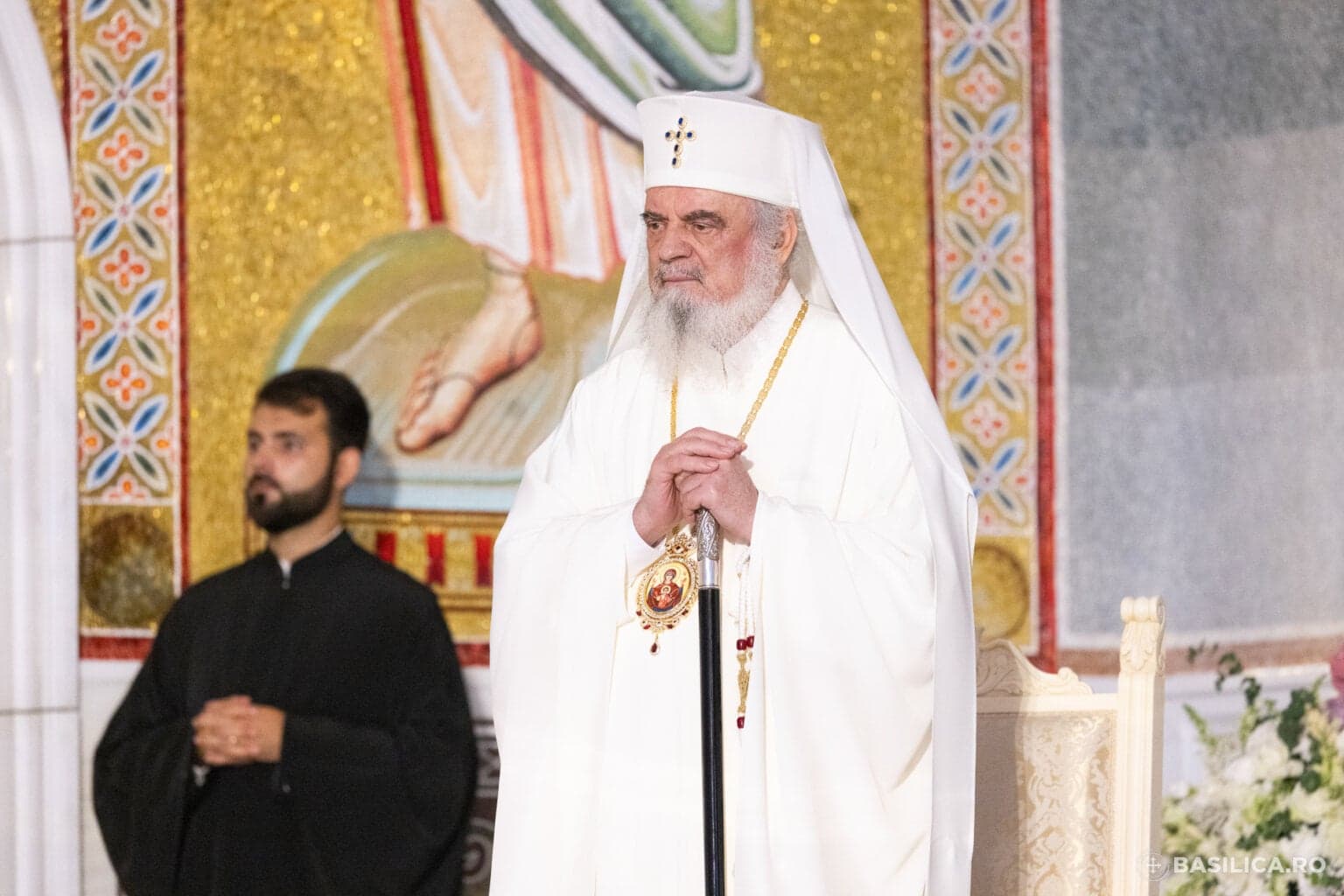
His Beatitude Patriarch Daniel of the Romanian Orthodox Church on Monday called for renewed pastoral support for the Christian family, warning that contemporary society faces profound spiritual, demographic, and moral crises that threaten family life and the transmission of faith between generations.
The Patriarch delivered the message at the opening of the spring pastoral and missionary conference of the clergy of the Archdiocese of Bucharest, held at the Patriarchal Palace. The address forms part of the Romanian Patriarchate’s broader programme for 2026, proclaimed as the Solemn Year of the Pastoral Care of the Christian Family and the Commemorative Year of Holy Women in the Church calendar.
In his speech, Patriarch Daniel described the Christian family as the “household Church” and the first school of faith, prayer and generous love, emphasising the responsibility of parents, clergy and parishes to strengthen communion within families and counter the effects of secularisation, individualism and digital isolation.
The Patriarch also addressed declining birth rates, the fragmentation of intergenerational relationships, the influence of technology on children’s education and the weakening of marital stability, urging the Church to intensify pastoral counselling, family support programmes and religious education initiatives throughout society.
Please read Patriarch Daniel’s message below.
The Christian Family – The Church at Home and the First School of Faith and Generous Love
The Holy Synod of the Romanian Orthodox Church proclaimed 2026 as the Solemn Year of the Pastoral Care of the Christian Family and the Commemorative Year of Holy Women in the Calendar (myrrh-bearers, martyrs, monastics, wives, and mothers). This decision represents a profound recognition of the fundamental role that the family and women play in forming and preserving Christian identity, as the principal factors in transmitting the faith from one generation to another.
In the present age, marked by spiritual crisis and rapid social transformations, the institution of the family faces multiple challenges. Therefore, it is essential that we rediscover and place greater value on the biblical and patristic Tradition of the Orthodox Church for an effective pastoral ministry to the Christian family.
In this regard, the year 2026 invites us to a profound reflection on how holiness may blossom within our homes, transforming every believer’s home into a space of faith and generous love. The Church has the mission of supporting and strengthening the Christian family, offering pastoral guidance and spiritual support for all stages of family life: the birth and upbringing of children, the preparation of young people for marriage, the Christian education of children, overcoming difficulties and strengthening the bonds of love among family members. The Christian family is not merely a social unit, but a small church (“For indeed a house is a little Church”), according to the words of Saint John Chrysostom, in which the Orthodox Christian faith is lived and transmitted in a living and direct manner.
Holy Scripture describes God’s relationship with humanity as one of intimacy, a marriage, and a family (cf. Ephesians 5:21–33). The Church is the place where, through the purifying and sanctifying work of the Holy Spirit upon the soul of the humble person, brotherly love in God the Son become Man and the fatherly love of God the Father are experienced — the Father whom our Lord Jesus Christ taught us to call: “Our Father, Who art in heaven” (Matthew 6:9). The Church is therefore the Family of the love for mankind of the Most Holy Trinity, and the Christian family has rightly been called, following the expression of Blessed Augustine, “the household Church (ecclesia domestica).”
Considering that the social transformations of our age have led to the transition from the traditional extended family, which included at least three generations, to the nuclear family, with the risk of a certain isolation from the wisdom of previous generations, the Church is called to rediscover and promote the bonds between children, parents and grandparents, as well as enduring family values. We must understand that true parental authority is exercised not through coercion, but through the power of living example and respect for the uniqueness of each child, who is a person created in the image of God (cf. Genesis 1:26–27).
The Christian family finds models of holy living in numerous holy families from the history of the Orthodox Church. For example, in the fourth century, the family of Saint Basil the Great offers us a remarkable example of how holiness begets holiness: the parents Basil and Emilia, the grandmother Macrina the Elder and five of their children — Saint Basil the Great, Saint Gregory of Nyssa, Saint Peter of Sebaste, Saint Naucratius and Saint Macrina the Younger — all became saints in the Church calendar, demonstrating that Christian education and the living of evangelical virtues within the family can bear fruits of holiness for all generations.
Likewise, later, in the fourteenth century, the family of Saint Gregory Palamas, in which the parents Constantine and Kalloni and their five children — Gregory, Theodosius, Macarius, Epicharis and Theodota — all became saints in the Church calendar, shows us that holiness can flourish both in Christian families and in monastic life through humble love for God and merciful love for one’s neighbour. In these concrete models of Christian life, the family becomes the place where Christian virtues are learned and practised: fervent prayer, humble and merciful love, patience, forgiveness and assistance for those in need.
Education in this “household Church” must be marked by profound discernment. We must understand that children are not the property of their parents, but unique and unrepeatable persons, given by God for growth and education. Much is said about the duty of parents to educate, but the need for parents and elders to self-educate within their communion with children is often forgotten.
Christ calls us to become “as little children” (cf. Matthew 18:3) in order to enter the Kingdom, which means that parents have the privilege of rediscovering innocence by living alongside their children. The character of children is formed not so much through intellectual activities as through the life and living example of their parents.
True parental authority is not exercised through coercion or exaggerated protectionism, which often undermines the maturation of the young, but through a harmonious way of life that convinces and guides the soul toward responsible freedom and merciful or generous love (St. Paisios of Mount Athos, With pain and love for contemporary man).
Reflecting on the current state of the family, we must realistically identify the principal challenges and the answers our faith offers:
The demographic crisis and uncertainty about the future
The decline in births is often attributed to economic difficulties, but at its root lies the absence of generous love and trust in God’s help. The fundamental value of motherhood and fruitfulness is emphasised by Saint John Chrysostom, who observes that for the fulfilment of a woman, the gift of bearing and raising children is irreplaceable: “For a woman, there is no greater misfortune than the absence of children; even if she were to bathe in riches, the pain caused by this wound could never be removed from her soul.” (St. John Chrysostom, Homilies on Hannah).
Financial instability, a lack of housing, or career ambitions are cited as the principal reasons for refusing to have children. Yet a deeper look reveals that material scarcity is only a secondary reason. At the root of this crisis lies a spiritual mutation: a crisis of faith expressed through fear of an uncertain future, individual self-sufficiency and, above all, the absence of generous or sacrificial love.
Secularised man tends to conceptualise the child not as a gift, but as a responsibility threatening selfish personal comfort and material security, because man no longer relies on God’s help. Overcoming the demographic crisis can only occur when society rediscovers that generous love does not diminish man but fulfils him, and that the birth of children is the most human exercise of trust in God and in the triumph of life over selfish approaches to existence (Otto Pollak, The Outlook for the American Family).
In a world where success is measured by material comfort and immediate security, the Christian response restores the family to its authentic foundation: generous love and unconditional trust in divine providence.
Understanding that every child is a blessing of eternal value, the Christian family becomes a space for strengthening generous love according to the model of intra-Trinitarian love: “that they may be one even as We are one” (John 17:22). Husband and wife give themselves to one another, dedicate themselves together to the raising of children and ultimately entrust their whole lives to Christ, the Source of life and eternal joy. Only through this restoration of generous love can fear of insecurity be driven away and the demographic problem overcome.
The fragmentation of ties between generations
The accelerated transition from the extended family to the nuclear family represents one of the most acute structural crises of contemporary society. This mutation is not merely statistical, geographical or residential, but has profound psychological and spiritual implications.
The estrangement of young families from their place of origin has led to the self-isolation of parents and children, who are often deprived of the moral and emotional support once offered by grandparents. In their absence, the family nucleus becomes vulnerable to daily stress, economic anxieties, and the lack of guidance in the upbringing of young children, deprived of the climate of calm and patience that only the age of grandparents can provide (Pharos, Kofinas, Marriage).
Faced with this imbalance, the Church intervenes as a space of spiritual resistance and restoration of communion. She reminds society that the family is not a simple social contract or an isolated economic unit, but a “small Church,” a communion sanctified through Baptism, Marriage, and the Eucharist, in which generations are called to coexist in mutual, generous love.
The Church cultivates spiritual and social bridges between generations, transforming the parish into an extended spiritual family in which lonely elderly people rediscover their dignity and respect, while young people are loved and encouraged to become active in the community. Old age is not viewed, through the lens of modern utilitarianism, as a social burden; rather, the wisdom and prayer of grandparents are revalued as a necessary source of spiritual maturity and kindness, an essential support in a world marked by instability and moral relativism.
The impact of technology and mass media on education
In today’s technocentric society, we are witnessing a profound mutation in the pedagogical act: the digital environment (television, mobile phones, the internet, social networks, and artificial intelligence) has ceased to be merely a tool for information or entertainment and has become a veritable “teacher at home.” This “digital educator” acts subtly, continuously and persuasively, often surpassing the moral and formative authority of both school and family (see Michel Desmurget, The Digital Cretin Factory).
The great problem lies not only in the enormous volume of information to which children have access, but in the fact that this flow escapes almost entirely parental guidance. The algorithms of online platforms are designed to capture attention through hyperstimulation, often promoting behavioural models based on violence, individualism and moral relativism. This early exposure distorts the child’s developing discernment, leading to fragmented attention, social isolation, and an inability to manage reality apart from a screen.
Our response must be an intensification of parental love in the work of raising children, offering them living models of life in communion instead of superficial distractions. The solution is not merely the installation of technological restrictions, but an increase in attention, care for children and parental love within the home.
Parents are called to offer quality time, not merely supervision; children need the loving presence of their parents in their lives, not just the financial comfort they provide.
The child, captive to the virtual world, often seeks refuge from loneliness or a lack of validation in real life; therefore, a warm family atmosphere based on dialogue and listening can reduce the allure of the screen. Children must see in their parents models of honesty, prayer, calmness and sincere love. If parents themselves are captives of screens, their educational discourse loses its power.
The distortion of authority and the temptation of supremacy within the family
In a culture marked by a desire to assert individual power, the family often risks transforming the relationship between husband and wife into a struggle for authority (Pharos, Kofinas). The Church, however, reaffirms that the family is not a space of competition, but an icon of perfect unity or communion, founded on the ontological equality of persons created in the image of God.
This equality does not imply a homogenising similarity that abolishes natural distinctions, but rather recognition of the special mission of each person; otherwise, the rejection of complementarity under the pretext of juridical or social equality leads to transforming the other into a superfluous entity and blocking communion.
Healing this temptation toward domination is achieved by moving from narcissistic individual power to altruistic service in Christ.
If the man is called “the head of the woman” (Ephesians 5:23), this position does not grant him privileges of domination over the woman, but imposes upon him the duty of sacrificial love according to the prototype of Christ, the Bridegroom of the Church, Who gave Himself as a sacrifice for the Church. Just as Christ sacrificed Himself for the Church, so must the man show generous and humble love toward his wife. Saint John Chrysostom emphasises that no relationship can endure if it is based on fear, because the wife must be valued as a free person, not as a slave to another’s will (St John Chrysostom, Homily on Ephesians).
Thus, true authority is exercised not through coercion, but through humble and generous love, transforming family hierarchy into a hierarchy of humility, in which the husband’s duty to love his wife is greater than the wife’s duty to submit to her husband.
The weakening of marital stability through narcissistic and possessive love
Today’s mentality, deeply permeated by consumerism and individualism, has transformed the very idea of love into a consumer good. Interpersonal relationships are often cultivated only so long as they provide immediate satisfaction, emotional comfort and fleeting pleasure.
When the first difficulties arise — inevitable in any shared life — individual selfishness prevails: the other person is no longer seen as a beloved person with whom one attains salvation through union with God, but as an obstacle to selfish self-realisation and self-affirmation.
This fragility of long-term commitment explains the explosion in divorce rates and the ease with which society tends to disregard the holy bonds of the Sacrament of Marriage, leaving deep traumas, especially in the souls of children. The Church teaches us that true love is mutual self-giving and service, the only force capable of transforming the family into a dwelling place of stability, peace and harmony even amid social turmoil.
The remedy against divorce and marital instability does not consist in the utopian search for a perfect relationship devoid of trials, but in changing our perspective on the meaning of love. The Sacrament of Marriage is not a simple religiously sanctioned partnership, but a common assumption of the logic of the Cross and Resurrection, the crucifixion of selfish love in order to cultivate altruistic love, according to the apostolic exhortation: “Husbands, love your wives, just as Christ also loved the Church and gave Himself for her” (Ephesians 5:25).
In conclusion, the Church is called today to intensify pastoral efforts in support of the Christian family, to develop counselling programmes and to provide spiritual and material assistance for families in difficulty, to provide adequate religious education for children, and to promote the enduring values of the Christian confessing family.
Through family counselling centres, marriage preparation programmes, social assistance initiatives, and the activities of women’s organisations, the Romanian Patriarchate will continue to offer concrete support for strengthening Christian families and for developing a profound awareness of the importance of the family and of women in the life of the Church and society.
We bless the opening of the spring pastoral-missionary conference of the clergy of the Archdiocese of Bucharest, praying to the Most Holy Trinity to pour forth His abundant gifts upon all ministers of the holy altars, strengthening them in their mission.
† Daniel
Patriarch of the Romanian Orthodox Church
Photo: Basilica.ro / Mircea Florescu