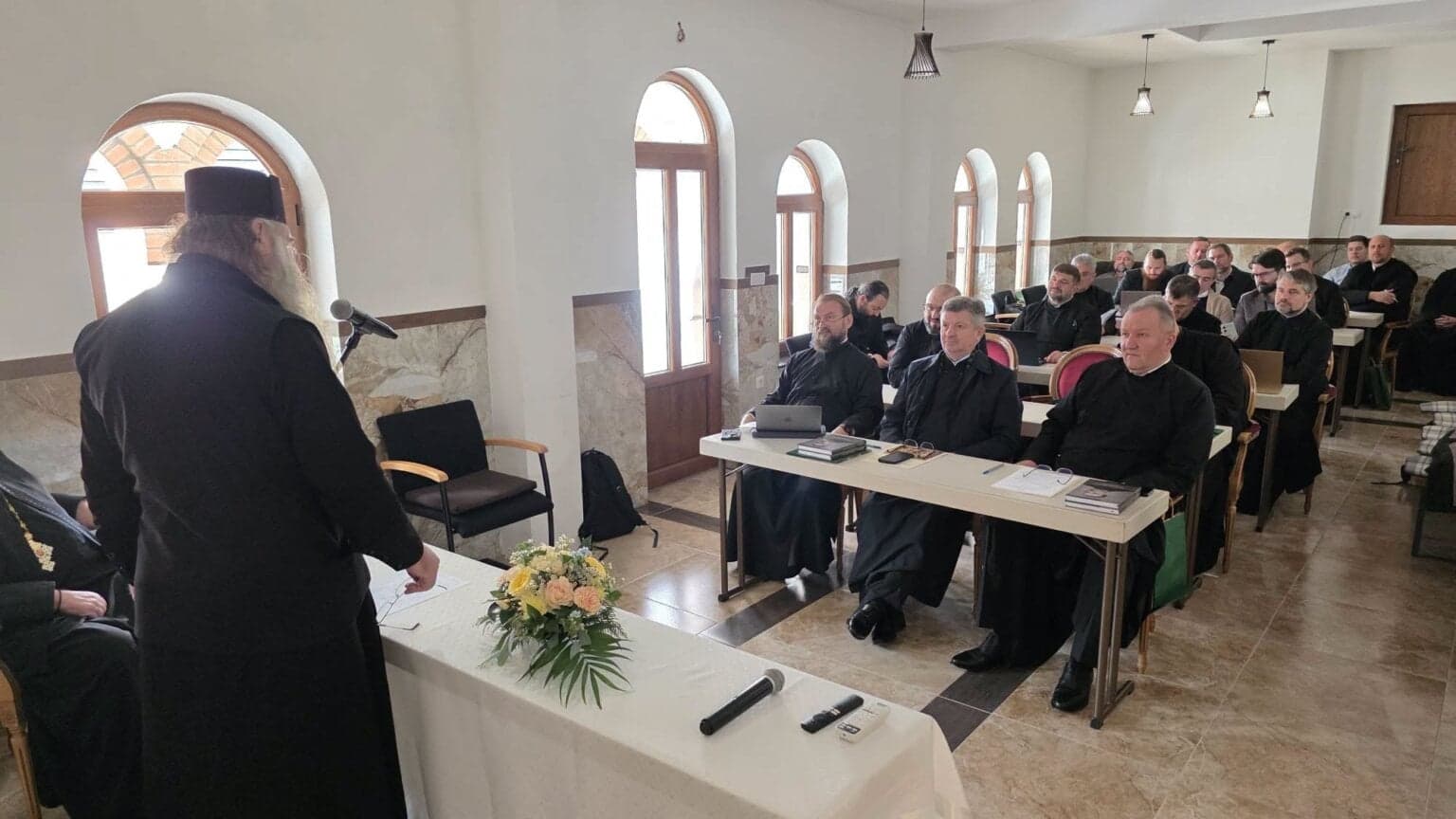
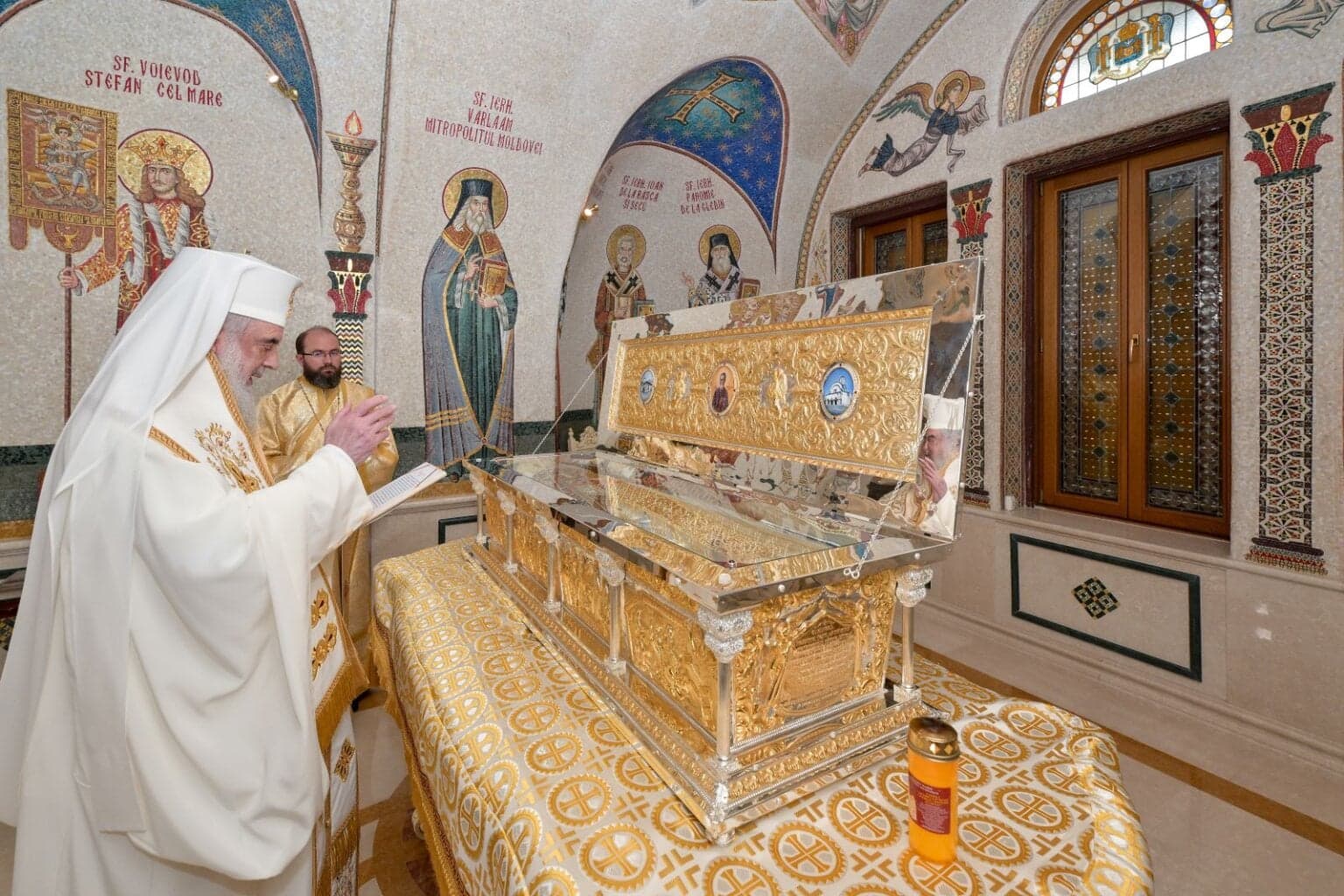
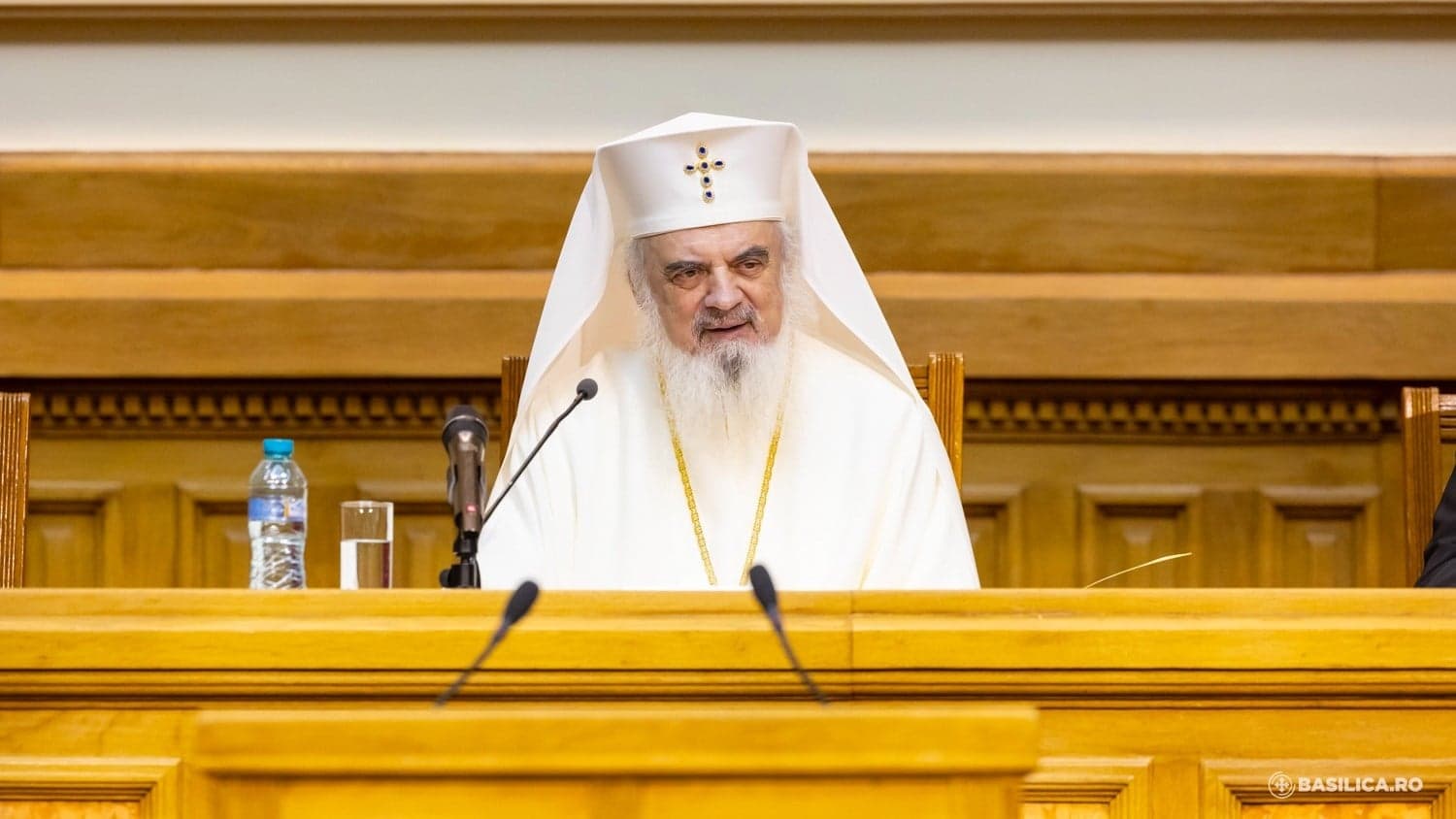
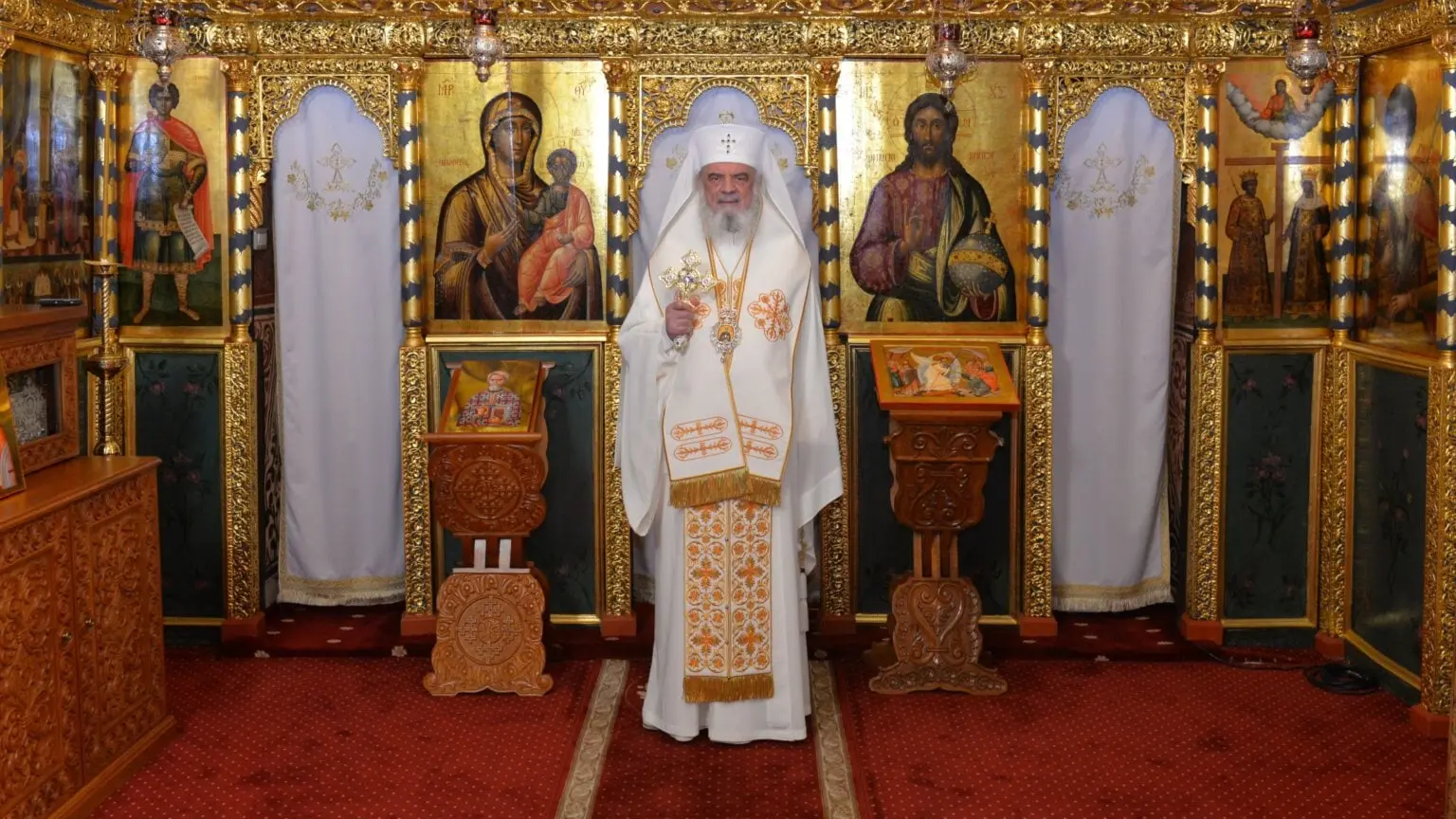
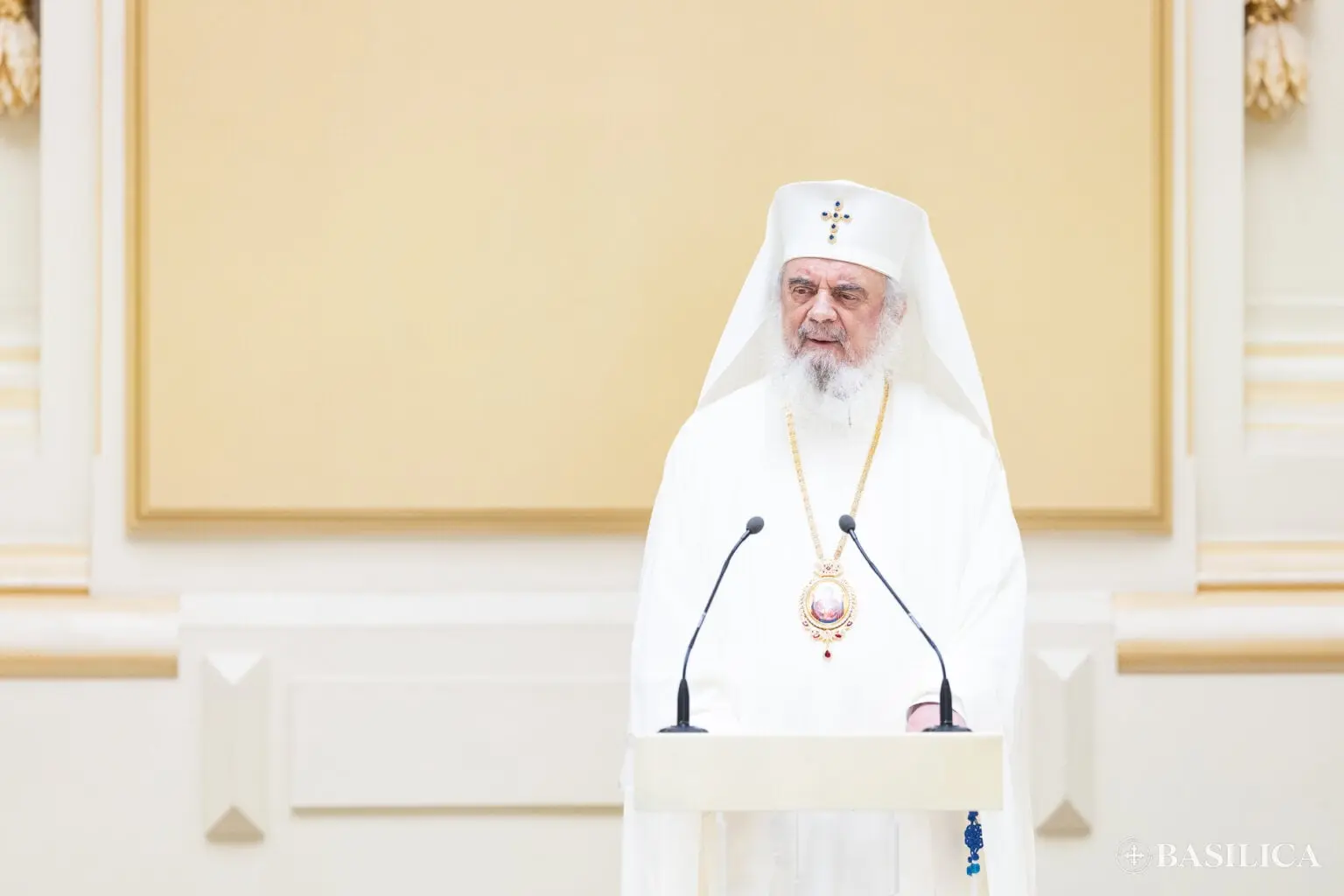
During the opening of the Autumn Pastoral-Missionary Conference of the Archdiocese of Bucharest on Tuesday, His Beatitude Patriarch Daniel remembered four great hesychast elders and confessors of the 20th century — Saint Cleopas Ilie, Saint Paisius Olaru, Saint Dumitru Stăniloae, and Saint Sofian of Antim — all of whom he personally knew.
The Patriarch said these spiritual fathers, now canonised, embodied prayer, humility, and courage during the communist persecution, and contributed decisively to the spiritual life and resilience of the Romanian Patriarchate, founded a century ago.
Four Examples of Hesychast Spiritual Fathers and Confessors of Orthodoxy During the Communist Regime
The year 2025 has been proclaimed by the Romanian Orthodox Church as the “Solemn Year of the Centennial of the Romanian Patriarchate” and the “Commemorative Year of Romanian Orthodox Spiritual Fathers and Confessors of the 20th Century.”
In this blessed context, it is fitting to bring to remembrance the example and teaching of the great spiritual fathers who shone in the past century — men who illuminated countless souls on the path of salvation, while serving as tireless models of hesychasts.
I. Romanian Orthodox Spiritual Fathers and Confessors of the 20th Century
Alongside the elevation of the Romanian Orthodox Church to the rank of Patriarchate in 1925, its subsequent organisation, and its rich pastoral and social activity, another significant chapter in the history of the 20th century is represented by the sacrificial witness of Romanian Orthodox spiritual fathers and confessors during the atheistic communist regime (1945–1989), when the Romanian Orthodox Church was marginalised and persecuted.
During this time of severe trial, many clergy, monastics, and laypeople bore witness to the Orthodox faith at the cost of their freedom or even their lives.
On the occasion of the Centennial of the Romanian Patriarchate, the Holy Synod decided that on February 4, 2025, a general proclamation of the canonisation of several Romanian Orthodox spiritual fathers and confessors from the communist period would take place.
These saints were canonised for the steadfastness with which they preserved their faith and Christian dignity in the face of oppression. The Church honours them because they endured persecution with dignity and bore witness to the truth of Christ even under torture and death, offering a living example of Christian life.
Their canonisation represents the Church’s recognition of the holiness and sacrifice of their lives, which transcends any political context, affirming that true Christian witness does not serve transient worldly ideologies but upholds the eternal values of faith and divine love.
The Romanian spiritual fathers and confessors of the 20th century canonised by the Church are true teachers of Orthodox faith and Christian life. Through their example, they teach us that no temporal power can overcome genuine faith.
As great hesychast prayerful elders and patient shepherds, they guided the faithful along the path of salvation and thus helped the Romanian Orthodox Church continue its pastoral and spiritual mission in the life of the Romanian people.
Their spiritual legacy inspires us to preserve our Orthodox faith and to defend the virtues and values of Christian life in the face of present-day challenges.
These holy confessors are living icons of our Church, showing that sacrificial love for Christ is the highest calling of every Christian.
Today, we will briefly present four great luminaries of our Church from the 20th century, whom we had the joy of knowing personally: Archimandrite Cleopa Ilie and Hieroschemamonk Paisie Olaru of Sihăstria Monastery (Neamț County), Rev. Professor Dumitru Stăniloae, and Archimandrite Sofian Boghiu of Antim Monastery in Bucharest — all of whom were glorified among the saints by decision of the Holy Synod of the Romanian Orthodox Church in July 2024.
These four great spiritual fathers and confessors were contemporaries of the founding and consolidation of the Romanian Patriarchate and contributed essentially to the preservation and defence of the Orthodox faith during times of great trial.
II. Saint Cleopas of Sihăstria – the missionary spiritual father
What impressed me most about Saint Cleopas of Sihăstria was his gift of making Orthodox theology accessible to ordinary people — without ever trivialising it. He himself used to say: “I make theology for the grandmothers, for the old men, for the people of the countryside.”
Yet this “theology for grandmothers” was in fact the theology of the Holy Fathers, conveyed in a simple, warm, and fatherly language. Saint Cleopas of Sihăstria had the grace to express profound truths in words understandable to all, for his wisdom sprang not only from the diligent reading of holy books, but also from his abundant prayer and ascetic struggle.
Saint Cleopas of Sihăstria did not know the writings of the great desert fathers and the great lavras merely intellectually; he lived them daily for more than seventy years, faithfully following the canons and rules of the Holy Fathers who established and shaped the monastic vocation. Through his holy life, deeply rooted in the Tradition of the Church, Father Cleopas was, for us, both a contemporary and a friend of the saints of all ages.
As a spiritual father, Saint Cleopas of Sihăstria was an experienced guide whose teaching was the teaching of the saints. Everything he taught was grounded in Holy Scripture and the writings of the Holy Fathers; it was never an arbitrary opinion, but a communion of universal Orthodox thought, deeply theological and profoundly human..
He felt the love of the faithful who came to him for spiritual counsel and responded to them with tender, fatherly care. Saint Cleopas loved dearly those who came to him, often saying:
“I feel pity for them, for they come from far away. They wait for hours, and my heart aches for them. Even though I am tired, have undergone four operations, and suffer many ailments, when I see so many believers eager to hear the word of God, I am strengthened.”
III. Saint Paisius of Sihăstria – the humble hesychast and peace-bearer
From Saint Paisius of Sihăstria, I learned that the greatest thing in this life is to be at peace with God. The spiritual fathers of the Philokalia said, “Acquire peace with God, and you will save a multitude of people around you.”
Saint Paisius of Sihăstria was a man who showed, through both word and deed, that he was completely reconciled with God. He had attained heavenly peace in his soul and was able to share it with all those who came to him — people wounded by passions, distressed by suffering, or troubled by life’s hardships.
His great soul, though housed in a body weakened by long ascetic struggles and unceasing prayer, was a fountain of calm, comfort, and peace, radiating spiritual warmth. His teaching was both simple and wise, evangelical and practical. Saint Paisius Olaru of Sihăstria possessed the great gift of discerning what was essential from what was secondary — without diminishing the fullness of the faith and without burdening it with unnecessary details.
Like the desert fathers, who condensed vast holy wisdom into a few words, Saint Paisius of Sihăstria expressed the essence of the Church’s teaching in simple, fatherly counsel. His kindness was not sentimental, and his anger was never passionate. An ascetic and a man of prayer, Saint Paisius possessed a gentle severity and a constant humility — a spiritually mature man, pure in heart.
Yet his greatest gift was the ability to bring peace to the souls of those who confessed to him or sought his blessing. The peace that radiated from him came from his deep and humble love for God and for his fellow human beings. From his holy familiarity with the All-Merciful and Loving God was born his tender, fatherly blessing for the faithful pilgrim: “Bless, O Lord, his little house, his little table… grant him, O Lord, a small corner of Paradise.”
Together with His Beatitude Patriarch Teoctist, before either of us bore any episcopal insignia, we went to ask for Father Paisie’s blessing after I had been elected Metropolitan of Moldavia and Bukovina. I knelt before him to receive his blessing at the beginning of a difficult, yet holy and great task — that of being a spiritual shepherd of the eparchy. He blessed us both with his usual fatherly love and said, “May God grant you a little corner of Paradise!”
I believe that the secret of this blessing lies in the fact that he himself had already encountered Paradise in this life, though he kept it humbly and quietly in his heart, as a foretaste of eternity. He carried within him the guarantee of the Kingdom of God, which illumined his entire life. That is why he wished for all those he blessed to receive a “corner of Paradise.”
I knew Saint Paisius of Sihăstria not only as a spiritual father who gave counsel and blessings, but as a confessor filled with the Spirit of Christ. I could feel that he had the Spirit of God within him.
Though frail in appearance, Saint Paisius of Sihăstria was, in the final years of Romania’s communist dictatorship, a true giant of the Romanian spirit who, in silence, strengthened the Church of Christ in the hearts of believers, even as the noise of the capital resounded with the destruction of stone churches.
Only God knows how precious a spiritual father is who gives peace and healing to souls when human society turns into an infernal system! The holiness of Elder Paisius the Spiritual Father was not spectacular, but irresistibly peaceful — for holiness humanises man, in contrast to selfish passions, which estrange the human being from his true self.
IV. Holy Confessor Priest Dumitru Stăniloae – the illumined and witnessing theologian
The Holy Confessor Priest Dumitru Stăniloae was one of the greatest Orthodox theologians of the twentieth century. What distinguished him from others, however, was that his theology was not an abstract intellectual construction but a living experience of communion with God.
He himself said that the teaching of the Church does not consist of “abstract principles, but of the living unity of Christ — the Person in whom, and through whom, divinity and creation are united. And Christ, the divine–human Person, is the system which, while all-encompassing, remains open and promotes freedom, for all those who wish to be saved through Him.”
His monumental work — the translation and commentary of the Philokalia — was a providential gift for our Church. Through this masterpiece, Father Stăniloae brought back into the consciousness of the Romanian people the treasure of patristic and hesychastic spirituality. He was not merely a learned translator but also an inspired interpreter, making the wisdom of the Holy Fathers accessible to his contemporaries.
Saint Dumitru Stăniloae was not only a profound and gifted theologian but also a confessor of the faith during times of trial. He was imprisoned for his faith, enduring great suffering in the communist prisons, yet he never lost his inner hope and joy.
After his release, he resumed his theological work with even greater zeal, leaving the Church an invaluable legacy — most notably the twelve volumes of the Philokalia translated and annotated by him.
During the communist period, when Christian faith and religion in general were being systematically attacked, and when many intellectuals abandoned God under the pressure of atheistic ideology, Saint Dumitru Stăniloae remained steadfast in his confession. He showed that faith and reason are not opposed, but that faith illumines reason — and that Orthodox theology offers true answers to the deepest questions of human existence.
From Saint Dumitru Stăniloae, the Confessor Priest, we learned that theology must always serve the spiritual life and the mission of the Church in the world. His theology was philokalic — centred on the experience of divine grace in the life of the believer. He taught that the goal of Christian life is the sanctification of life and deification — that is, the participation of the human person in the divine life through grace.
Saint Dumitru Stăniloae stands in our Church as a faithful theologian of the Holy Fathers, yet also a creative one — a theologian who revealed the light of Holy Scripture and of the Philokalia to the contemporary cultural context.
V. Saint Sofian of Antim – a hesychast spiritual father and a church painter
Saint Sofian of Antim united in his life hesychasm and sacred art, being both a missionary church painter and a spiritual father who taught that the icon calls man to prayer. As a spiritual father, he healed souls through prayer and through his wise counsel. During the harsh years of communist persecution, Saint Sofian bore witness to the faith, suffering imprisonment out of love for Christ and His Church.
During the communist dictatorship, when the Church was persecuted and the faithful lived in fear, Saint Sofian of Antim courageously professed his faith. He was arrested, sentenced to forced labour, and endured humiliating sufferings in the communist prisons — yet he overcame them through prayer and patience. After his release, he continued to serve God with the same devotion, painting churches and guiding the faithful along the path of spiritual life.
Saint Sofian of Antim was a man of unceasing prayer, living in a mystical and continual communion with Christ. This communion radiated around him as light and peace, drawing souls closer to Christ. Many believers came to him not only for spiritual guidance but also to feel the presence of divine grace, reflected on his luminous countenance.
In presenting these four great luminaries of our Church from the twentieth century, we should ask ourselves: what have we learned from them, and what spiritual legacy do they leave us?
- We learn from them that true and mature spiritual fatherhood presupposes a life of unceasing prayer and communion with God. The spiritual father is first and foremost a man of prayer, and only then a counsellor to others.
- We learn from them that the true spiritual father is deeply rooted in the Holy Tradition of the Church. All four great fathers we have presented were men of the living Tradition of the Church — not in the sense of a mere formal knowledge of the past, but in the sense of living the same spiritual experience as the saints of all ages. Tradition, therefore, is understood as a living fidelity to Christ, “the same yesterday, today, and forever” (Hebrews 13:8).
- We learn from them that the wise spiritual father possesses the gift of discernment. Saint Cleopas of Sihăstria used to say that a spiritual father must be “severe with himself and more lenient with others,” since the main goal is spiritual growth in stages, taking into account each person’s inner condition.
- We learn from them that an excellent spiritual father is a man of merciful, self-sacrificing love. All these great fathers gave themselves entirely for the salvation of the souls entrusted to them. Saint Paisius, like Saint Cleopas of Sihăstria, used to say that he felt compassion for the faithful who came from far away and waited for hours at his cell door; therefore, he overcame his physical weaknesses in order to receive them and offer them a word of comfort.
- We learn from them that the authentic spiritual father is a man of constant and unwavering humility. Saint Paisius of Sihăstria, though widely beloved, was never touched by pride, for he did not seek popularity — he saw only suffering souls, coming to him for healing of body and spirit. Saint Sofian of Antim, though a renowned iconographer, attributed everything to God’s grace and considered himself unworthy of any praise.
- We learn from them that the steadfast spiritual father is a confessor of the faith even in times of trial. Saint Dumitru Stăniloae and Saint Sofian of Antim suffered imprisonment for their faith, yet they never lost hope. They showed that true faith is strengthened through suffering.
- We learn from them that Orthodox theology is fulfilled in a life of prayer, in participation in the liturgical services and in the missionary activities of the Church. Saint Cleopas of Sihăstria was deeply aware that the salvation of those he taught depended on how he instructed them in the faith — but also the salvation of us, the shepherds of souls.
In conclusion, all four great spiritual fathers we have presented today lived and laboured in a difficult era for the Romanian Patriarchate.
They were contemporaries of the great patriarchs of the twentieth century and made essential contributions to the spiritual life of our Church.
The example of these great spiritual fathers and confessors of the twentieth century remains for us all a constant call to holiness and to a life devoted to the salvation of others. They are, for us, models of deep Christian living, of holy spiritual guidance, and of sacrificial service.
We bless the opening of the Autumn Pastoral-Missionary Conference of the clergy of the Archdiocese of Bucharest, praying that the Most Holy Trinity may pour out Its abundant gifts upon all the servants of the holy altars, strengthening them in their sacred mission.
† DANIEL
Patriarch of the Romanian Orthodox Church
Photo: Basilica.ro / Mircea Florescu