“Fasting is not a simple exercise in hygiene or aesthetics, but a school of spiritual self-restraint, a school of purification or gradual liberation from selfish passions in order to acquire the humble and merciful love found in Jesus Christ, Who became obedient unto death—even death on the Cross,” said Patriarch Daniel on Clean Monday.
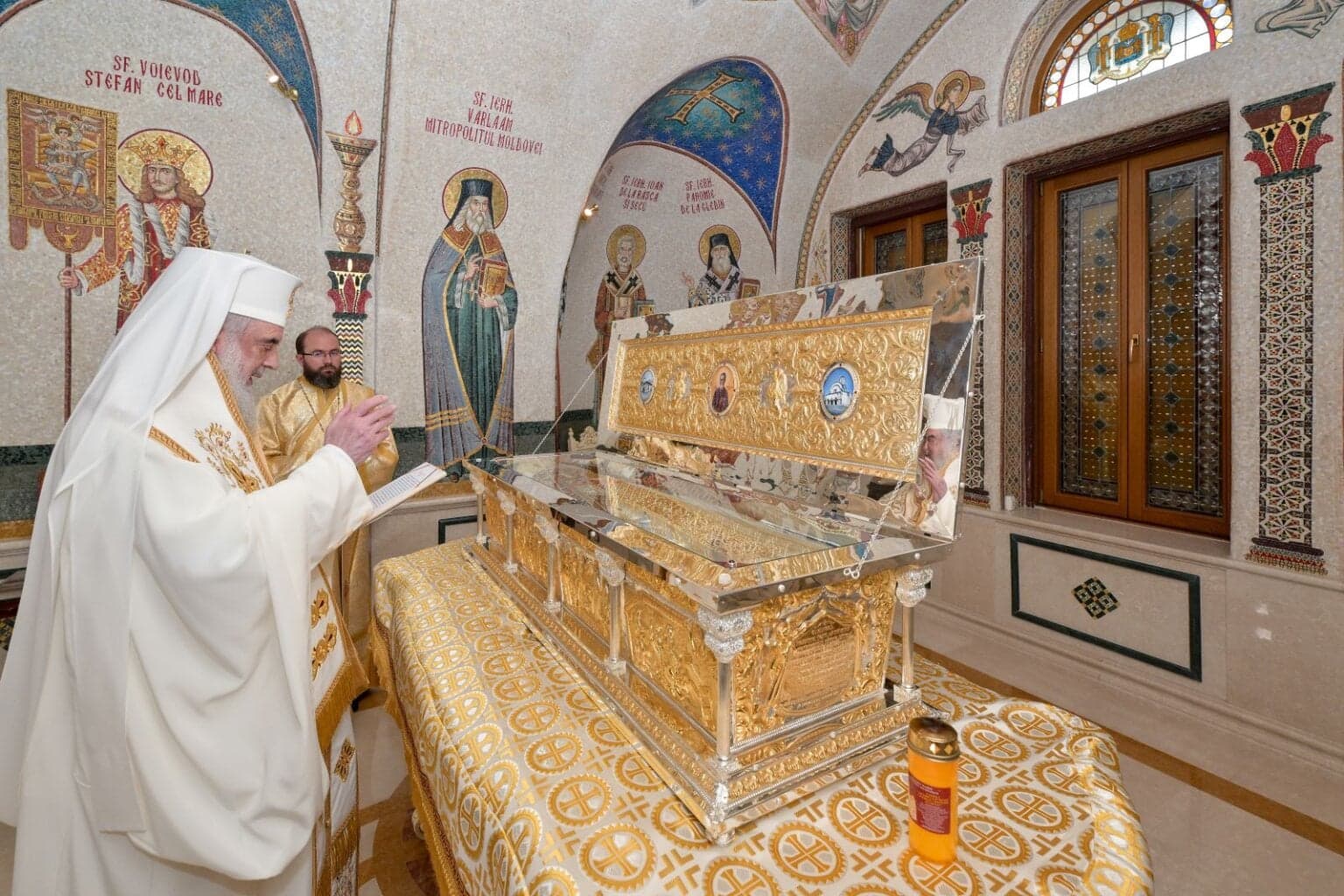
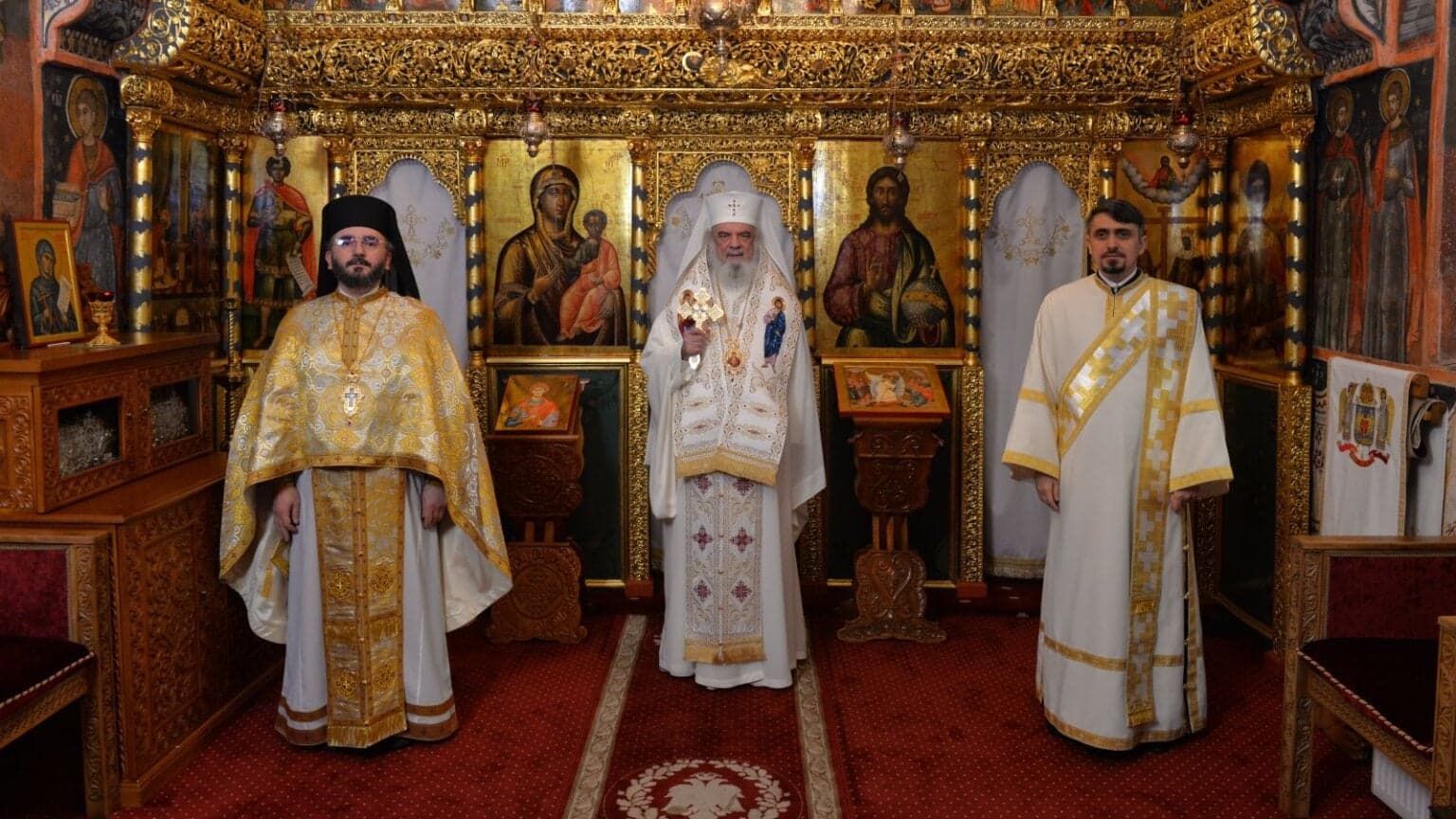
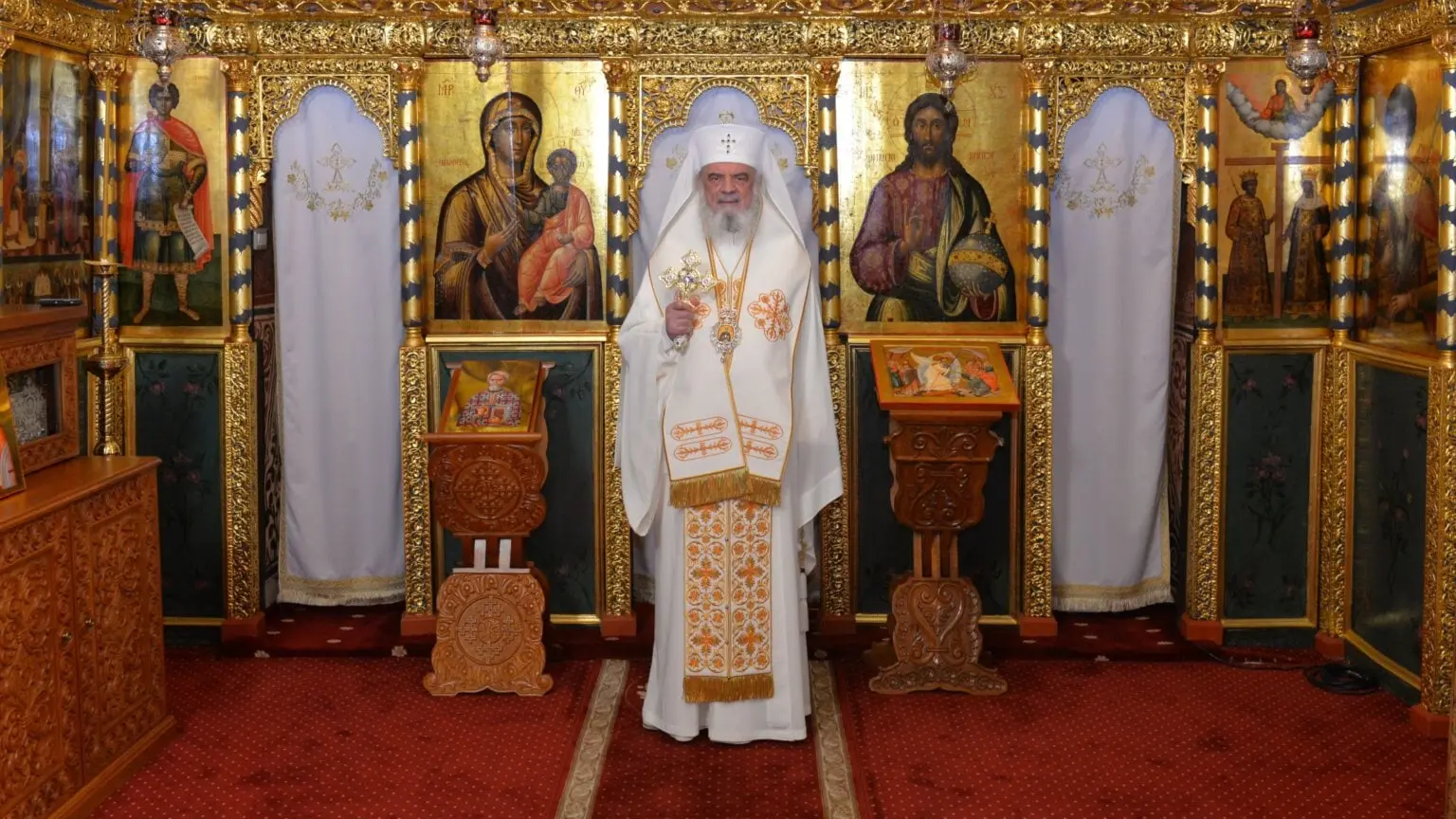
The Patriarch of Romania officiated Monday the Great Compline with the first part of the Great Canon of Saint Andrew of Crete at the historic chapel “St George the Great Martyr” of the Patriarchal Residence.
His Beatitude underlined that fasting was instituted in Paradise as an exercise in self-restraint and as an expression of human freedom to choose between the Giver–Creator and the tree forbidden by Him.
“Since this spiritual restraint, which began with the fast in Paradise, was not fulfilled by our forefathers Adam and Eve, the Lord Jesus Christ, the New Adam, at the beginning of His public ministry, after being baptised in the Jordan by John, was led into the wilderness by the Holy Spirit and there, after forty days and forty nights of fasting and prayer, He was tempted,” the Patriarch explained.
The Three Temptations
Patriarch Daniel outlined the three temptations faced by Christ at the start of His preaching ministry.
“The first was the temptation to have bread without labour or effort, by transforming stones into bread in an automatic or magical way. However, the Lord Jesus Christ rejected this temptation, saying: ‘Man shall not live by bread alone, but by every word that proceeds from the mouth of God.’”
The temptation to rule over peoples and entire nations was also rejected by the Saviour, who said: “Be gone, Satan! For it is written: You shall worship the Lord your God and Him only shall you serve” (Matthew 4:10).
“The third temptation rejected by the Lord Jesus was that of vainglory or the narcissistic overvaluation of the human self, the illusion of unlimited success—that is, the temptation to be all-powerful like God, but without communion with God,” the Patriarch added.
“These three temptations are permanent in humanity. Therefore, the Holy Fathers of the Church teach us that fasting is a school of freedom and maturity, a school of choosing between the Giver and His gifts.”
A Sign of Love
Patriarch Daniel explained that through fasting we show that obedience to God and communion with Him in prayer are more important than consuming the various material gifts offered by God for bodily nourishment.
“For this reason, one who fasts but does not pray and does not seek God’s help fasts only as a physical exercise to keep fit or, as Saint John Chrysostom says: ‘He who fasts but does not give alms fasts in order to become wealthy—he gathers reserves for the future,’” the Patriarch cautioned.
“Thus, from this perspective, fasting is a school of restraint and freedom—the freedom to prefer spiritual gifts to material ones, to reject the passion of greed and to cultivate generous love.”
Quoting Saint Basil the Great, he added that fasting lightens the weight of the body but strengthens the health of the soul. While animal products from which the faithful abstain during Great Lent are temporary and limited, Holy Communion with the Body and Blood of Christ is a pledge of eternal life.
The Prayer of St Ephraim: An Epiclesis of the Liturgy of Repentance
In the final part of his homily, the Patriarch explained the meaning and spiritual benefit of the Prayer of Saint Ephraim the Syrian during Great Lent.
He noted that on Saturdays the Divine Liturgy of Saint John Chrysostom is celebrated, and on Sundays during Great Lent, the Liturgy of Saint Basil the Great. These are full Eucharistic Liturgies, including the epiclesis—the invocation of the Holy Spirit upon the bread and wine.
However, over time the faithful desired to receive Holy Communion also on weekdays—Monday through Friday—during Lent. On these days, no full Eucharistic Liturgy with epiclesis is celebrated; instead, the Liturgy of the Presanctified Gifts is served, which does not include the Eucharistic epiclesis.
This is possible, the Patriarch explained, because the Prayer of Saint Ephraim—containing four petitions for the banishment of evil spirits and four petitions for the calling down of virtues—functions as an epiclesis of the Liturgy of repentance.
“During Great Lent, from Monday to Friday, all the services together form a Liturgy of repentance,” he said.
Citing Saint Petronius Tănase of Prodroms Skete on Mount Athos, Patriarch Daniel noted that this prayer is not an invocation of the Holy Spirit upon bread and wine, but upon the person who repents. The transformation is not of bread into the Body of the Lord and wine into His Blood, but of the sinful person into a virtuous one through forgiveness of sins, repentance and communion with Christ through prayer and the Holy Mystery of the Eucharist.
The Great Canon is read in portions during the first four days of Great Lent at Great Compline, and in its entirety on Wednesday of the fifth week.

At the Monday evening service, Patriarch Daniel wore a black cassock. The Patriarch of Romania wears white clerical vestments as an expression of the permanent canonicity of the Romanian Orthodox Church. Exceptionally, however, he dresses in black vestments during the first week of Great Lent, during Passion Week, at the Prohodul Domnului, symbolizing a state of deep repentance.
Photo: Lumina Newspaper / Luigi Ivanciu