Researchers from the University of Haifa have discovered what they say is the world’s oldest nursing home, in the Byzantine (Roman) city of Hippos, the Times of Israel reported.
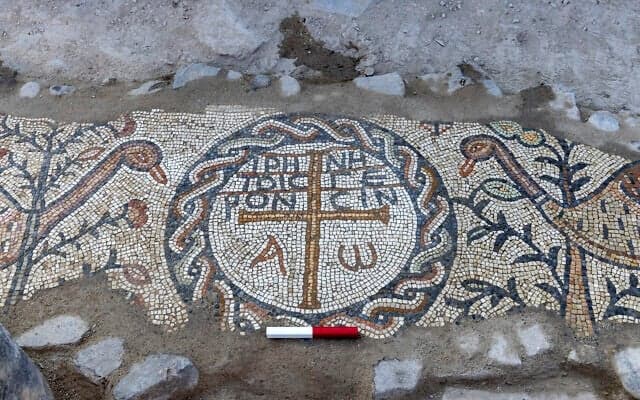
Israeli archaeologists made the identification based on a mosaic inscribed with the words “Peace to the Elders,” uncovered on Monday, August 18, during excavations at Hippos National Park, near the Sea of Galilee.
The find centres on an ornate mosaic medallion, dated to the late 4th or early 5th century, bearing the Greek inscription “Peace to the Elders,” located near one of the site’s most impressive mosaics, researchers explained.
“This is living proof that care and concern for the elderly are not just a modern idea, but part of institutions and social concepts already some 1,600 years ago,” said Dr. Michael Eisenberg of the Zinman Institute of Archaeology at the University of Haifa, one of the excavation leaders.
Christian stronghold on the Sea of Galilee
In a study published in Zeitschrift für Papyrologie und Epigraphik, Eisenberg, along with colleagues Dr. Arleta Kowalewska and Prof. Gregor Staab from the University of Cologne, argued that the inscribed medallion represents the earliest excavated evidence of a nursing home. They based their claim on the inscription’s reference to a specific age group and the location within a residential quarter of the city.
Institutions designated for the elderly are mentioned in texts from the 5th and 6th centuries, but this marks the first physical evidence of such a practice, the researchers said.
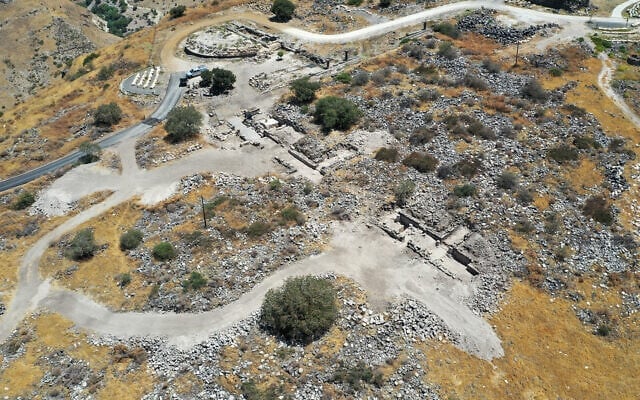
The discovery was made near the intersection of two main streets in Hippos’ residential district. The Christian city served as an episcopal centre, where archaeologists have uncovered seven churches, a temple, a basilica, a theatre, and at least two bathhouses.
A community institution
The mosaic was fully unearthed during the 2023–2024 excavation seasons. The team analysed the inscription and surrounding iconography, concluding that it was prominently displayed at the institution’s entrance.
“This was a communal and spiritual institution integrated into the fabric of city life and reflecting the social values of the period. The inscription addresses a specific public directly, which is a rare glimpse into the daily lives of older people in antiquity,” the researchers wrote.
They added that the medallion “may provide one of the earliest material testimonies in the Holy Land, showing how the Christian community began assuming responsibilities for care that had previously been handled by family networks alone. This development likely reflects new Christian ways of life outside traditional family structures, such as monasticism.”
Romanian Orthodox Patriarchate and elderly care
In 2023, the Romanian Patriarchate declared the year as the “Solemn Year of Pastoral Care for the Elderly.” Saints Simeon and Anna are regarded as the protectors of the elderly.
On that occasion, Patriarch Daniel explained that “revering and helping the elderly are expressions of spiritual and social maturity in community life.”
Additionally, October 1 was established as both the “International Day of Older Persons” and the “Day of Older Persons in the Romanian Patriarchate.”
Photo: University of Haifa / Dr. Michael Eisenberg