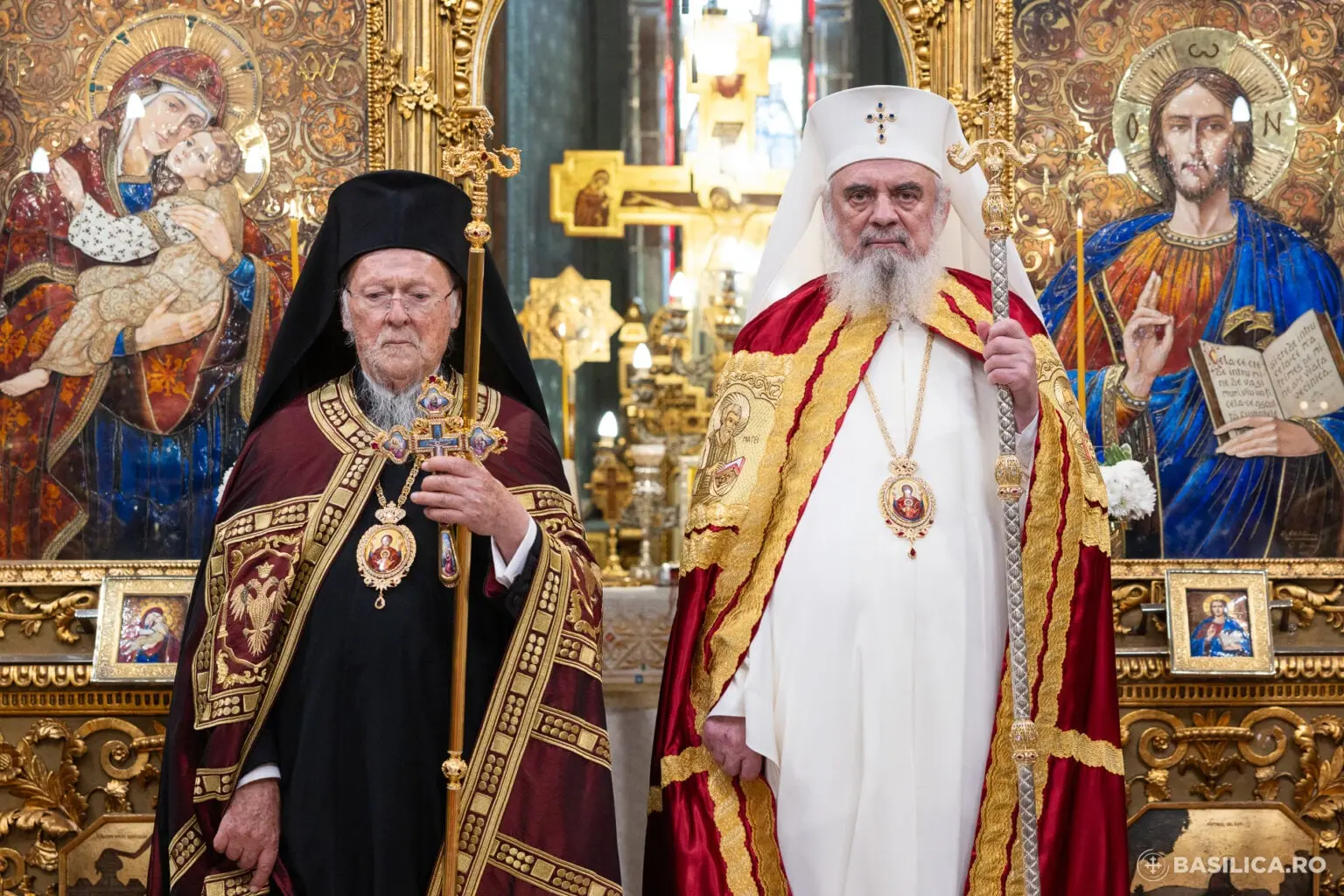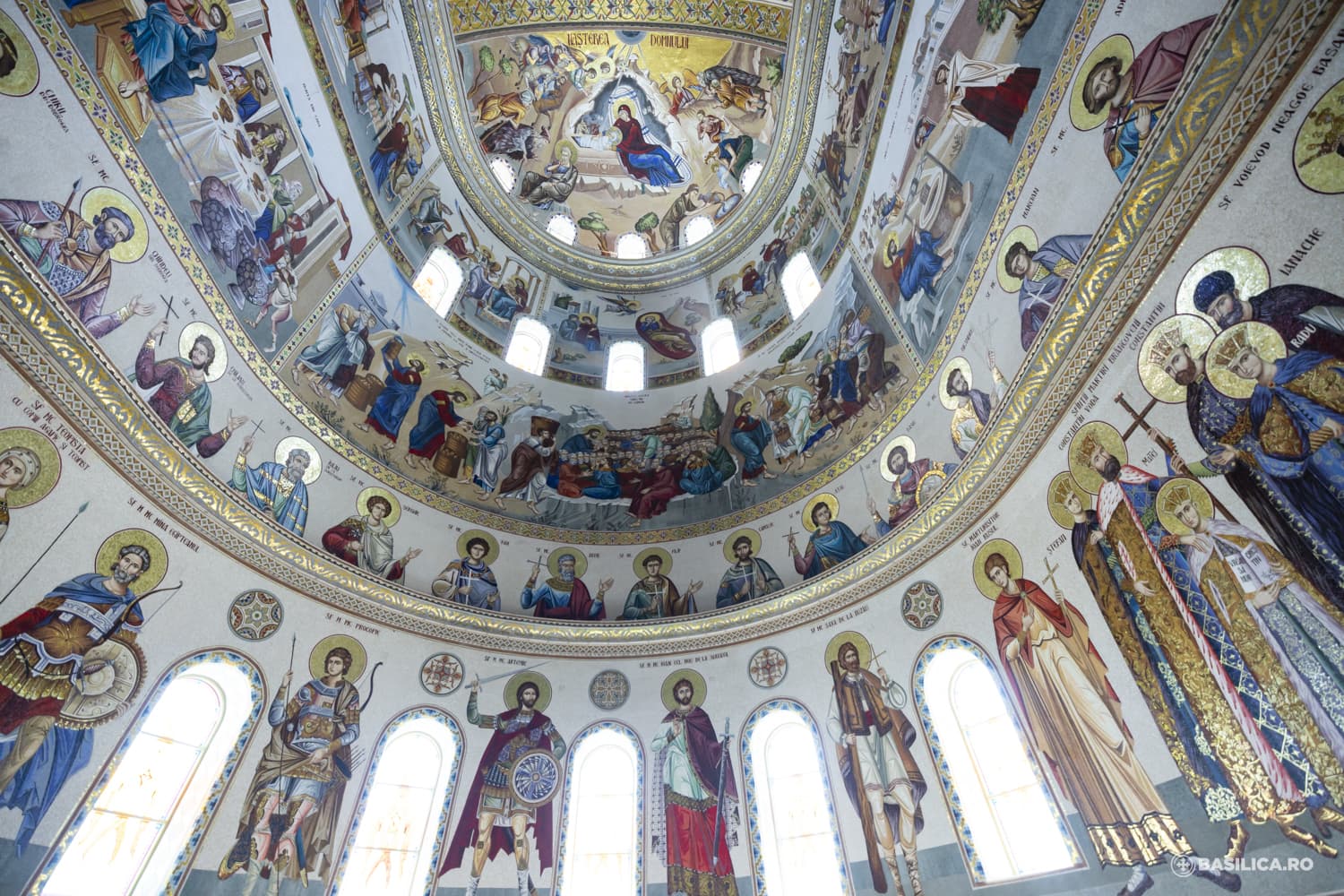
The Archdiocese of Bucharest has published a series of brochures dedicated to the National Cathedral, which Basilica.ro is presenting in the days leading up to the consecration of the church’s mosaic iconography. Below we present the brochure on the mosaic painting, which can also be downloaded in pdf format.
The mosaic technique was chosen because it has the potential to withstand the test of time better than any other form of sacred painting.
Due to the scale of the edifice, the National Cathedral currently holds the largest Orthodox iconostasis in the world, painted using the ancient art of mosaic.
The Mosaics of the National Cathedral

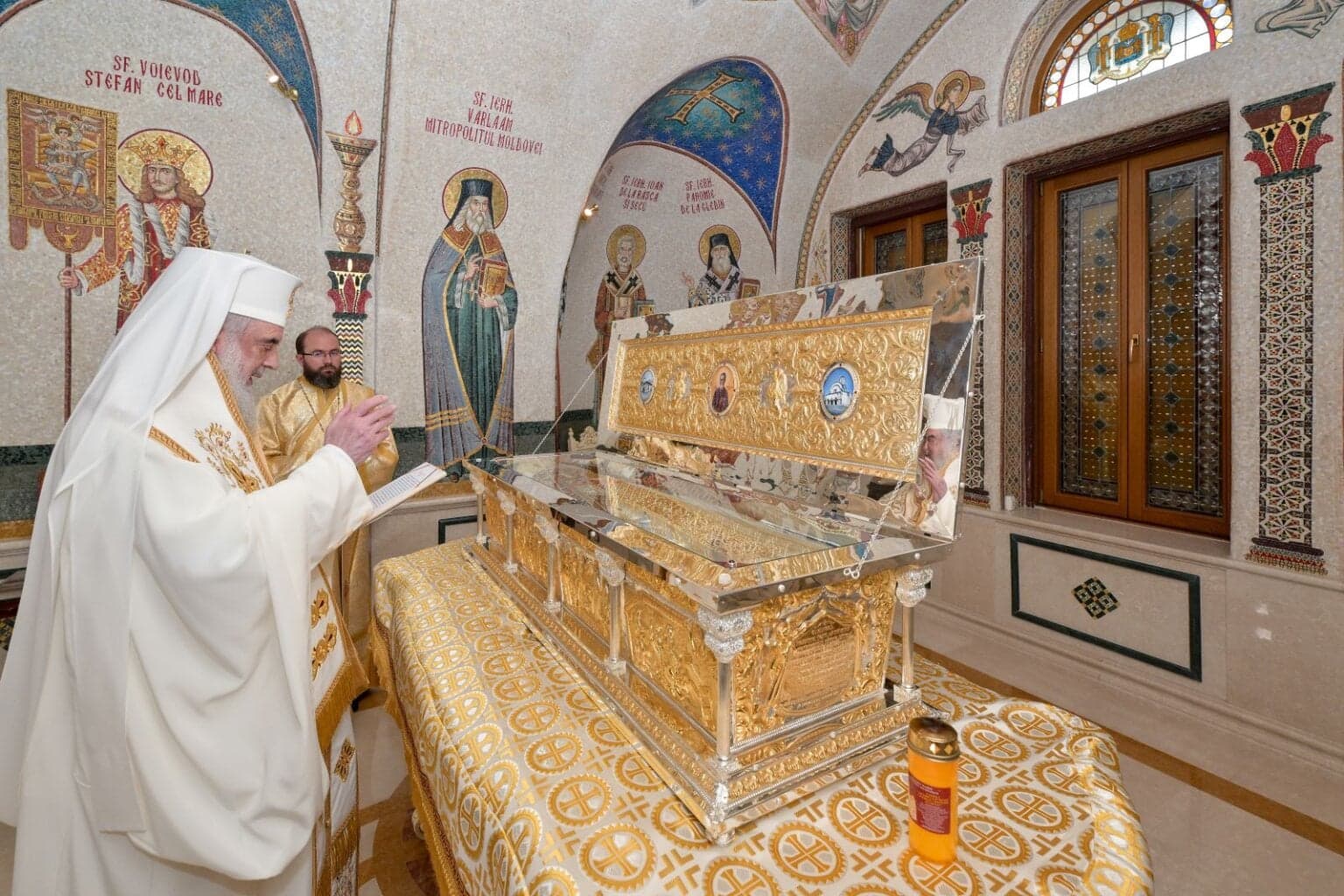
The mosaics of the National Cathedral, created between 2019 and 2025, form an extensive and elaborate mosaic complex spanning 25,000 sqm. By their iconographic conception, stylistic manner, and ornamental repertoire, they draw inspiration both from Byzantine art and from Romanian medieval art.
According to the iconographic plan, the mosaics depict scenes from the Old and New Testaments, events from the life of our Saviour, of the Holy Virgin Mary, of Saint Andrew the Apostle – Protector of Romania – as well as icons of holy angels, prophets and righteous of the Old Testament, apostles, hierarchs, martyrs, and confessors from all epochs of the Church’s history.
The iconographic programme was the outcome of meticulous research, with the aim of reflecting the spiritual zeal of those who sanctified their lives in devotion to God and to their fellow men.
Emphasis on the Latin specific of the Romanian Orthodoxy

Alongside saints of the universal Church – venerated in the Greek, Syrian, and Slavic traditions – Latin Fathers of the undivided Church are also represented, emphasising the Latin character of Romanian Orthodoxy, a bridge between Christian East and West.
Likewise, on the walls of the Cathedral are depicted the pillars of Romanian Orthodoxy from every epoch; not least, certain spaces within the Cathedral are dedicated to the portrayal of the holy confessors from the communist prisons.
Icons look differently on different moments of the day
The execution of the mosaic painting was entrusted to a large team coordinated by the iconographer Daniel Codrescu. The holy icons were created with meticulous attention to detail, as a work meant to endure through the ages and to stand as a sacrifice of faith offered to the saints portrayed.
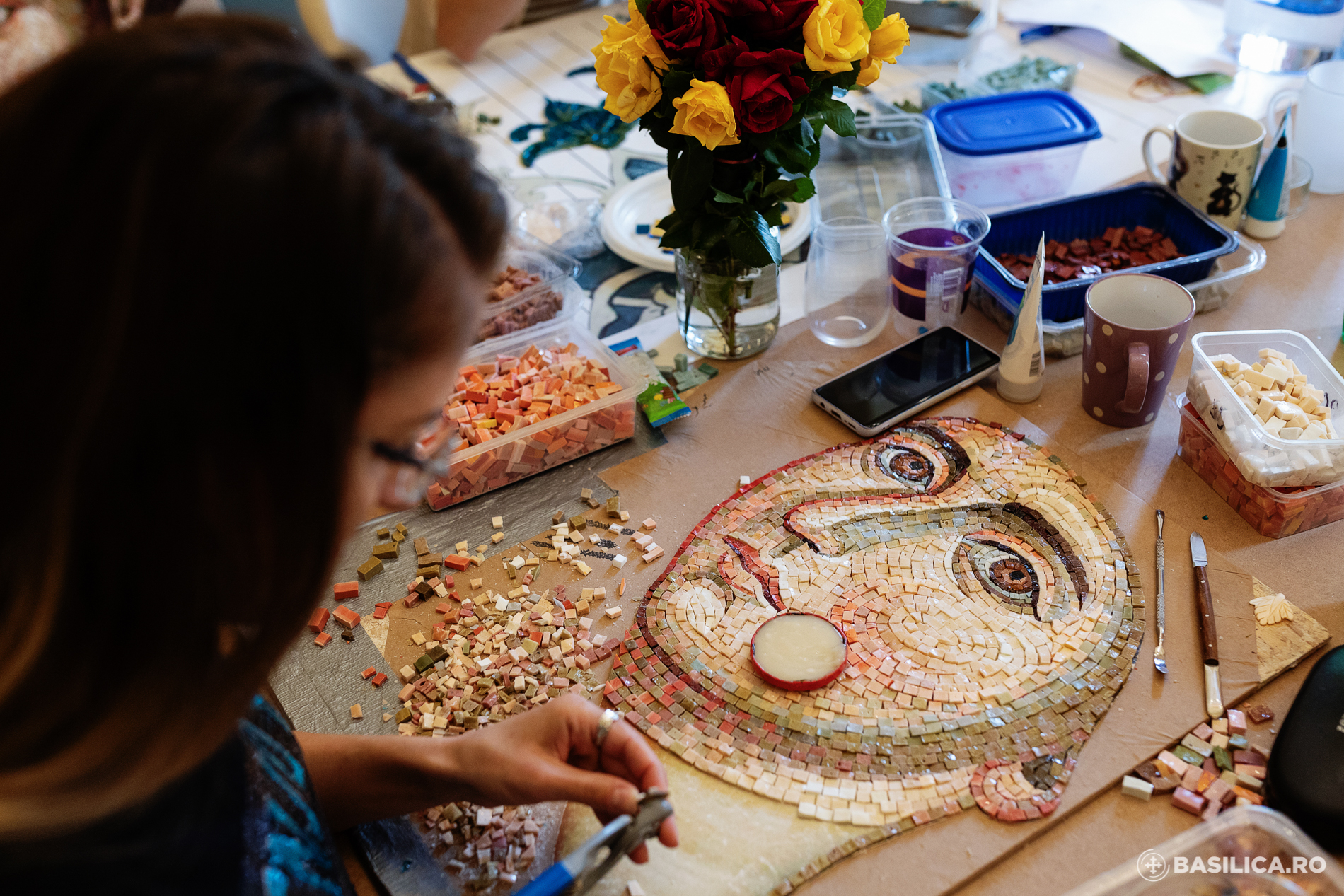
Owing to its particular materiality, mosaic endows the image with a highly dynamic character, altering the viewer’s perception according to the time of day or the circulation of light. It creates a sense of animation, drawing the eye from one holy countenance to another (through the specific girotondo effect), thereby intensifying the mystical atmosphere of the Cathedral’s interior.
Some numbers
The execution of a single square metre of mosaic requires the placement of around 10,000 tesserae, applied with a special cement-based adhesive.
Created piece by piece in the workshop, from a carefully chosen palette of stones in more than 2,500 colours, the icons take their full form once applied onto the walls of the Cathedral, where small retouchings are made at the junctions of the component sections.

The materials used for the Cathedral’s icons are procured from Venice and Carrara, from Orsoni, one of the most prestigious suppliers of stone and mosaic in the world.
- The iconostasis – with a surface area of 406.98 sqm, a length of 23.8 metres and a height of 17.1 metres, is comprised of 45 icons arranged in four tiers.
- The Platytera Icon of the Mother of God in the Cathedral’s main dome measures 12 metres in diameter; the face of the Saviour alone is 4.5 metres high and was executed by Alina Codrescu, employing 2,400 kg of tesserae.
- The Pantocrator Icon in the Cathedral’s main dome measures 12 metres in diameter; the face of the Saviour alone is 4.5 metres high and was executed by Alina Codrescu, employing 2,400 kg of tesserae.

Mosaic church painting is the most expressive and most valuable form in which the interior adornment of the National Cathedral could be realised.
Download leaflet in * pdf format here.
See all leaflets in 4 languages here.
Photo credit: Basilica.ro / Mircea Florescu (archive – article opening)