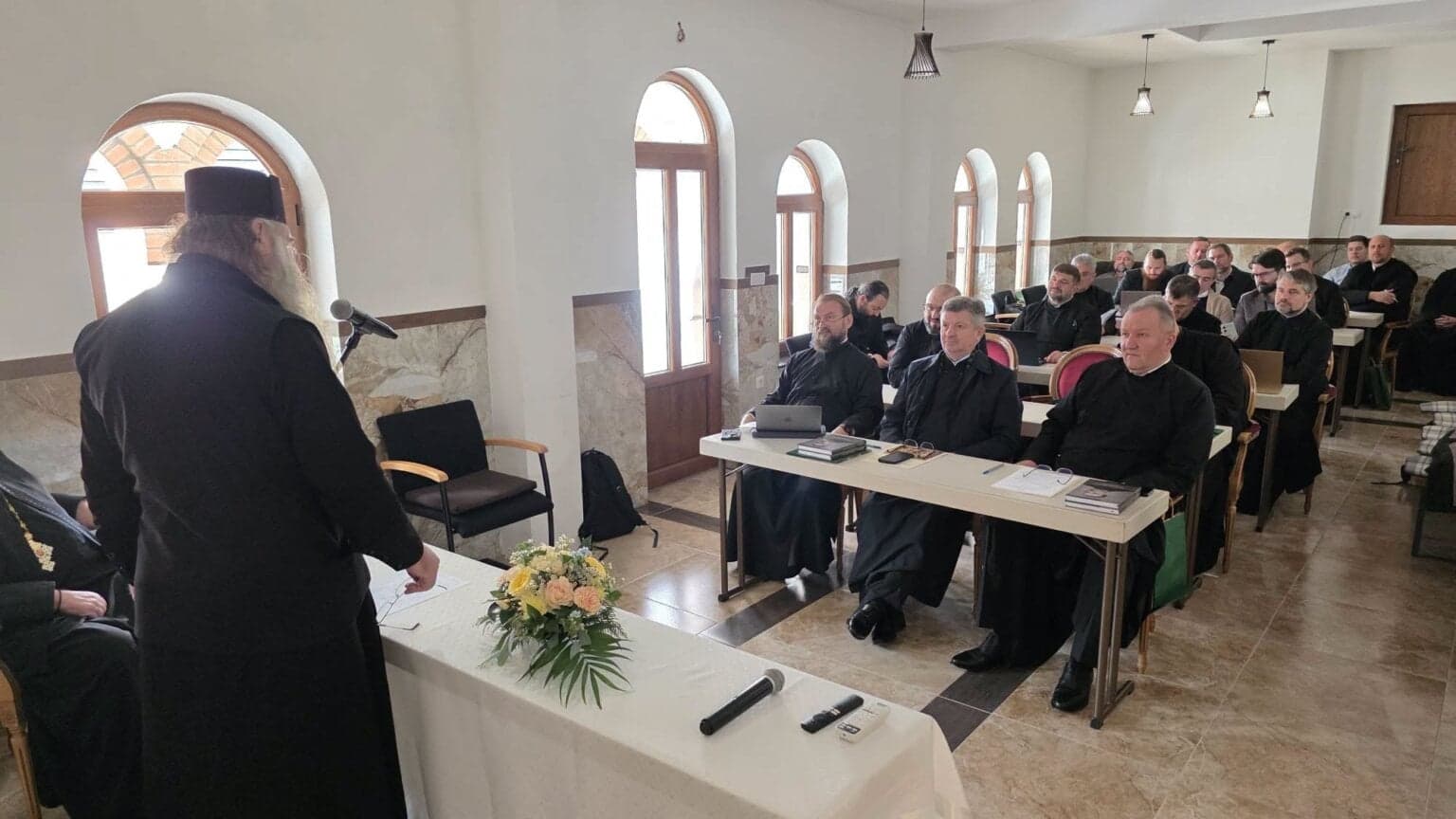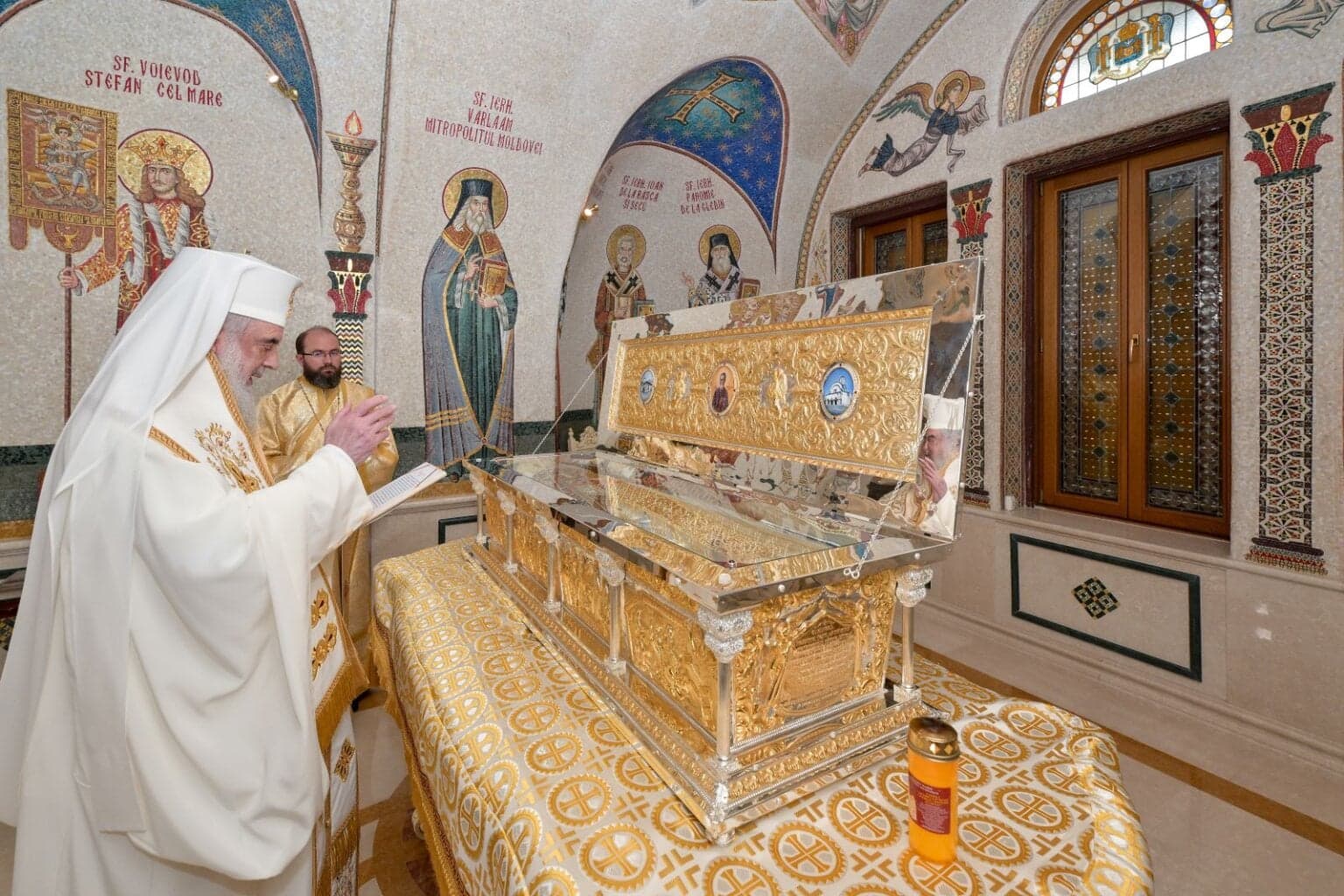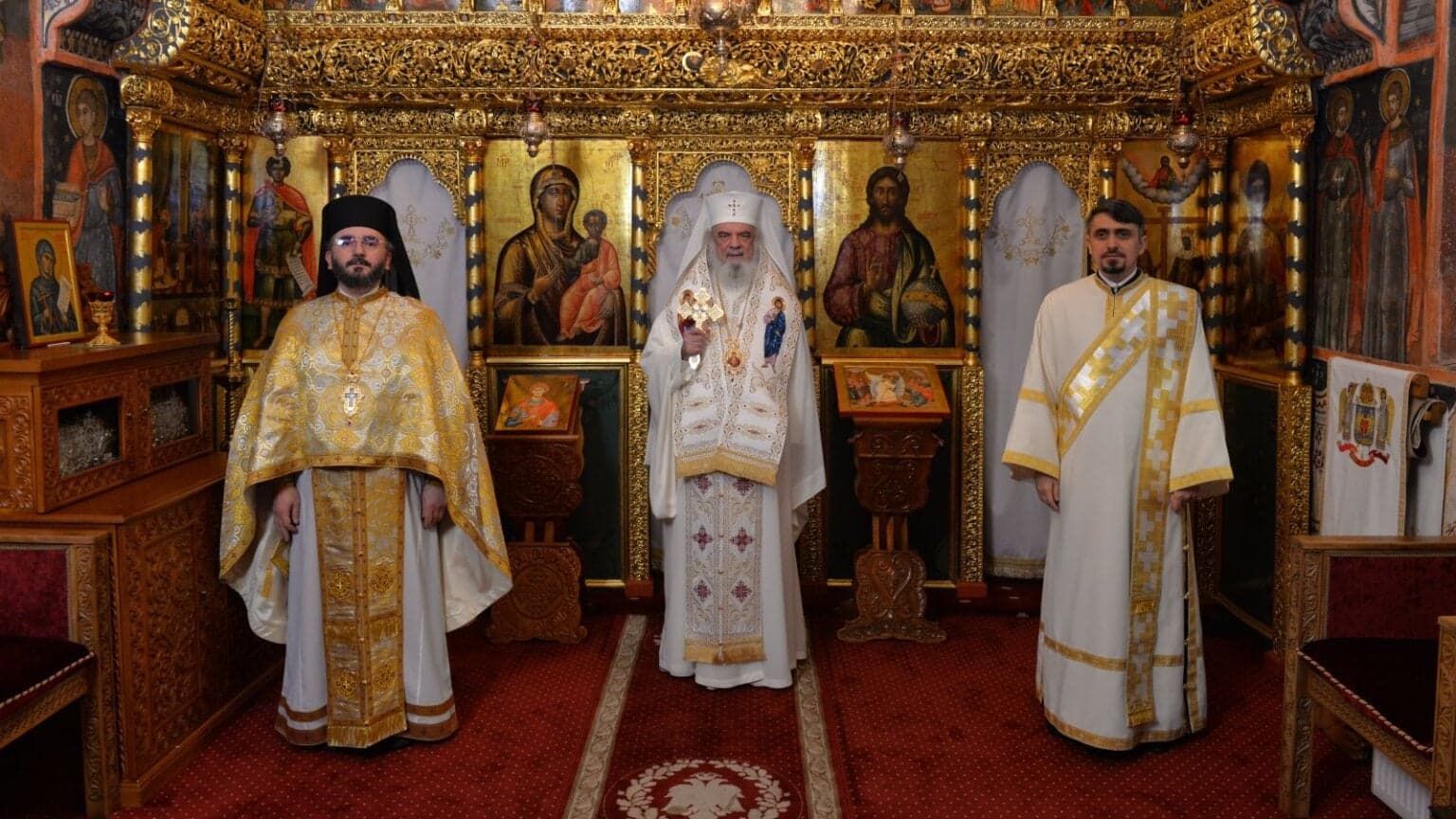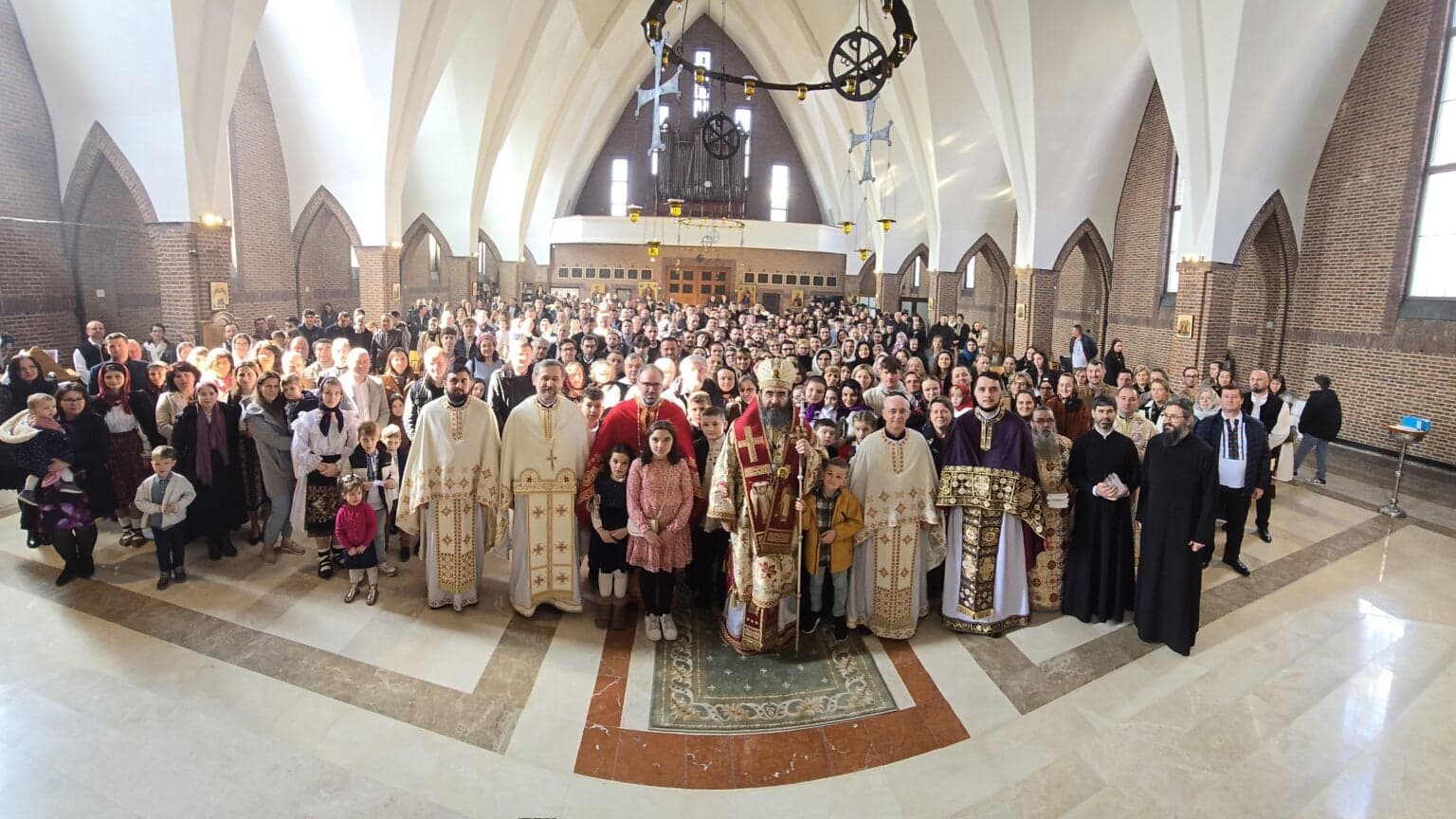
On Sunday, His Eminence Metropolitan Iosif of Western and Southern Europe celebrated the Divine Liturgy at the “Holy Apostles Peter and Paul and Saint Gertrude of Nivelles” Parish in Uccle, Brussels.
“When we fast, we reclaim our place in Paradise, for Adam and Eve ate the fruits that God provided for them in Eden. When did Adam first shed blood for his own sustenance? At the moment of his fall,” Metropolitan Iosif explained.
His Eminence emphasized that fasting contrasts with Adam’s state after his expulsion from Paradise.
“We know that when Daniel and others from his people lived in Babylonian captivity, God instructed them to refrain from eating meat, and they became healthier and stronger than those who consumed meat,” he added.
Fasting and Health
Metropolitan Iosif also highlighted the physical benefits of fasting.
“Doctors tell us that our bodies work harder to digest meat, making digestion more exhausting compared to vegetables and fruits. We can see that fasting and abstinence favour our health, which means that sometimes we poison ourselves by overeating without moderation or discernment,” he explained.
His Eminence also pointed out that beyond dietary discipline, interpersonal relationships significantly impact physical health.
“Our health is influenced by our sins, and our physical well-being is closely connected to our spiritual state. If we are quarrelsome and aggressive, we might end up at the doctor with high blood pressure and the need to calm down,” Metropolitan Iosif emphasized.
“Violence should be part of our fasting discipline. When we fast, we must also abstain from aggression because we often blame others while refusing to acknowledge our faults—this means we judge.”
“And judgment itself is a subject of fasting, for I must first examine myself rather than judging my brother. In what I perceive as his faults, I should recognize my own, as I may have committed them before he did.”
“If we dig deeper, we will find many such faults, which are all part of our fasting. We see how sin affects us physically, and we know that the most common ailments often stem from deep sorrows,” the metropolitan concluded.
Saint Gertrude of Nivelles
According to her biography, Saint Gertrude was a young, beautiful, intelligent, and compassionate woman. She came from the local nobility but fled from an advantageous marriage to dedicate herself to the poor, the sick, and the elderly. After taking monastic vows, she lived in a monastery where she welcomed foreign pilgrims with great hospitality. She knew much of the Holy Scriptures by heart and could easily explain difficult passages.
Saint Gertrude was a fervent practitioner of fasting, displaying remarkable spiritual zeal. God granted her several divine gifts: on multiple occasions, as she prayed in the church, those present witnessed a halo of fire above her head, filling the sacred space with light.
Sensing her end approaching, Gertrude prepared for her departure from this life with an all-night prayer vigil, surrounded by the monastery’s nuns. At dawn, she peacefully passed into the Lord just as the priest entered the altar to begin the Divine Liturgy. This occurred on March 17, 659, when Saint Gertrude was only 33.
The parish of Uccle, dedicated to the Holy Apostles Peter and Paul (June 29) and Saint Gertrude of Nivelles (March 17), was established in 2015 with the blessing of Metropolitan Iosif of Western and Southern Europe.
Photo: Uccle Parish