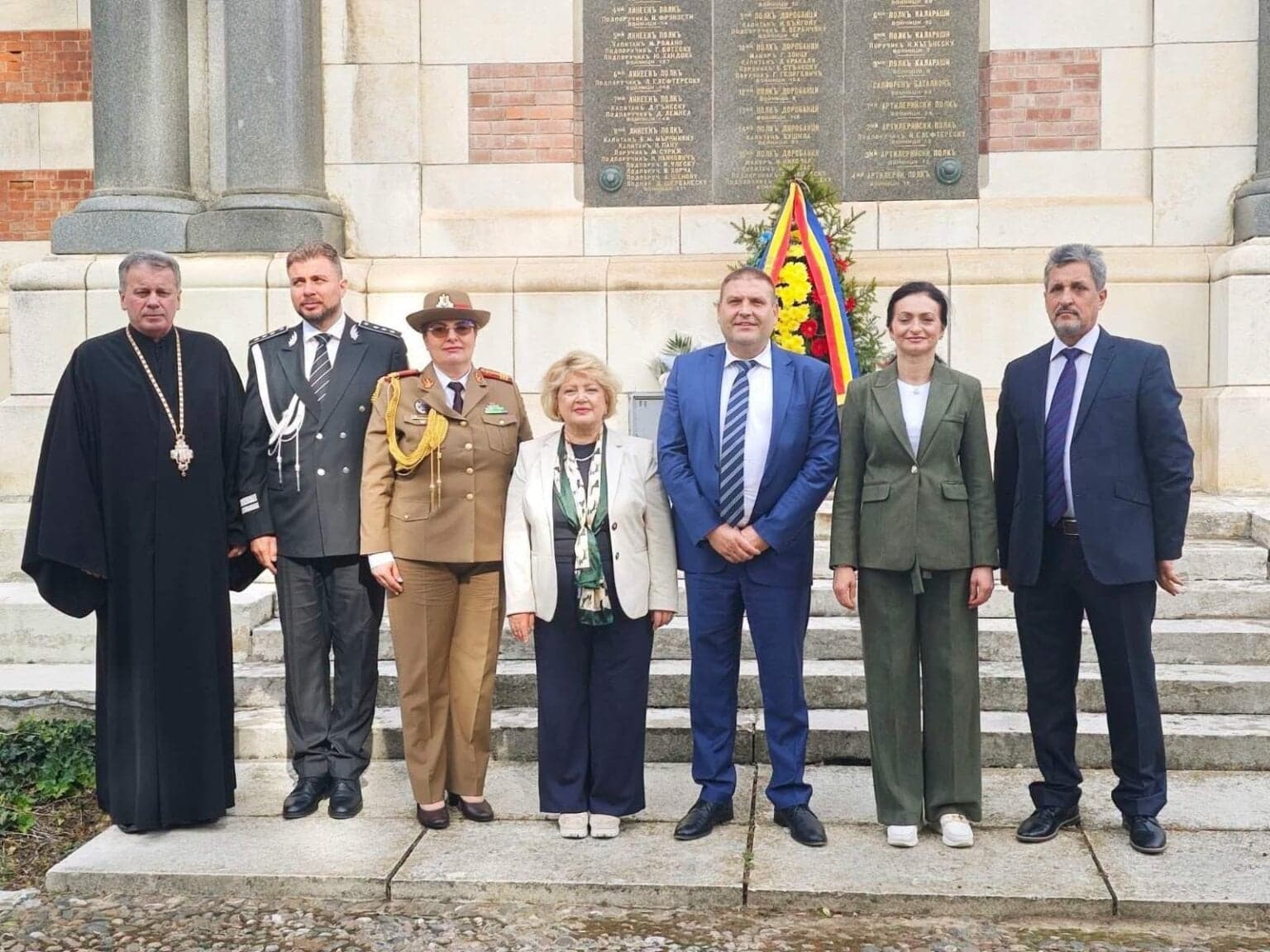
Bishop Antonie of Bălți officiated a memorial service on Thursday in honor of the victims of Stalinist deportations. The commemorative event took place at a symbolic location in the city of Bălți – the train station from which thousands of people were deported to Siberia and Kazakhstan.
Dozens of candles were lit near the Monument to the Victims of the Totalitarian Communist Regime to honor those who were deported.
Remarks were delivered by Nicolae Uncuță, President of the Association of Victims of the Totalitarian Communist Regime in Bălți; Nelea Chihai, PhD candidate and senior specialist at the Northern Branch of the Academy of Sciences of Moldova; Dinu Diaconu, a social sciences teacher from Bălți; and Bishop Antonie of Bălți.
June 12, 2025, marked 84 years since the first wave of deportations of Bessarabians to Siberia and Kazakhstan. Tens of thousands of people, mainly intellectuals, were taken from their homes and transported in inhumane conditions to remote regions, from which many never returned due to cold, hunger, disease, and harsh living conditions.
The deportations took place in freight trains, with journeys lasting up to three weeks in the heat of summer. Each deportee received only 200 grams of water daily and salt-cured fish as food.
The beginning of the deportations was decided during a joint meeting of the Regional Bureau of the Chernivtsi Committee of the Communist Party of Ukraine and the Executive Committee of the Chernivtsi Regional Council on June 8, 1941.
On the night of June 12 to 13, 1941, 1,000 Soviet activists were sent to Romanian homes in the Herța Region and Northern Bukovina. They deported 458 families in that single night.
Photo: Bălți Diocese