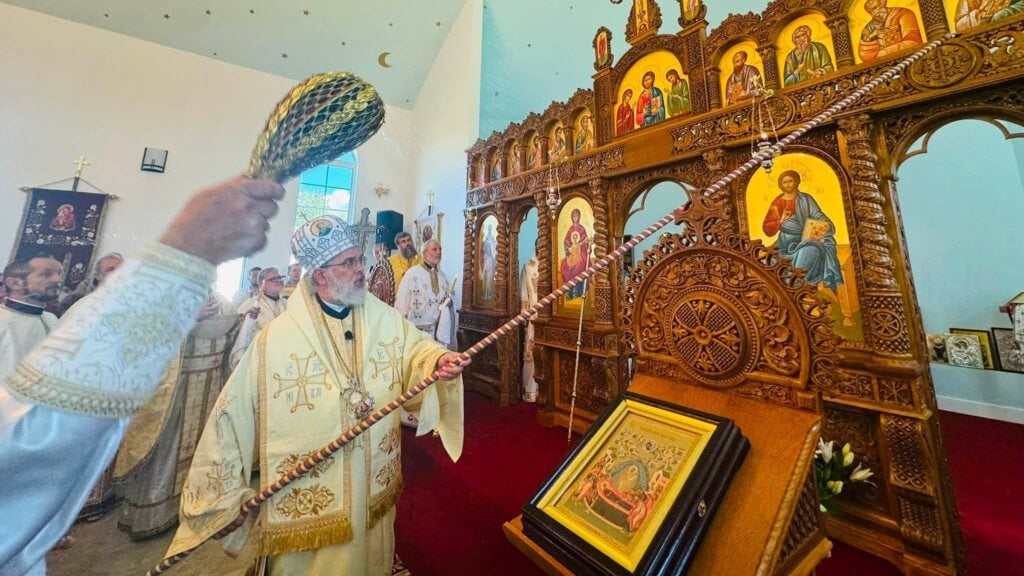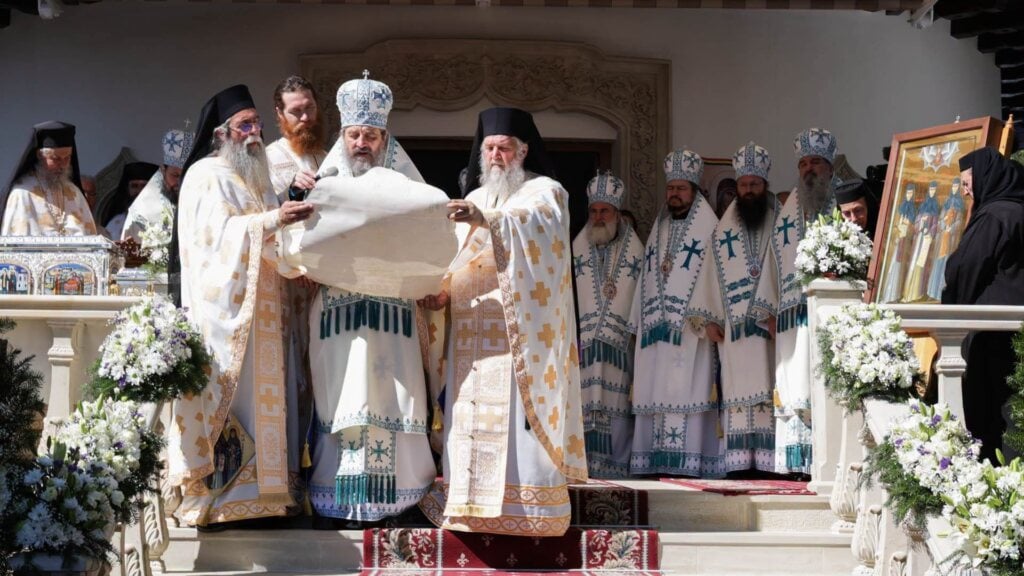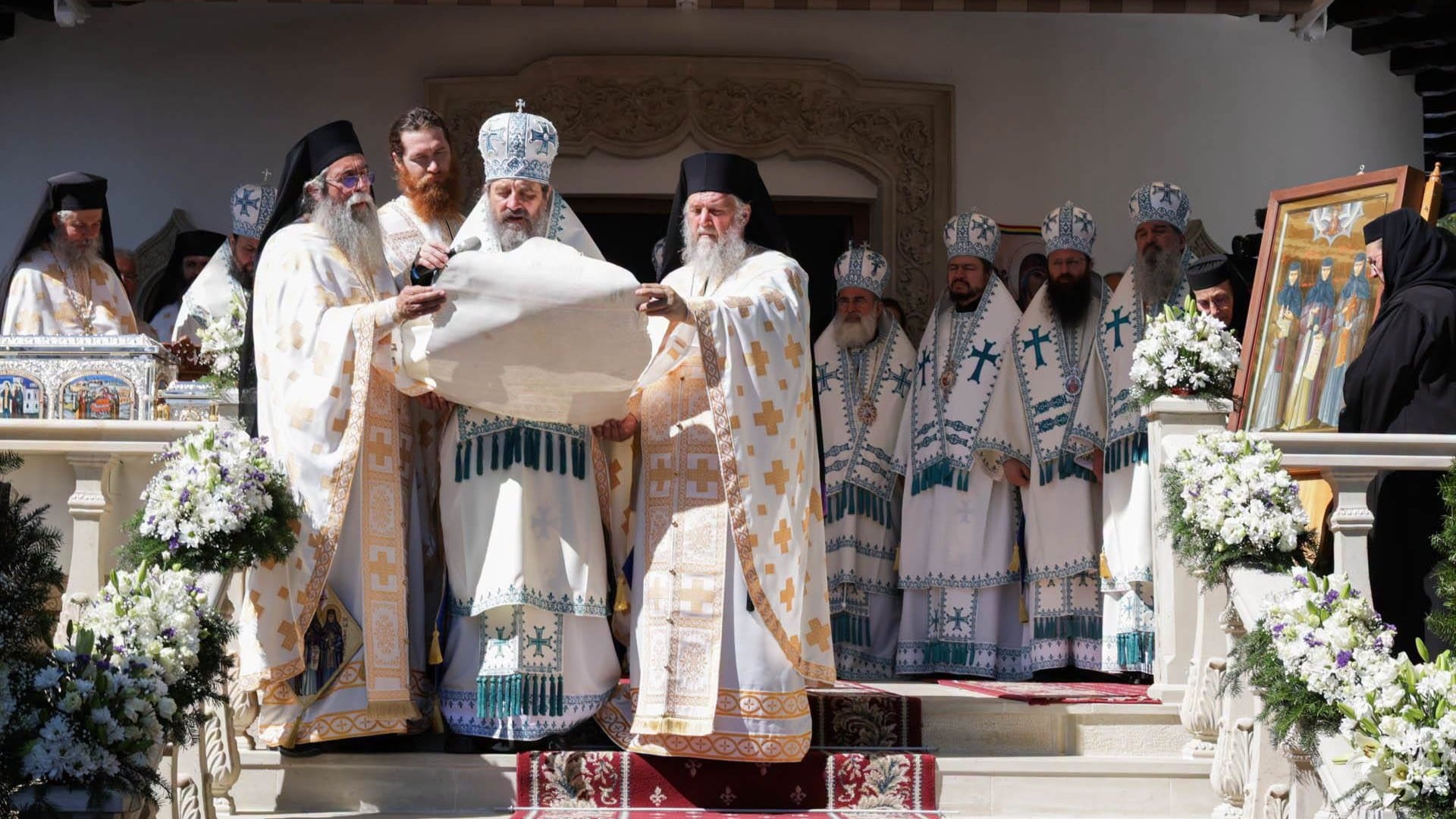
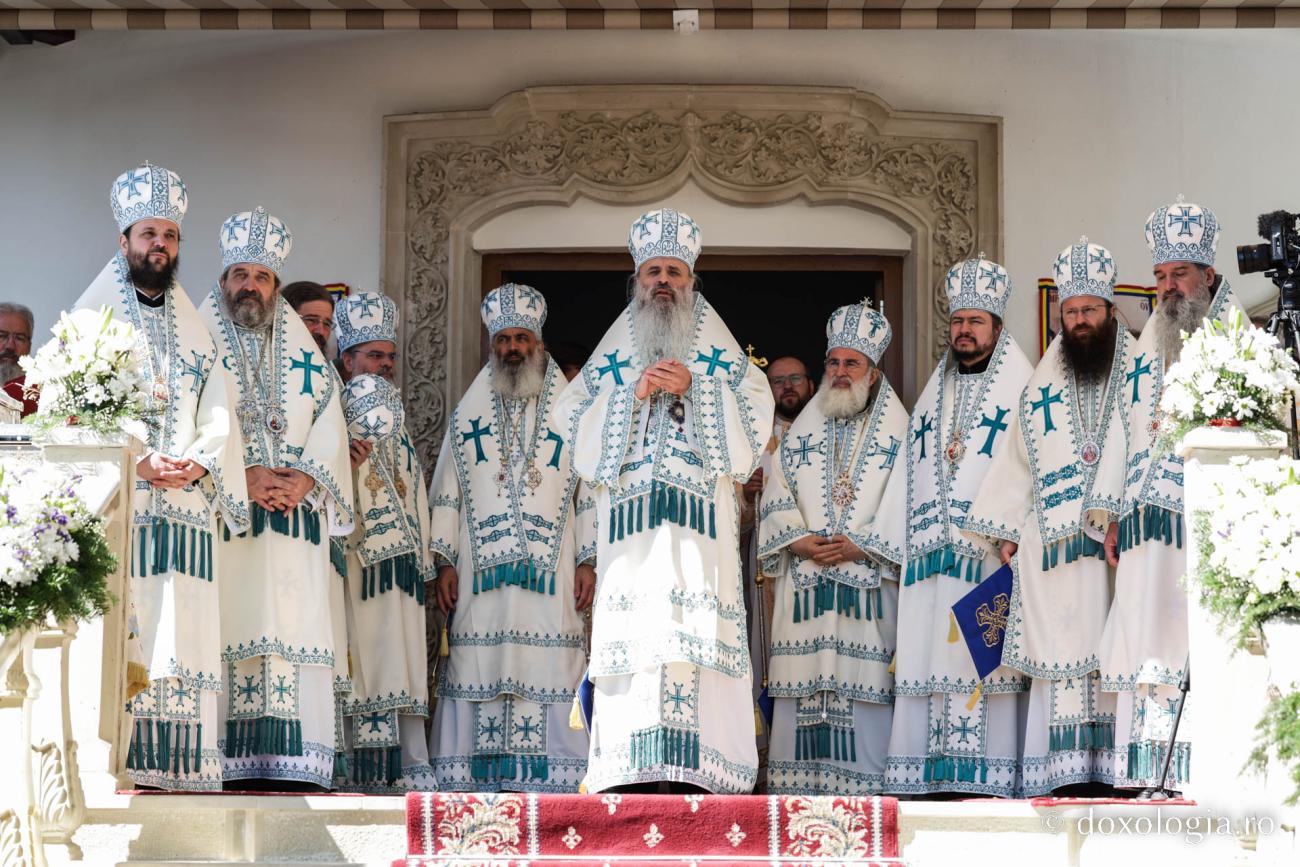
Ten hierarchs and numerous abbots from the Moldavia region, joined by clergy from across Romania and the diaspora, celebrated the Divine Liturgy last Sunday at Văratec Monastery in Neamț County, where the local proclamation of the canonisation of Saints Nazaria, Olympias and Elizabeth of Văratec took place after the liturgy.
The assembly of hierarchs comprised Metropolitans Teofan of Moldavia and Bukovina and Antonie of Bessarabia; Archbishop Ioachim of Roman and Bacău; Bishops Ignatie of Huși, Veniamin of Southern Bessarabia, Macarie of Northern Europe, and Nectarie of Ireland and Iceland; and Assistant Bishops Nichifor of Botoșani of the Archdiocese of Iași, Nectarie of Bogdania of the Archdiocese of Chișinău, and Teofil of Trotuș of the Archdiocese of Roman and Bacău.
Synodal Tomos and message from the Patriarch
At the conclusion of the Divine Liturgy, Assistant Bishop Nichifor read the Synodal Tomos announcing the saints’ canonisation. This was followed by the unveiling of their icon and the chanting of their troparion and kontakion.
His Eminence Metropolitan Teofan of Moldavia and Bukovina read a message from His Beatitude Patriarch Daniel delivered on the occasion.
“The canonisation of Saints Nazaria, Olympias and Elizabeth of Văratec, together with the other 13 Romanian holy women, demonstrates God’s blessed work among the Romanian people, from whom these holy women arose,” His Beatitude said.
“Through their spiritual lives, they enlightened the souls of nuns and lay believers, showing them the path to salvation in Christ.”
Taking on responsibilities is no obstacle to holiness
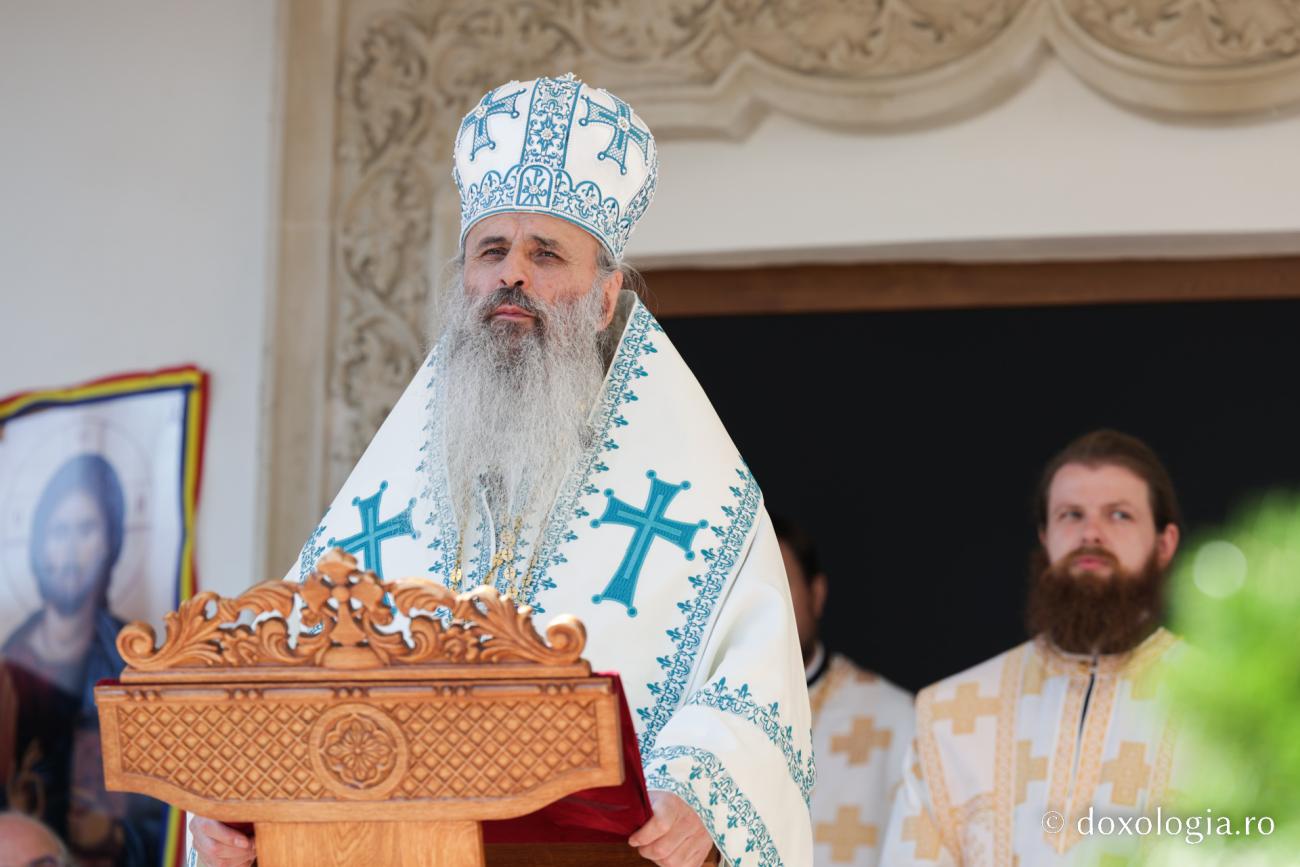
After delivering the Patriarch of Romania’s message, His Eminence Metropolitan Teofan shared several personal reflections on the historic occasion at Văratec Monastery.
“Saint Nazaria shows us that pure prayer is not a utopia. A person with a vigilant mind, pure thoughts and a watchful heart is helped by God to build up the inner person, the hidden person of the heart, as the Holy Apostles Peter and Paul testify, and thereby to acquire, in a humble spirit, the sweetness of prayer,” the Metropolitan said.
“Saint Olympias likewise shows us that taking on external concerns and responsibilities related to building, administration, or leadership does not prevent a person from reaching God,” the Metropolitan of Moldavia and Bukovina continued.
“On the contrary, if these ministries are undertaken in the name of God and with fear of Him, they become an offering of pure sacrifice presented before the Throne of the Most Holy Trinity.”
“And Saint Elizabeth shows us that there have been people who fulfilled the word of the Lord addressed to the rich young man in the Gospel: Go, sell your possessions, give to the poor, and then come and follow Me,” the Metropolitan added.
Prayer, service and love as expressions of the same spiritual work
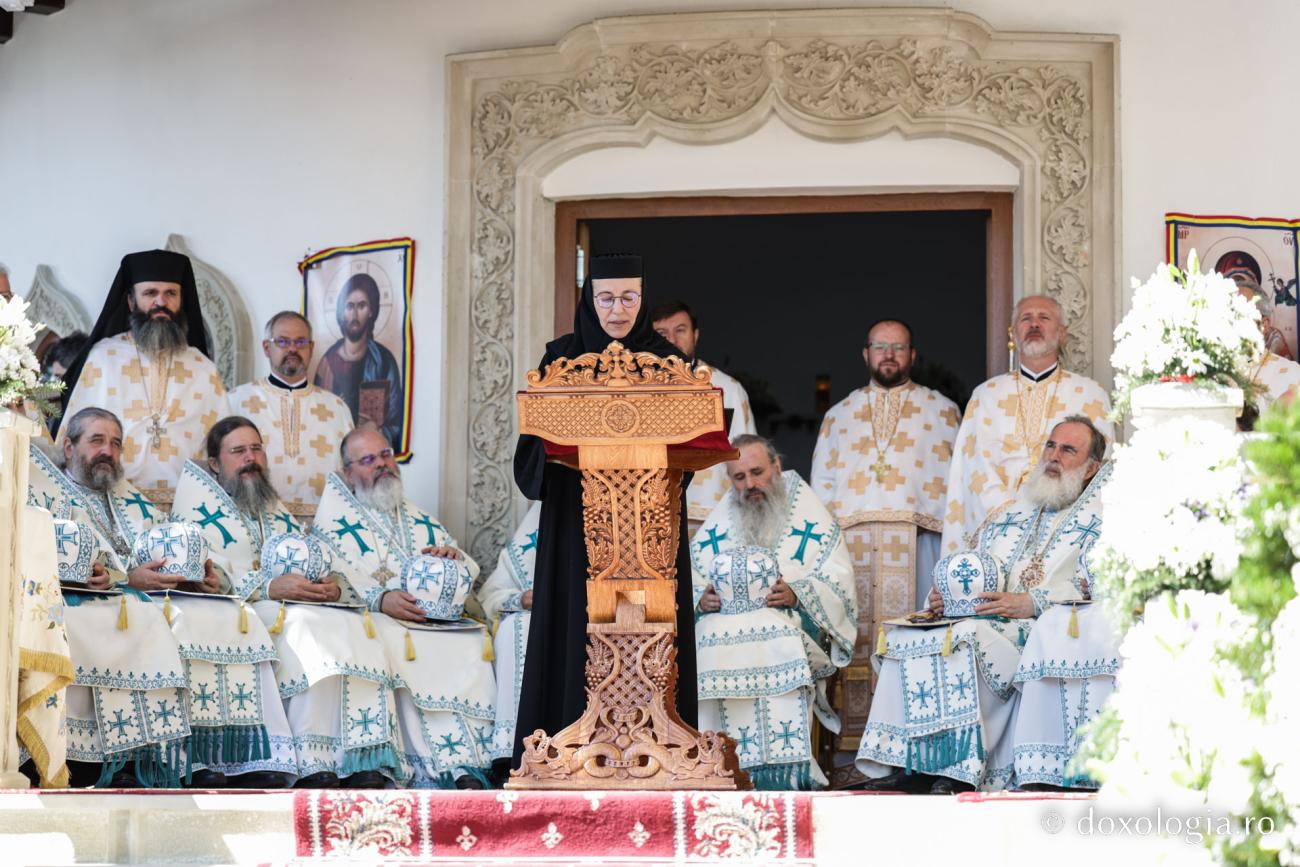
Stavrophore Iosefina Giosanu, Abbess of Văratec Monastery, delivered an address emphasising the community’s responsibility to carry forward the legacy left by previous generations.
“Such a celebration is not prepared in a day, nor even in a year. We could say that it has been in preparation for almost 240 years, since the foundations of this monastery were laid. Generations of nuns have come here in prayer and obedience, preserving the rule of the Church and the order established by the founders of this coenobitic community,” the Abbess said.
“Each generation received something from the one that preceded it – an order, a prayer, an obedience, a responsibility – and each was called to preserve this heritage and pass it on.”
“Looking at the three venerable saints, we discover three distinct expressions of the same life in Christ. Saint Nazaria introduced the hesychastic rule, Saint Olympias cultivated liturgical beauty, while Saint Elizabeth translated prayer into works of mercy. Through their lives, they show us that prayer, service and love of neighbour are not separate paths, but expressions of the same spiritual work,” Stavrophore Iosefina Giosanu added.
“For those of us who live in this monastery today, their proclamation is not merely a privilege; it is also a calling – a calling to preserve the rule, not to allow prayer to weaken, and to pass on to those who come after us what we ourselves have received.”
St Elizabeth’s foundation receives relics
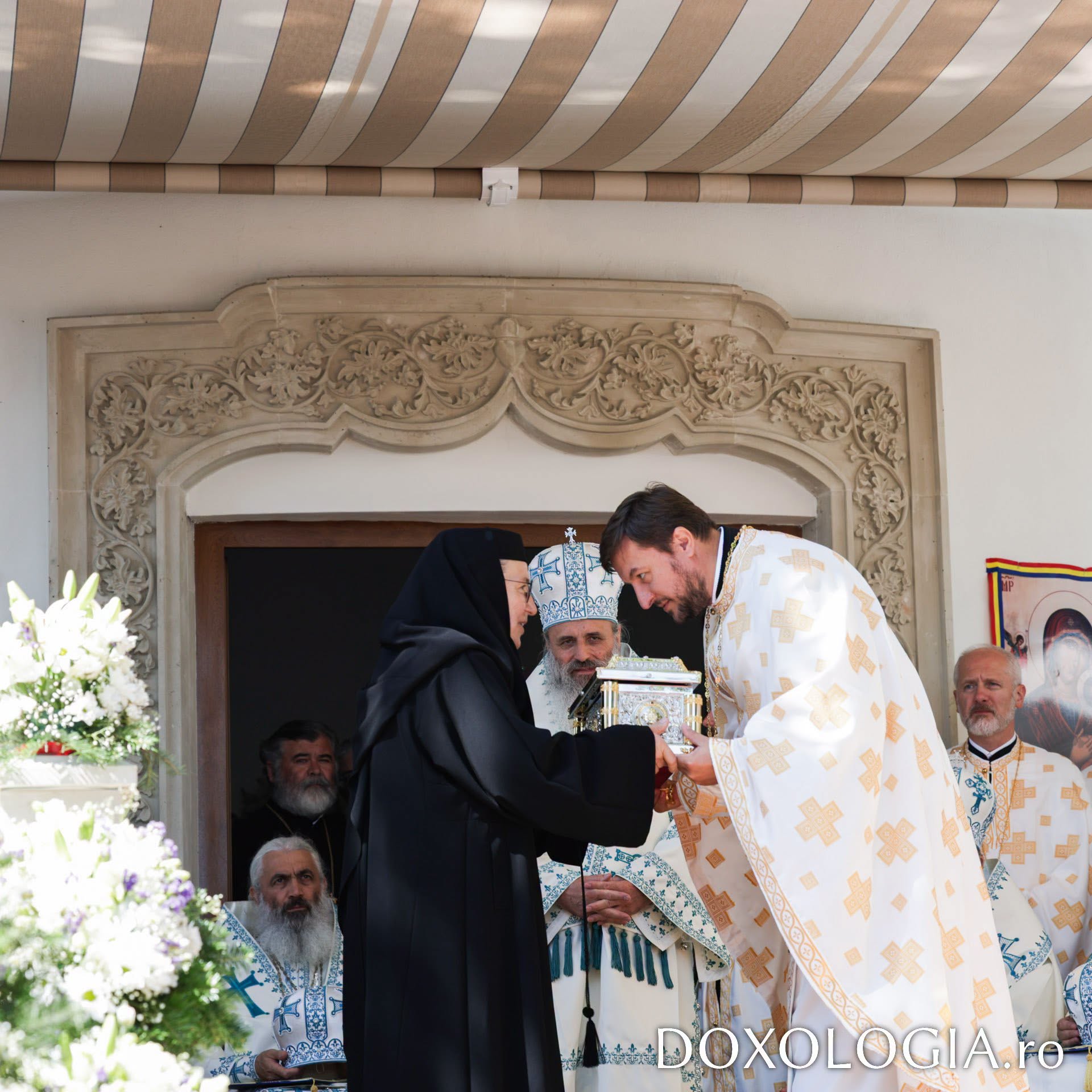
A special moment during the ceremony was the presentation of relic fragments to the Brâncoveanu Foundations – the “Lady Bălașa” Church in Bucharest, founded by Saint Elizabeth (Safta) Brâncoveanu.
The sacred relics were presented to Father Ștefan Ababei, parish priest of “Domnița Bălașa” Church and Patriarchal Adviser within the Department for Patriarchal Stavropegia and Social Centres of the Patriarchal Administration.
The events were broadcast live on Doxologia.ro’s Facebook page and YouTube channel. Photo galleries from Sunday’s Divine Liturgy and from the proclamation of the canonisation of the three saints are also available on the Doxologia.ro website.
Feast programme
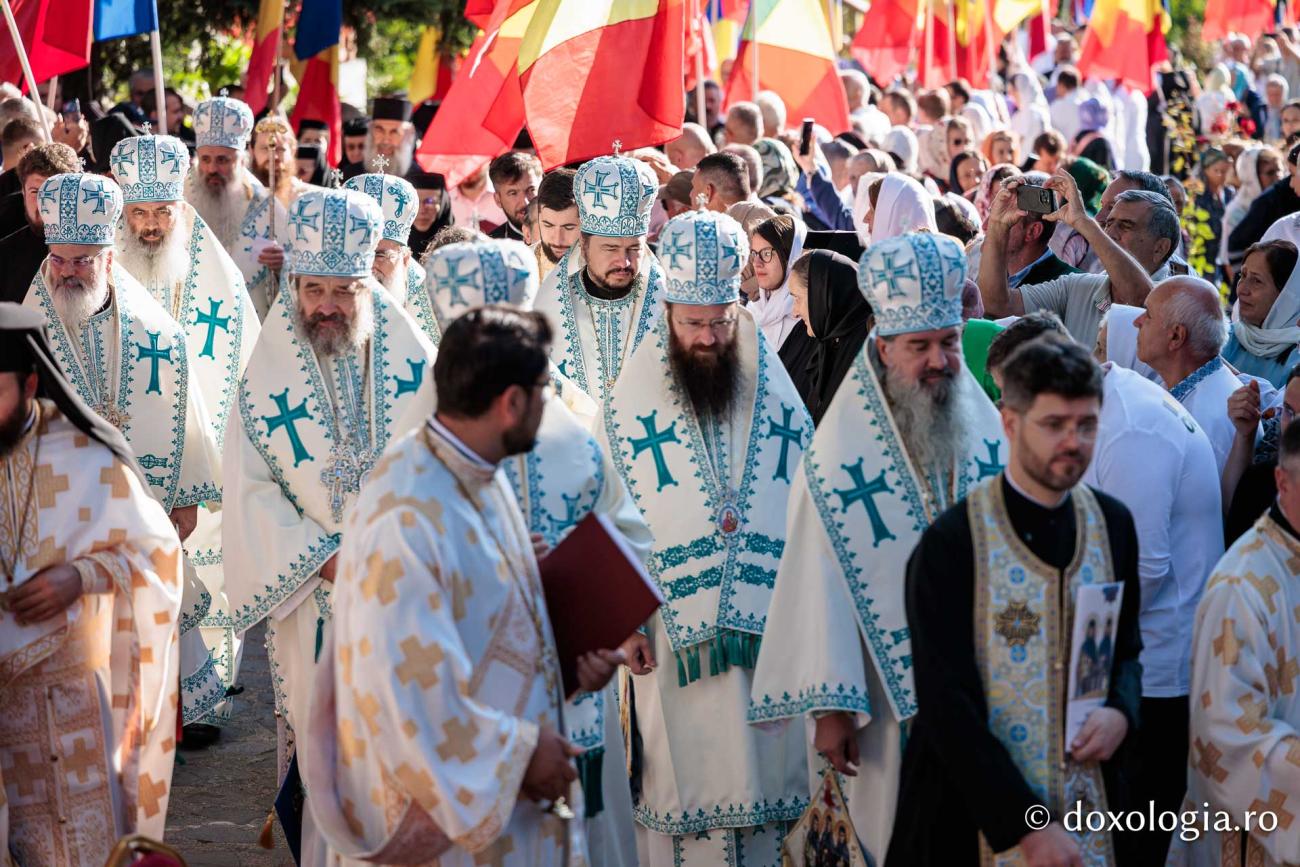
Events connected with the local proclamation of the canonisation of Saints Nazaria, Olympias and Elizabeth of Văratec began on Friday, on the eve of the Dormition of the Mother of God, with the Vigil for the great feast, celebrated by abbots and clergy from the Moldavia region, followed by a procession with the Epitaphios of the Mother of God.
On Saturday, the Divine Liturgy for the Dormition of the Mother of God was celebrated by Metropolitan Antonie of Bessarabia. In the evening, Assistant Bishop Nectarie of Bogdania of the Archdiocese of Chișinău celebrated the Vigil for the feast of Saint Joseph of Văratec.
About the saints of Văratec
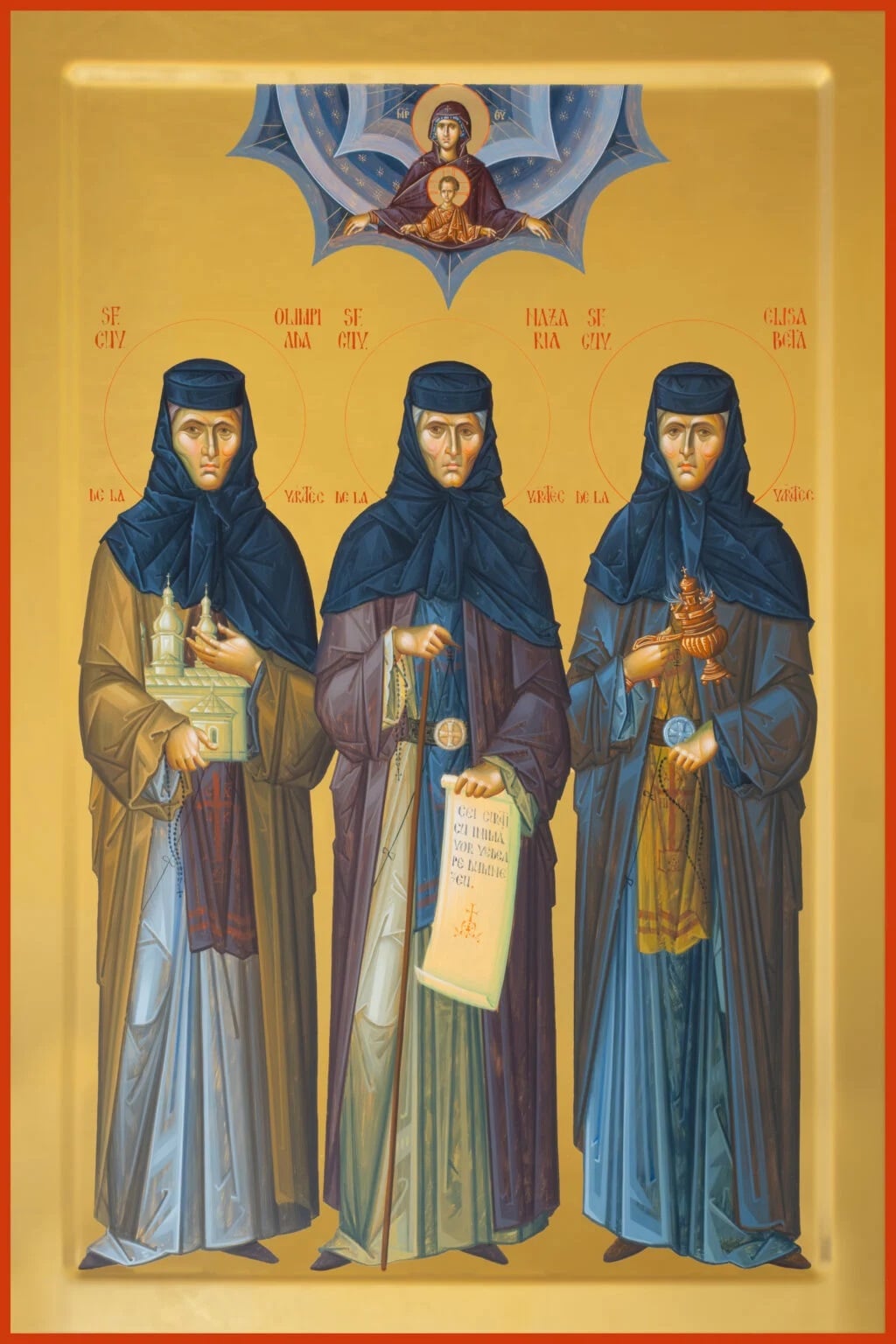
Saints Nazaria, Olympias and Elizabeth of Văratec have been jointly entered into the Orthodox synaxarion, with their feast day observed on 17 August. Their first liturgical commemoration will take place on Monday.
The three monastic saints were canonised last year, along with 13 other Romanian holy women, and the Patriarchal Cathedral formally proclaimed their canonisation on 6 February 2026.
Văratec Monastery also houses the relics of Saint George the Pilgrim and Saint Joseph of Văratec.
Photo: Doxologia.ro