Orthodox Christians who follow the unrevised calendar begin the Dormition Fast on Friday, 14 August, a two-week period that ends in late August.
It is one of the year’s strictest fasting periods, comparable to the Great Lent before Easter. During this period, meat, eggs and dairy products are not consumed, while fish is permitted only on 19 August, the feast of the Transfiguration of the Lord.
Alongside dietary restrictions, the period is devoted to increased prayer and to cultivating a more temperate way of life. Reading Holy Scripture, attending Church services and helping those in need are all part of the spiritual preparation for the feast.
Where the unrevised Julian calendar is observed
In Romanian communities, the unrevised calendar is followed particularly in the Republic of Moldova, northern Bukovina and Budjak, and among Romanians in the Timok Valley in Serbia. Some Ukrainian communities in Romania, the Patriarchate of Jerusalem, and Mount Athos also observe the same calendar.
In some Romanian communities outside the country, the period also retains traditional forms of prayer. The fast begins with lăsatul secului, the traditional final day before fasting begins, and during the two weeks the faithful customarily bring flowers, basil, and the first fruits of the harvest to church.
Prayer to the Mother of God holds a special place during this period, particularly through the reading or chanting of the Paraklesis in churches and, in some communities, even in the homes of the faithful.
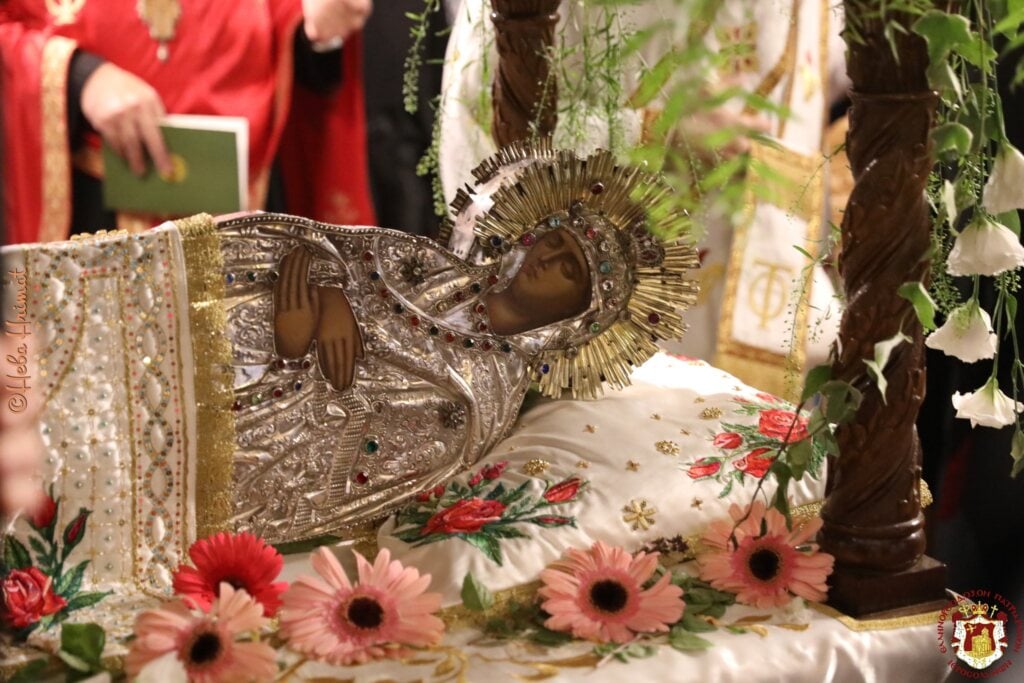
In Jerusalem, where the Tomb of the Mother of God is located in the Garden of Gethsemane, the fasting period is marked by services and, on the eve of the feast, by a procession carrying the icon of the Mother of God to the church in the Garden of Gethsemane.
The Dormition Fast ends on 28 August, when communities observing the old calendar celebrate the Dormition of the Mother of God.
The Dormition Fast
The observance of the Dormition Fast developed gradually during the early centuries of Christianity, when its duration varied from one region to another.
In Antioch, the faithful fasted for a single day for the feast of the Transfiguration, while in Constantinople the fasting period lasted four days and in Jerusalem it extended to as many as eight days.
To standardise the practice, the synod held in Constantinople in 1166, presided over by Patriarch Luke Chrysoberges, clarified the duration and established the official dates of the fasting period.
Photo: Jerusalem Patriarchate archive