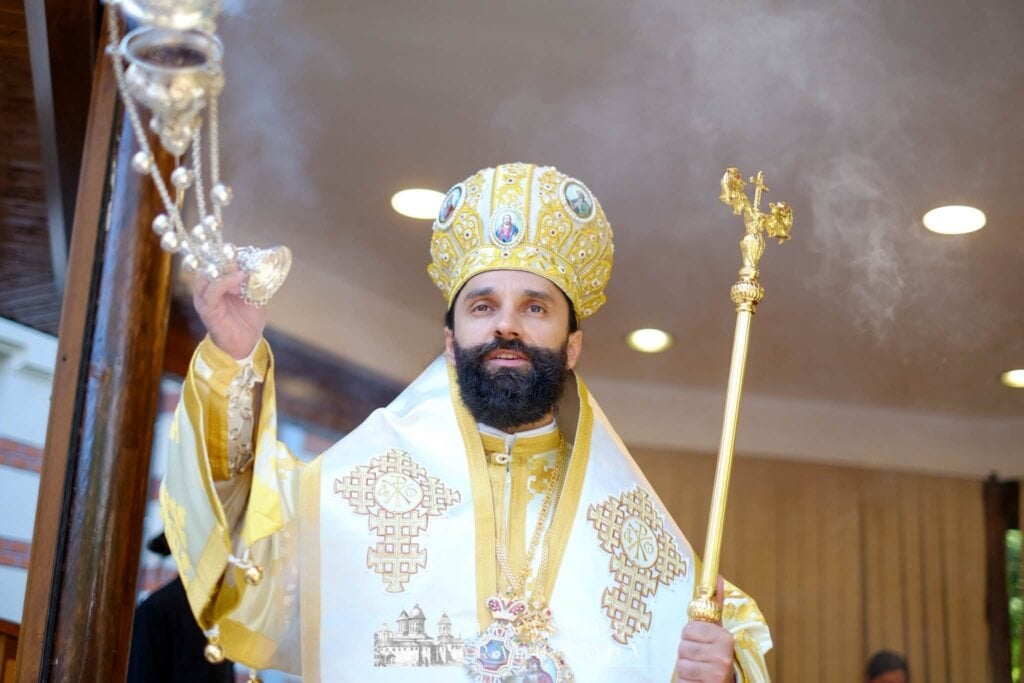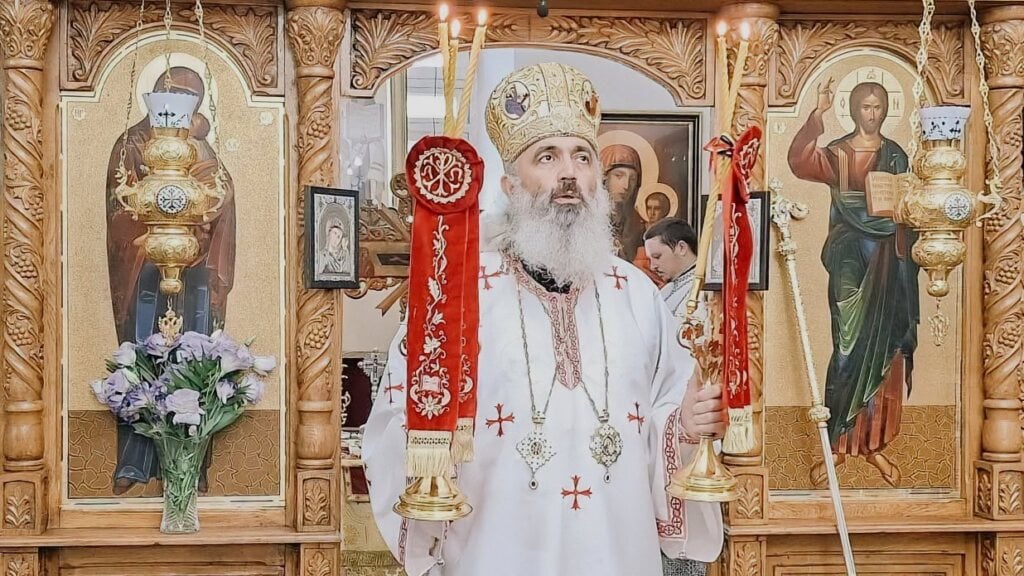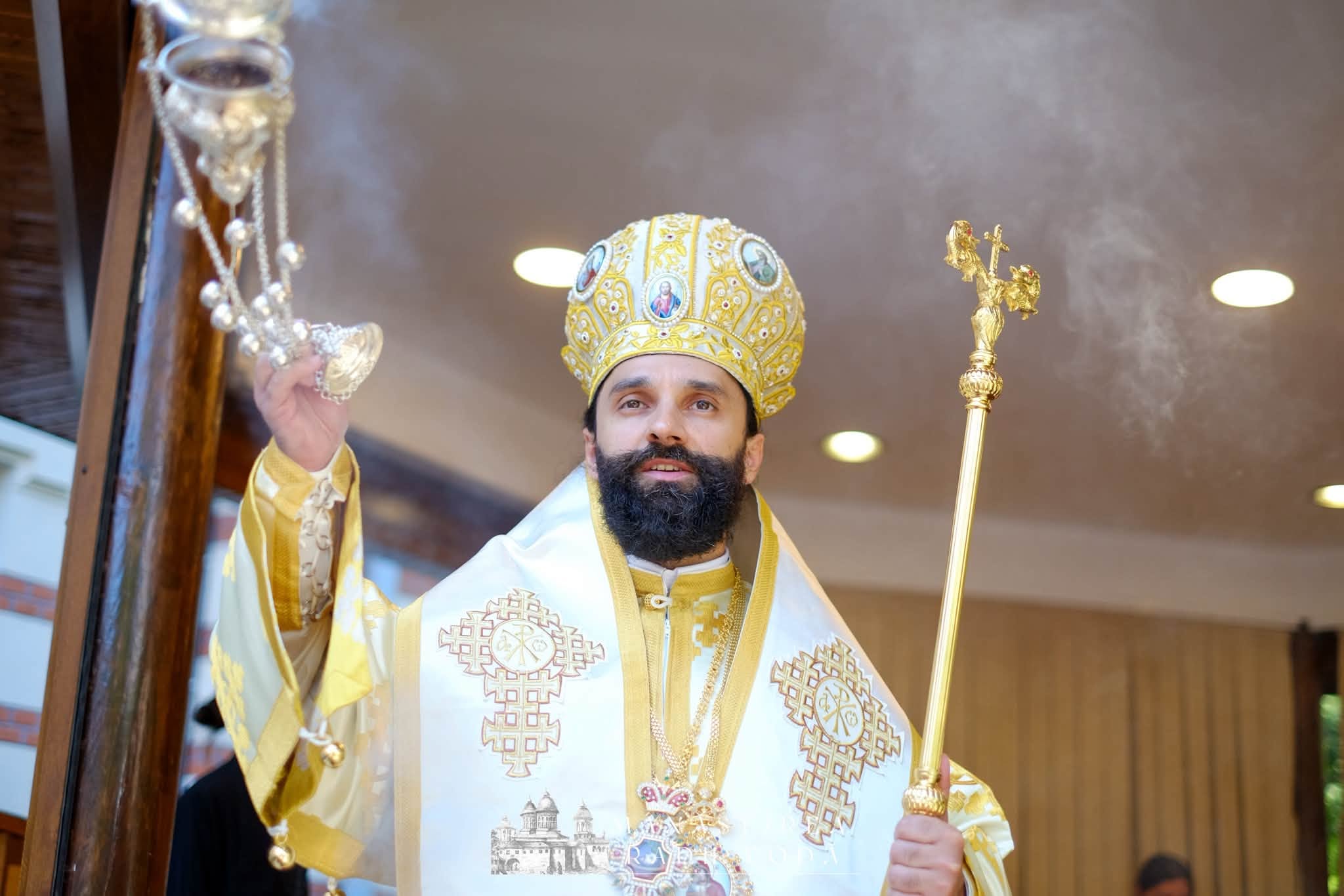
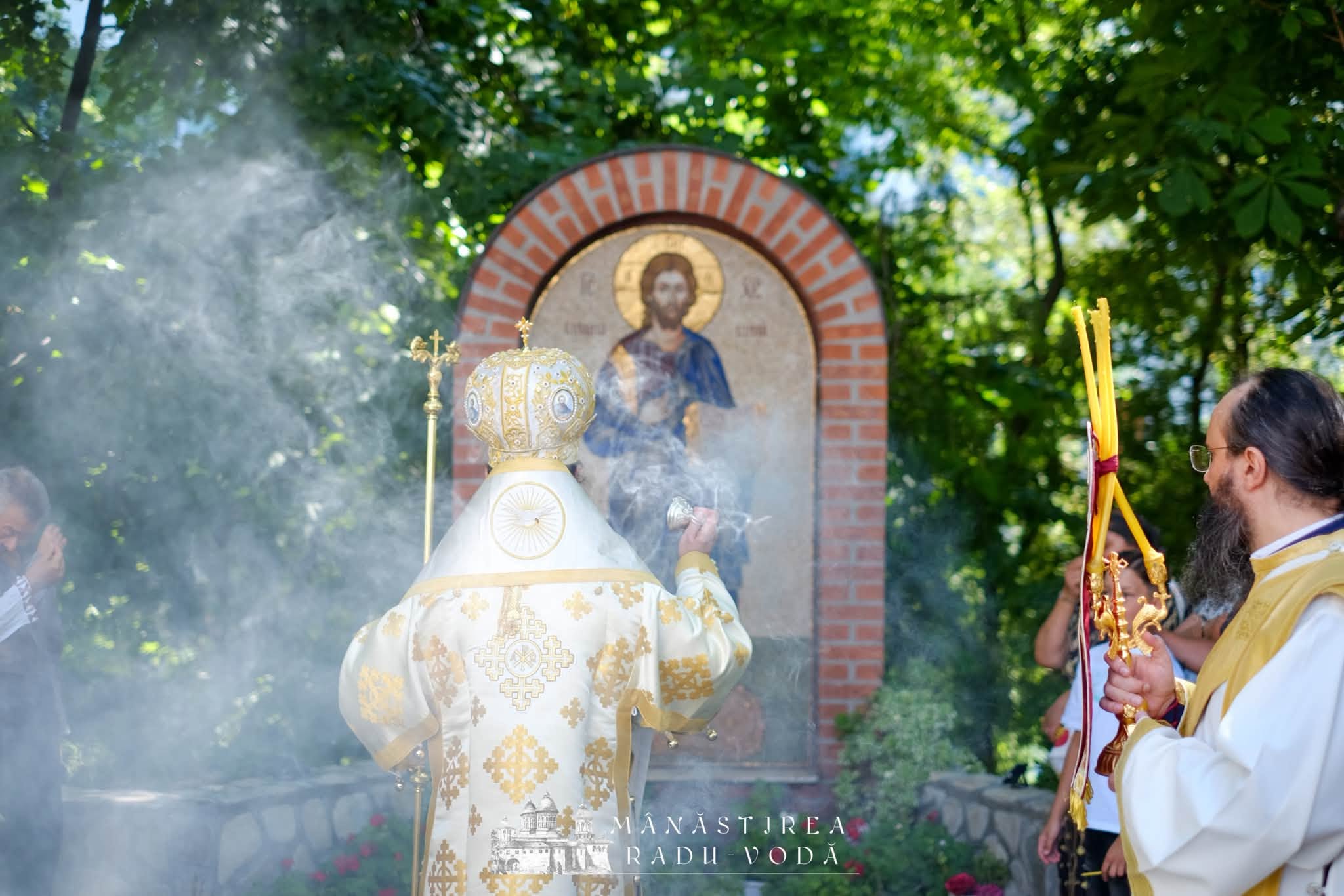
“Christ continues to nourish us today through the Holy Eucharist,” said Sunday Bishop Iachint of the Pacific, Assistant Bishop of the Romanian Orthodox Diocese of Australia and New Zealand, at Radu Vodă Monastery in Bucharest.
“Christ nourishes us with the Holy and Divine Eucharist, with His Body and Blood,” the assistant bishop said, noting that, symbolically, the Holy Eucharist is prepared from five prosphora loaves—the same number as the loaves multiplied by Christ.
“In every particle of Holy Communion, the fullness of the Lord’s Body and Blood is present. It is sufficient for our salvation and enables us to understand even more than the Apostles did: that Christ is the Saviour, that His teaching brings salvation, and that only by following Him can we become like God and fulfil the purpose of our existence,” the hierarch explained.
“Bring them to Me!”
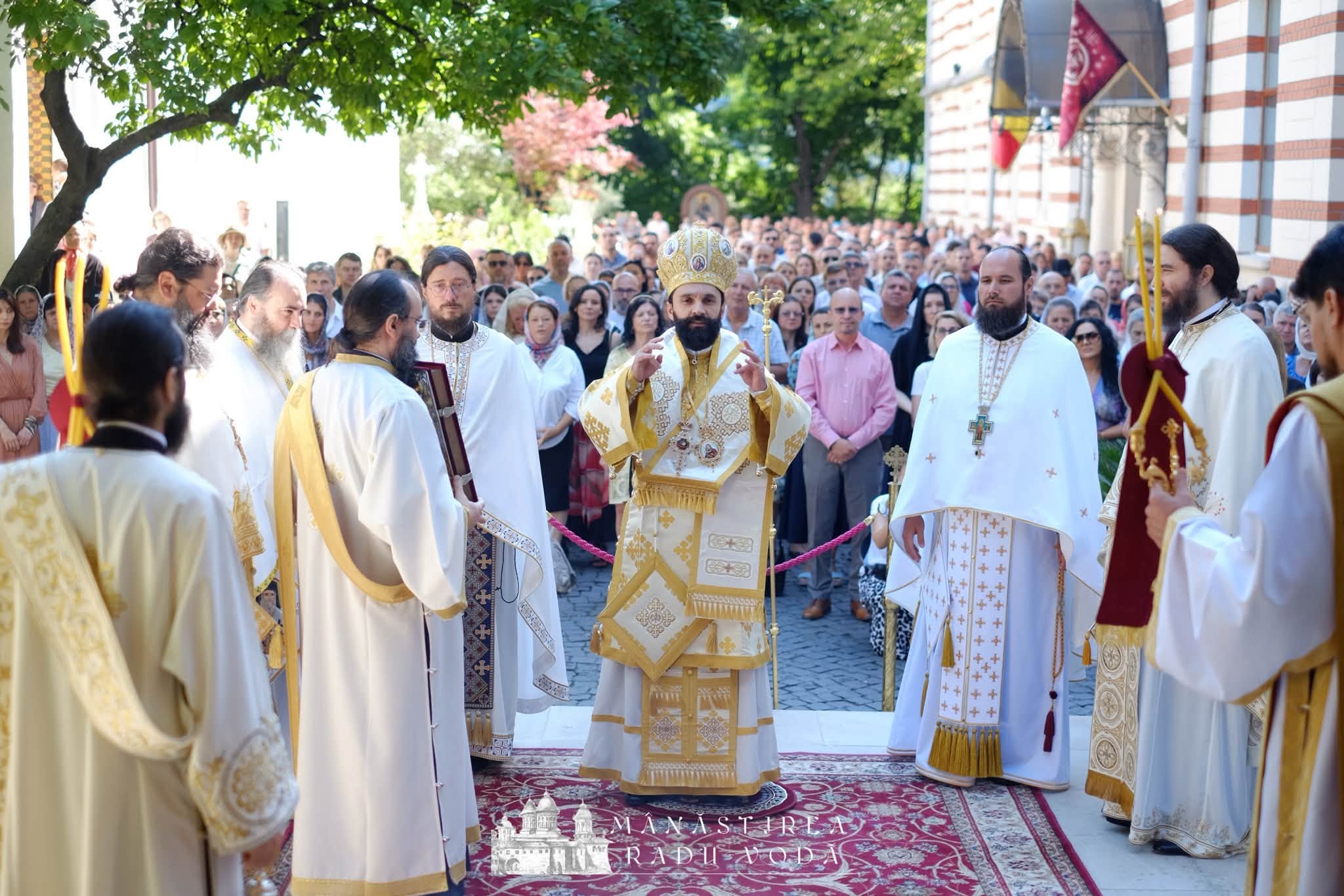
Bishop Iachint also reflected on Christ’s command, “Bring them to Me!”
From this exhortation, he said, Christians should learn that “everything we have—absolutely everything we possess as material goods in this life—comes from Him and should be used according to His teaching. We should receive these gifts with gratitude, and eat with thanksgiving, bowing our heads before our meals.”
“We should also offer them with gratitude, sharing them with others as acts of charity and love,” the bishop added.
Bishop Iachint recalled that, after receiving the loaves and fish, Christ looked up to heaven, blessed them, broke them, gave them to His disciples, and the disciples distributed them to the crowds.
“This is the proper order: first we look to heaven, to our Giver, the One who blesses us with so many gifts—God, from whom we receive life, health, and even this time, which unfortunately we sometimes waste, neglect or take for granted. Elder Arsenie Papacioc used to say that we must not play with time, because it flies away and never returns.”
“Before we share anything, we first thank God that we have something to share, and we glorify Him for the good we are able to do through it. That is why, when we prepare memorial offerings for those who have fallen asleep in the Lord, we first bring them to the church so that the priest may bless and sanctify them before they are distributed.”
“In this way they become signs of a love that reaches into eternity, into the Kingdom of God, overcoming death and every barrier that may stand between us and others,” Bishop Iachint emphasised.
Bread shared, bread multiplied
“Only after the bread was shared and given away did it become multiplied and miraculous bread, capable of feeding more than five thousand people,” the bishop continued.
He recalled the observation of a twentieth-century thinker: “Humanity has learned how to split the atom, but it has not yet learned how to share bread.”
“The bread that satisfied five thousand men, together with their wives and children, could feed them only after it had been broken and shared.”
“We should not imagine that, all at once, the wilderness was filled with tens of thousands of loaves. Rather, people were satisfied by the small pieces that Christ broke from those few loaves and distributed with love.”
Concluding his homily, Bishop Iachint said: “Dear faithful, it is faith and love that enable us to understand the true purpose of all the material goods that we possess.”
Photo: Radu Vodă Monastery