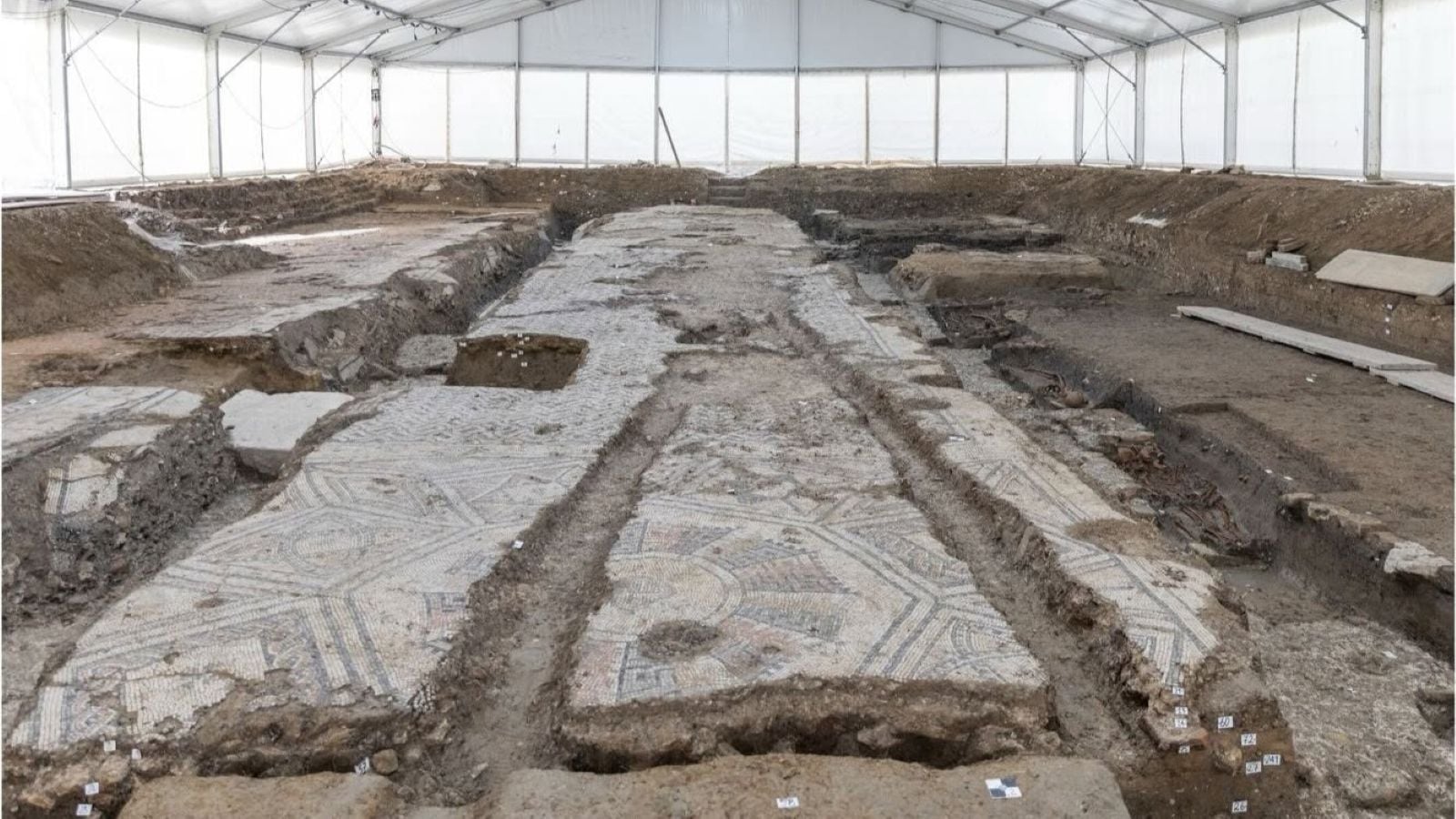
A vast early Christian basilica dating back approximately 1,600 years, previously unknown to scholars, has been discovered in the Italian town of Oderzo, in the province of Treviso, northern Italy.
According to a report by Archaeo Reporter, the discovery was made on the site of the town’s former fish market during preventive archaeological excavations that began in November 2025 ahead of a residential development project.
The excavations uncovered a large three-aisled hall, monumental walls, tombs and polychrome mosaic floors. Specialists believe the remains may belong to the earliest Christian church ever identified in the town.
An incredible surprise
The preliminary findings were presented during a public meeting in Oderzo, where Mayor Maria Scardellato described the discovery as “truly an incredible surprise for Oderzo.”
Maria Cristina Vallicelli, a representative of Italy’s Superintendency for Archaeology, admitted that even specialists had been astonished by the scale of the discovery.
“We never expected to find what we actually discovered.”
The excavations are being directed by archaeologist Simone Colucciello, who explained that the first clues consisted of only a few black-and-white mosaic tesserae. As the excavation expanded, however, the team’s understanding of the site changed dramatically.
“We began to think we were looking at a building—a church. We still had no idea how large it actually was.”
Basilica dates back more than 1,600 years
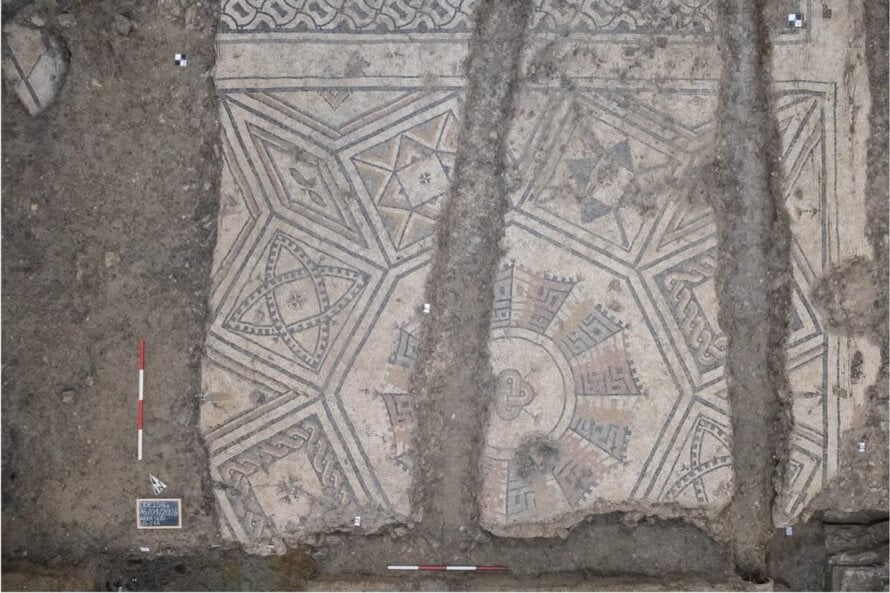
The basilica has been provisionally dated to the late fourth or early fifth century, based on its architectural plan and stylistic similarities between its mosaics and those found at Concordia Sagittaria and Aquileia.
The structure is remarkable for its walls, up to 1.2 metres thick, and for places where they are preserved to a height of three metres. It also displays sophisticated construction techniques, with foundations built on wooden piles driven into the alluvial soil. Samples have been collected for radiocarbon analysis to establish a more precise date.
Among the most spectacular discoveries are richly decorated polychrome mosaics featuring octagons, Solomon’s knots, vegetal motifs, concentric circles and geometric ornamentation, together with glass-paste tesserae that indicate a decorative programme of exceptional quality.
Archaeologists have also identified what may be elements of the presbytery, along with an area that appears to have served as a workshop and storage space for materials used in constructing and decorating the basilica.
Excavations continue
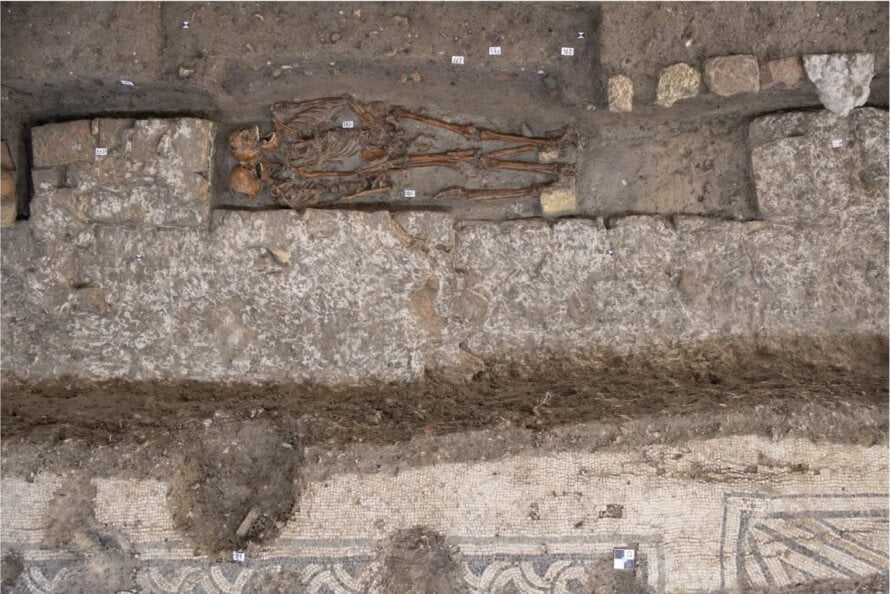
Four burials have been discovered outside the building. Researchers will conduct anthropological, isotopic, and genetic analyses to determine the age, sex, and origins of those interred. Meanwhile, excavations continue in the northern aisle, where additional mosaic sections and more wooden foundation piles have already been identified.
Commenting on the significance of the discovery, Maria Cristina Vallicelli said:
“We are writing a new and important chapter in the history of the city of Oderzo during Late Antiquity.”
She added that the basilica represents “the first known and discovered Christian place of worship in the city.”
Local authorities are already preparing a conservation and public presentation project that will allow visitors to admire a significant portion of the basilica and its mosaics, transforming the discovery into a new landmark of northern Italy’s archaeological heritage.
Photo: Facebook / Soprintendenza ABAP per le province di Padova, Treviso e Belluno