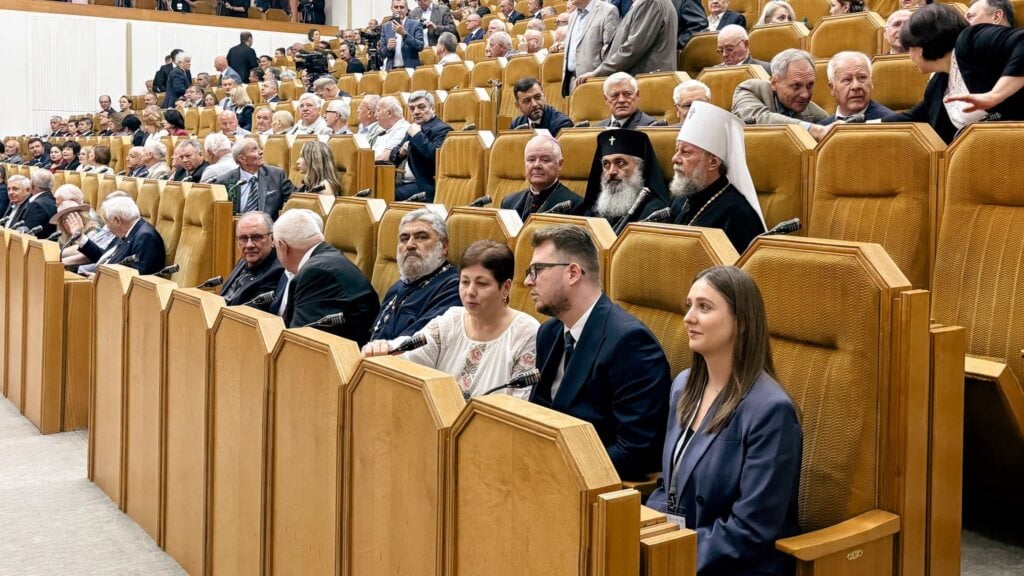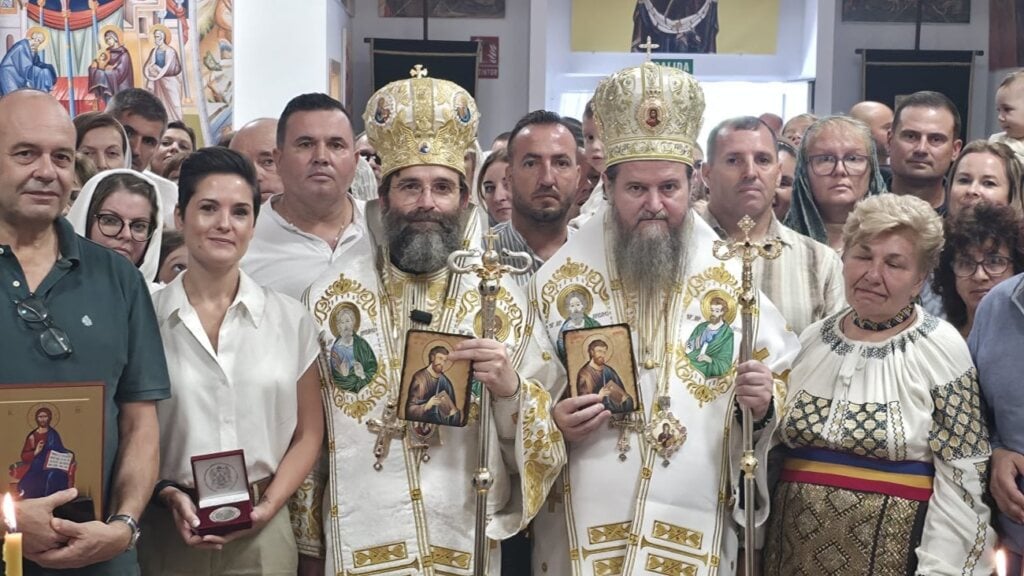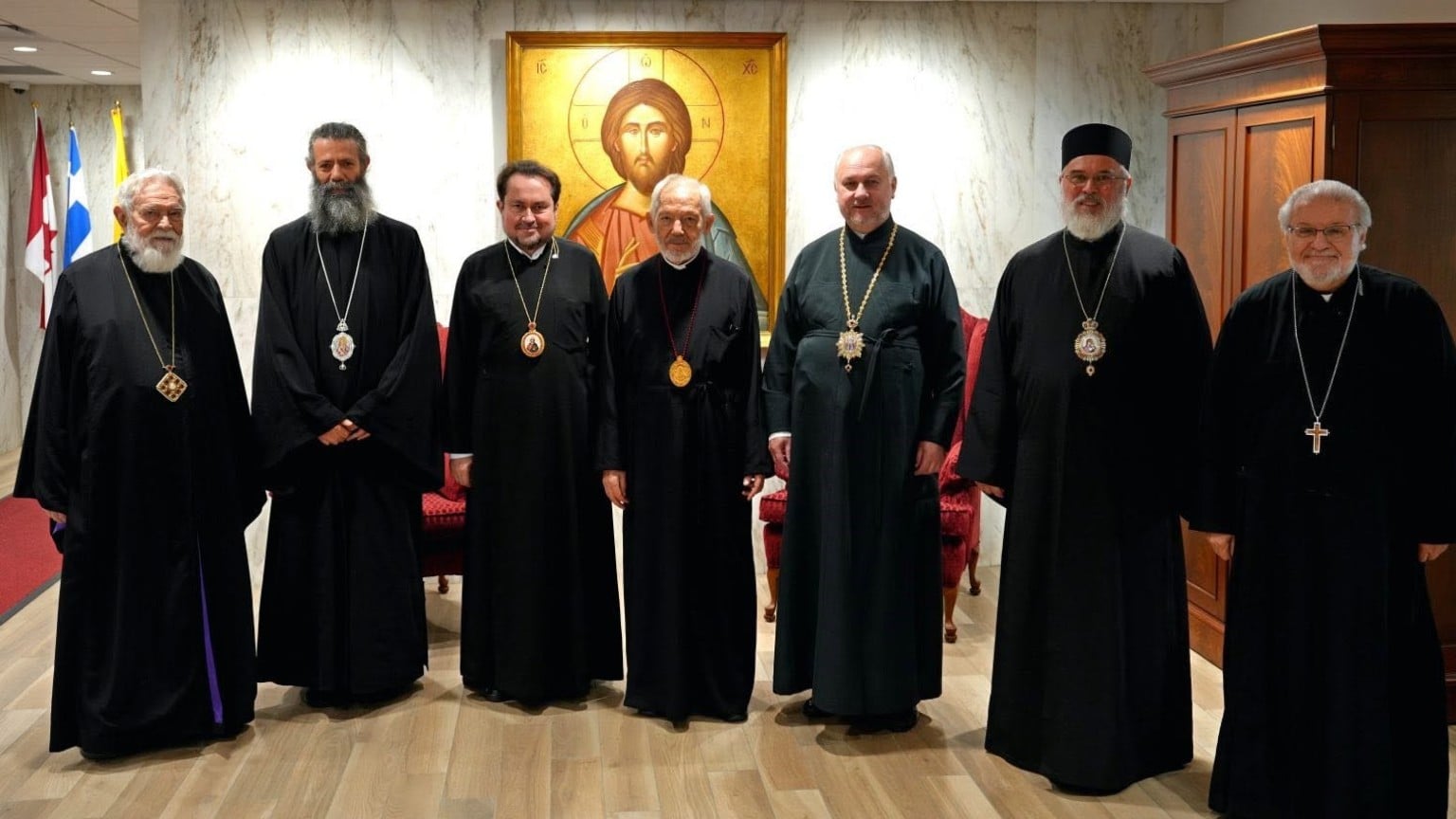
His Grace Bishop Ioan Casian of Canada took part in the plenary session of the Canadian Conference of Orthodox Bishops (CCOB) on Wednesday, June 17, in Toronto. The hierarchs noted the continued growth in the number of catechumens and converts while also addressing the challenges facing Orthodox communities, including the demographic decline of rural parishes.
The meeting was hosted by His Eminence Archbishop Sotirios of the Greek Orthodox Archdiocese of Canada and brought together hierarchs representing the various Orthodox jurisdictions in Canada, including Ukrainian Metropolitan Ilarion of Canada, Ukrainian Bishop Andriy of the Eastern Eparchy, Archbishop Nathaniel of the Romanian Orthodox Episcopate of America (Orthodox Church in America), and Assistant Bishop Clement of the Bulgarian Orthodox Diocese of the USA, Canada and Australia.
Following the opening prayer, the hierarchs discussed a range of issues of major importance for the life of the Church, including demographic developments within Orthodox communities, clergy formation, compliance with Canadian legislation, pastoral challenges and inter-Orthodox cooperation.
Growth and Challenges
The bishops presented reports on the dioceses entrusted to their care, highlighting both encouraging signs of growth and significant structural challenges.
Several jurisdictions reported a steady increase in the number of catechumens and converts, including people from a wide variety of ethnic backgrounds. Major urban centres continue to benefit from both immigration and the reception of Canadians from other Christian traditions.
By contrast, the bishops drew attention to the difficulties facing rural communities. In provinces such as Manitoba and Saskatchewan, population decline and low immigration levels have affected the long-term viability of many small parishes. In response, some dioceses have begun processes of administrative reorganisation and the integration of newly arrived clergy and faithful.
The meeting also highlighted new missionary initiatives as positive examples of evangelisation and Christian witness. At the same time, theological academies, youth programmes and women’s organisations continue to play an important role in supporting the life of the Church.
Clergy Formation and Leadership
The shortage of clergy across several jurisdictions remained a recurring concern for the meeting. The bishops observed that recruiting priests from their countries of origin has become increasingly difficult, while competition among parishes for available clergy has intensified.
At the same time, the practice of sending candidates abroad for theological education has not always proved sustainable over the long term. As a result, several dioceses are placing greater emphasis on fostering local vocations, including among those who embrace the pastoral ministry later in life.
Demographic changes within parish communities also prompted discussions about maintaining an appropriate balance between traditional liturgical languages and local languages, particularly English and French.
Legal and Administrative Issues
A significant part of the meeting was devoted to legal and administrative matters. Representatives of several jurisdictions highlighted the considerable costs associated with complying with the updated provisions of Ontario’s Not-for-Profit Corporations Act.
The Conference reviewed different models for the administration and ownership of Church property. In some jurisdictions, parish properties are owned directly by the diocese, while others favour transferring ownership to local parish communities. Hybrid models, particularly for urban parishes and monasteries, were also examined.
The bishops also discussed recent recommendations by public authorities concerning possible restrictions on freedom of expression in the public sphere regarding the citation and explanation of sacred texts.
Reception of Converts
A substantial part of the discussions focused on the reception of converts into the Orthodox Church. Particular attention was given to the practice commonly referred to as “rebaptism”. The bishops observed that, although certain monastic centres, including some associated with Mount Athos, adopt a stricter approach, this does not generally reflect the pastoral practice of the majority of Orthodox Churches.
The Assembly reaffirmed the existing North American theological agreements between the Orthodox Church and the Roman Catholic Church concerning the mutual recognition of canonical baptism.
The bishops also examined the pastoral challenges involved in integrating people from post-communist societies who often possess a cultural Orthodox identity but have received only limited religious formation.
Future Plans
Several standing committees, including the Committee for Military Chaplaincy, presented reports. Participants discussed the ongoing transformation of military chaplaincy and the challenges it poses for the values and practices of historic Christian traditions.
The bishops also considered ways of encouraging pan-Canadian inter-Orthodox concelebrations, particularly in major centres such as Toronto and Montreal.
The Commission for Monastic Life proposed organising a national monastic conference and examined several canonical issues regarding the administration of monasteries and their proper integration into the Church’s canonical order.
Further discussions addressed youth ministry, ecumenical relations and the Church’s pastoral response to Canada’s legislation on Medical Assistance in Dying (MAID).
The plenary session concluded with plans for the next meeting and a reaffirmation of the shared commitment to enhancing pan-Orthodox cooperation, addressing modern pastoral challenges, and supporting the unity of Orthodoxy in Canada.
Photo: Diocese of Canada