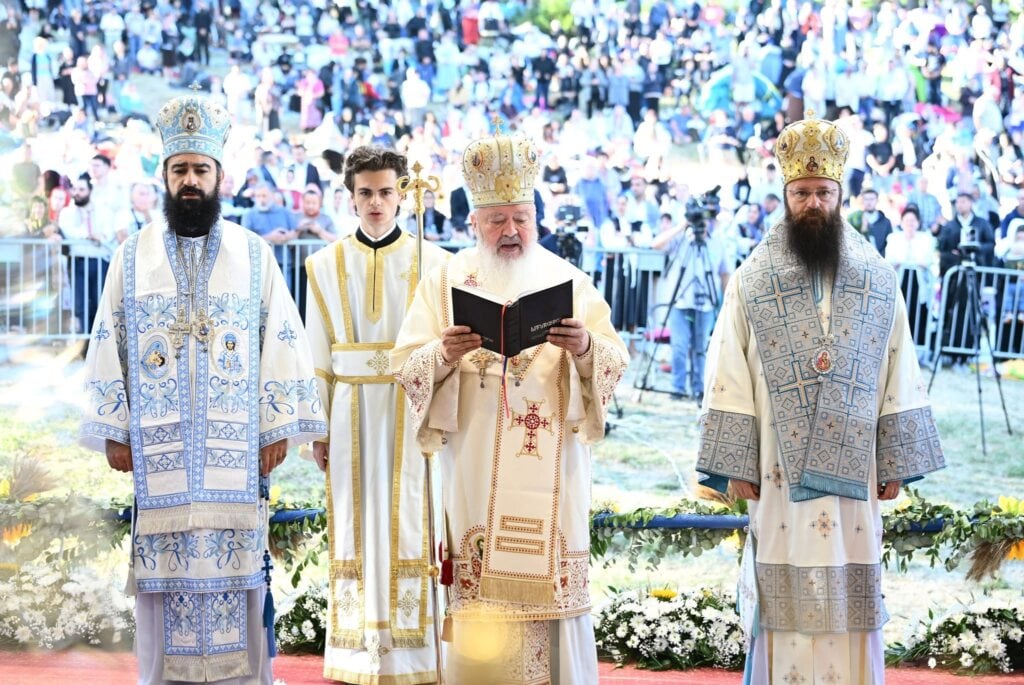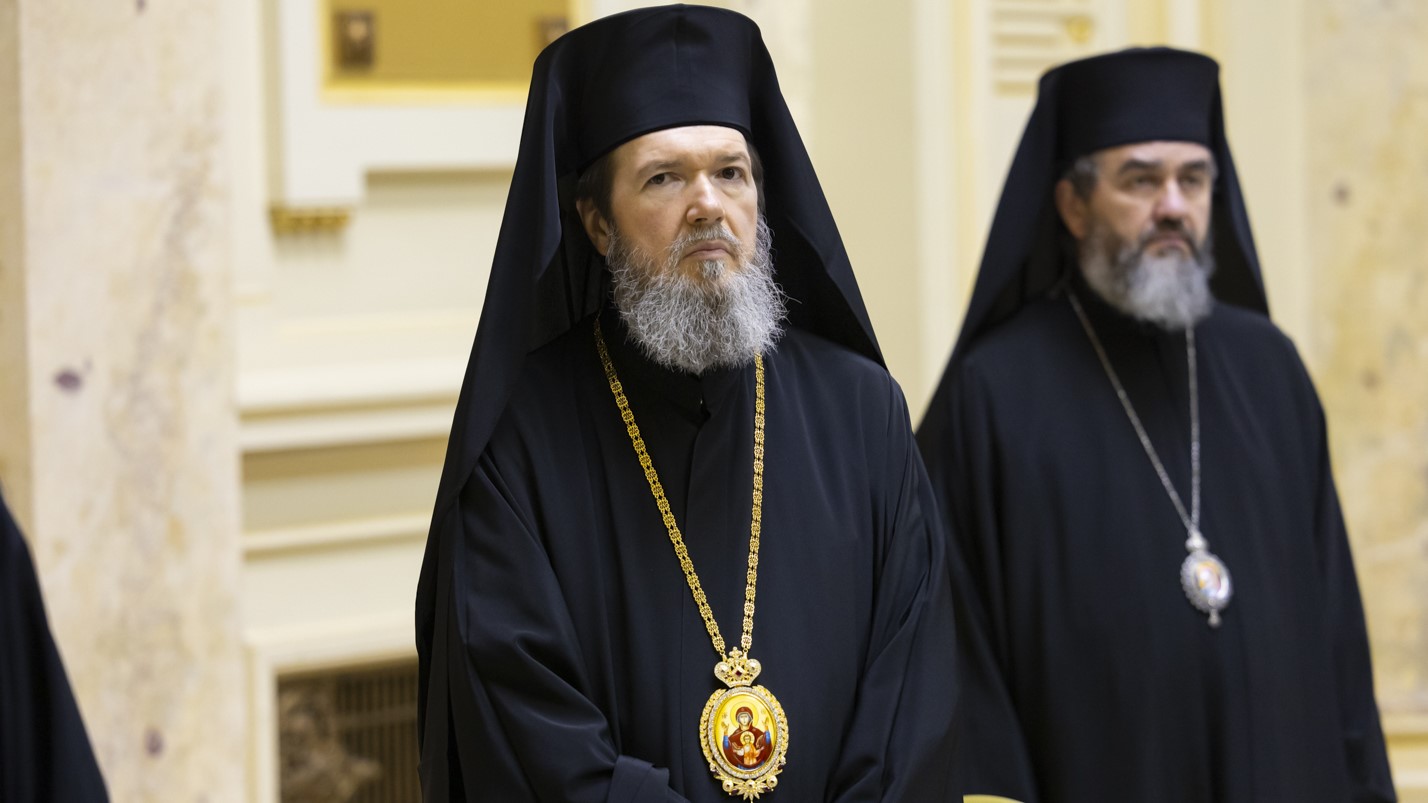
His Grace Bishop Sofronie of Oradea warned in an interview with Agerpres that drugs pose a major danger to young people because they promise “quick highs” but deliver “inner collapse and depression” in return.
According to the bishop, narcotic substances are a substitute for authentic good, sought by people to replace the love and meaning missing from their lives in moments of vulnerability.
“At their core, drugs are an unhappy substitute—an attempt to replace authentic good with a perverse and dangerous imitation. They promise what only God can truly offer: peace, joy, meaning.”
“A person forgets that he is not the author of his own being. In the absence of love that orders, heals and gives meaning, a person inevitably seeks substitutes. Yet no substitute can fulfil the human heart, created for truth, for relationship and for a full life.”
“The only One who can fulfil the human heart is the One who created it, and the relationship par excellence that offers the fullness of life is the relationship with God. Because God is love, and whoever abides in love abides in God, and God abides in him,” the hierarch said. Bishop Sofronie is also a physician, having graduated from the Faculty of Medicine in Timișoara.
An easy solution—or a trap for the young?
The bishop said that in an “age of consumption”, people risk becoming enslaved to their impulses and instincts, falling into “autonomy without discipline” and “without the ability to distinguish what is essential”.
“In this climate, drugs appear as an easy solution—ever cheaper and more accessible—promising instant well-being, without effort and without responsibility. But they offer only an illusion, a false intensity that does not heal, but deepens the rupture and the inner drama,” Bishop Sofronie said.
He stressed that the most vulnerable are young people, who often end up “in anxiety, profound restlessness, severe emotional disorders and, unfortunately, increasingly often, in self-destructive behaviours or even in the loss of the desire to live”.
In Bishop Sofronie’s view, the solution is love and transformation in Christ.
“Transformation in God is worth every effort. A person is healed not when he is constrained, judged or labelled, but when he rediscovers that his life has value, meaning and purpose. And where love is present—responsible, true, self-sacrificial love—addiction gradually loses its imagined power and pale seduction, because the human heart no longer needs to search in darkness for what it can receive, in the light, as a gift, as grace,” he said.
The Church, alongside people, on the road to healing
The road to healing is long, and the Church is ready to help along the way, the bishop said.
“There are no miraculous solutions, only paths walked with patience, community support and cooperation between the Church and specialists. To help someone rise again means to restore to them the meaning of life and the capacity to love and to allow themselves to be loved—this being the deepest form of healing.”
“The Church does not replace specialists, nor does it retreat into an abstract discourse, but remains present where a person suffers, accompanying them with prayer, community support and empathetic cooperation,” Bishop Sofronie concluded.
Christ heals
The Romanian Orthodox Church is involved in sustained prevention, awareness and support initiatives addressing addiction, with a focus on youth ministry.
These include educational programmes in schools and parishes, partnerships with public institutions and health specialists, counselling services and campaigns promoting prevention, recovery and social reintegration, while working to overcome the stigmatisation of those affected.
One relevant example is the pilot project “Hristocentric”, which brings together mental health professionals and clergy, placing Christ at the foundation of human healing.
Alongside the Church and specialists, the family also plays an important role by setting healthy boundaries and offering protection against temptation.
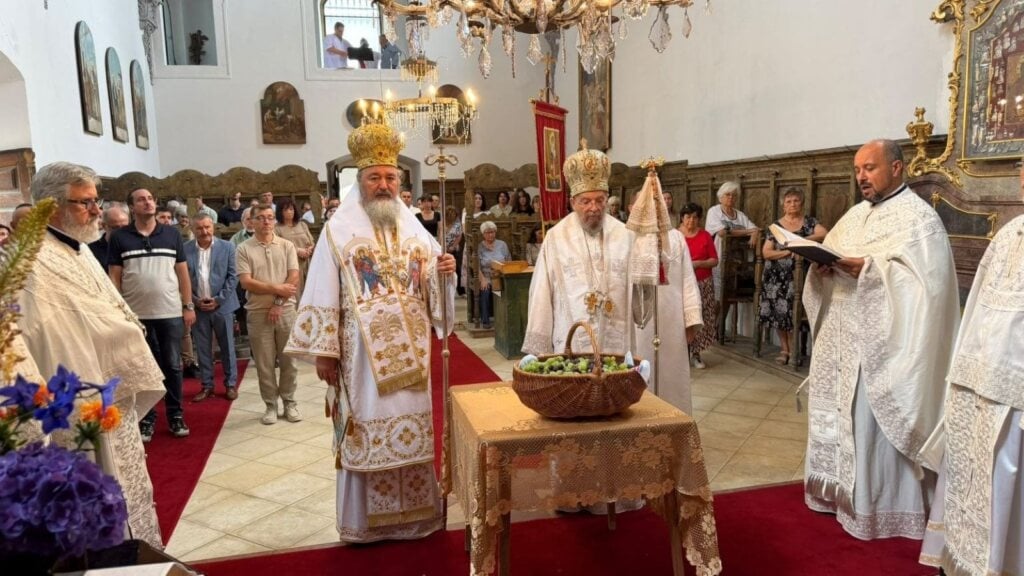
Photo: Basilica.ro Files / Mircea Florescu