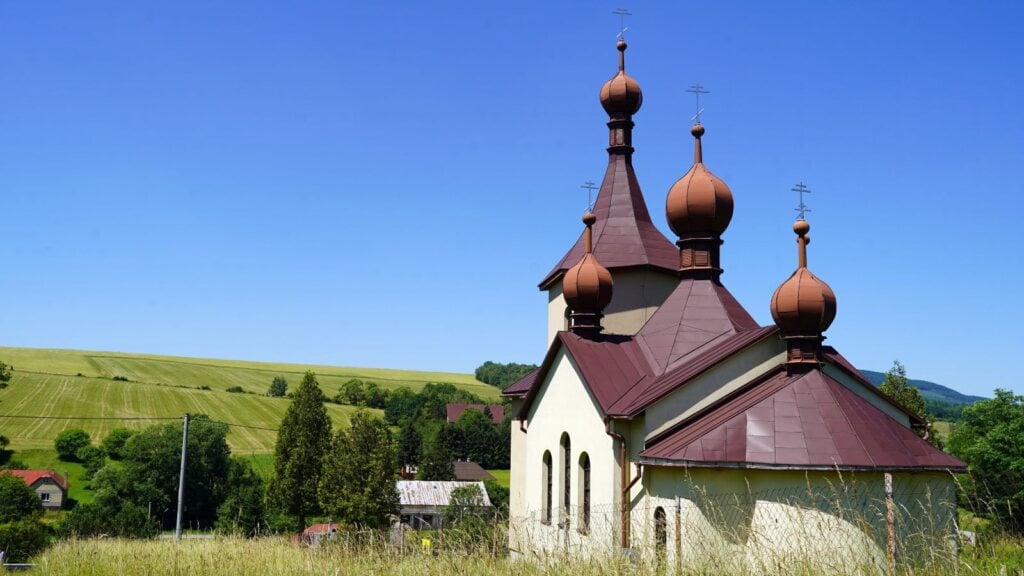
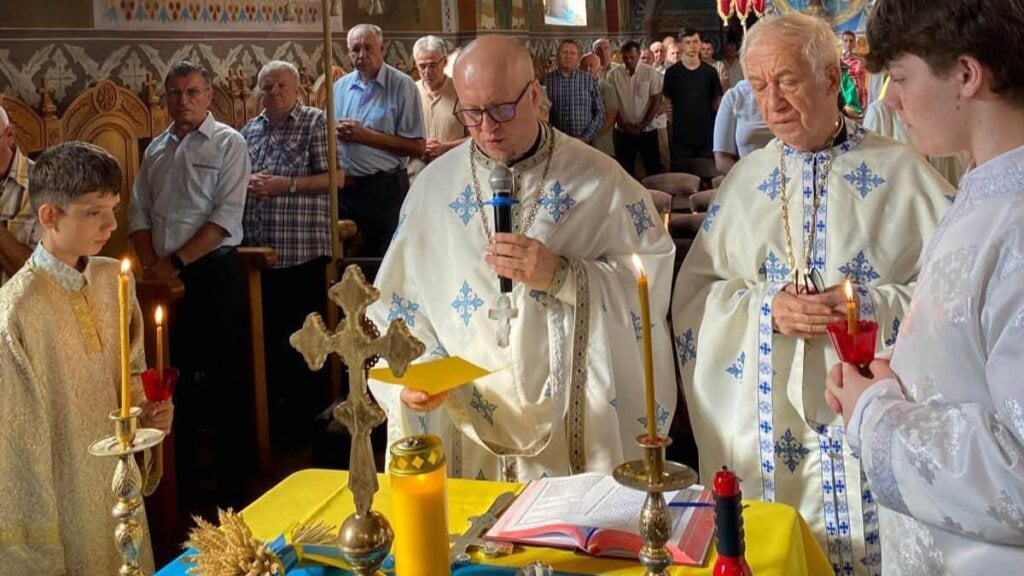
“Those who listen to us do not seek perfect people, but sincere ones,” emphasized the Bishop of Sălaj last week during the patronal feast of the church in Șimleu Silvaniei.
His Grace Bishop Benedict recalled that this year marks 1,700 years since the First Ecumenical Council of Nicaea, speaking about the gathering of bishops in the Roman Empire who came together to combat Arian heresy.
He also explained to the faithful that during that period, the Nicene-Constantinopolitan Creed was formulated, with the Holy Emperor Constantine acting as a mediator for the Truth and offering an example of a leader worthy of imitation.
“We see the Holy Emperor Constantine as a model of a Christian leader. He was a pagan, but he received a revelation not from people, but from God.”
The Model of a Good Leader
The Bishop of Sălaj drew several leadership principles from the Gospel of John, chapter 10, where Christ describes Himself as the Door to salvation and the Good Shepherd who cares for His spiritual flock. In this context, His Grace highlighted the traits of a good leader who is both obeyed and respected by those under his guidance:
“A Christian leader is called to look to the Good Shepherd in order to clearly understand what he must do. We are all leaders in some place where God has placed us, greater or smaller, especially when we desire to guide others.”
What Makes a Good Leader?
The bishop stated that the first principle any leader must hold is sincerity—toward others and toward oneself. Those who live outside of the Truth are distant from the reality they claim as leaders and lack the respect and obedience of others.
“Those who listen to us want people without hidden agendas, because in every community there are people who know how to forgive when you’ve made a mistake.”
“I am convinced that in any community or institution, if someone would admit their mistake, things would be different. But because we fear what might happen around us, we live in falsehood.”
According to Bishop Benedict, the habit of lying dulls a person’s conscience, preventing discernment between good and evil.
“When you get used to living in falsehood, your state becomes chronic, and you no longer realize you’re not in the Truth. You no longer even have a problem with it. The first time you lie, it hurts—you feel bad. But if you repeat it, you get used to it.”
Leaders with Compassionate Hearts
Bishop Benedict stressed that empathy and a compassionate heart are essential in leadership; without these, even worthy achievements are diminished. Following the model of the Good Shepherd, whose care for His sheep is not just an occupation, the bishop explained the role of those entrusted with leading a community:
“We need people whose hearts ache for those around them. The hired hand runs when trouble comes—he has no heart for his neighbor. But a true leader is proven in times of hardship,” the bishop explained.
“It is important for a leader to know how to listen and to look upon those in distress with sensitivity.”
He also illustrated how one who lovingly cares for his flock is followed willingly, simply at the sound of his voice:
“A good leader knows his sheep personally and cares about their well-being. Not only about their work, but how they live. If a good shepherd does this, then the sheep will heed the shepherd’s voice—they recognize his voice.”
A Shortage of True Shepherds
According to the Bishop of Sălaj, a wicked man cannot shepherd a flock, because the sheep do not recognize his voice. If he is merely an administrator, or worse—if he commands with severity instead of leading with gentleness—such a leader will never earn the trust or following of the faithful.
“We lack authentic shepherds—those who do not rely on authority or aggression to lead, but only on the word filled with love, not necessarily bringing comfort, but the Word of God,” concluded His Grace Bishop Benedict.
Photo: Diocese of Sălaj