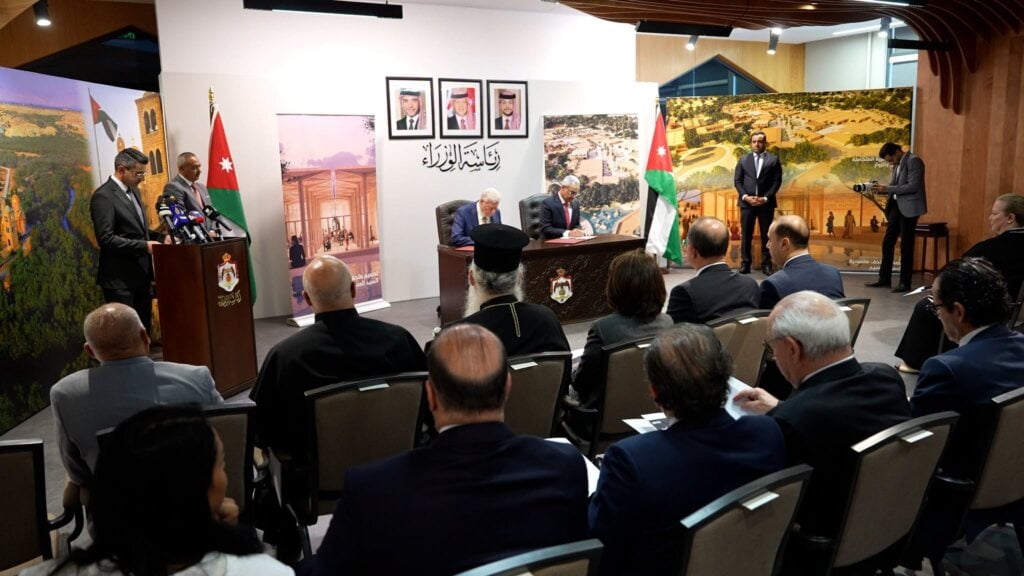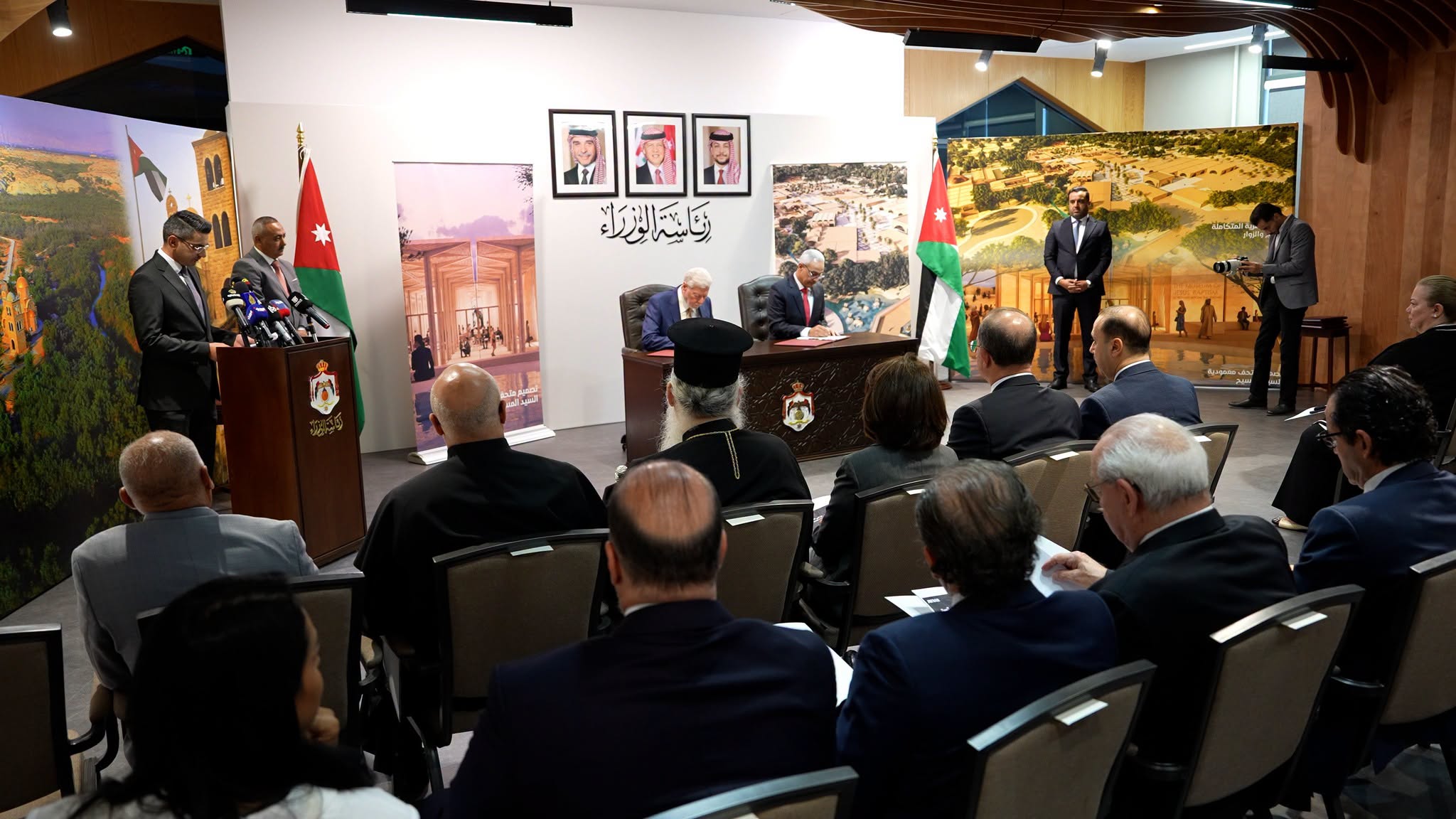
The Jordanian government has signed four agreements to develop the area where Jesus Christ was baptised as part of preparations to mark the 2,000th anniversary of the Baptism of the Lord in 2030.
The agreements were signed on Wednesday at the Jordanian government headquarters in Amman following the first meeting of the National Committee for Preparing the Celebration of the Second Millennium of the Baptism of the Lord, chaired by Jordanian Prime Minister Jafar Hassan.
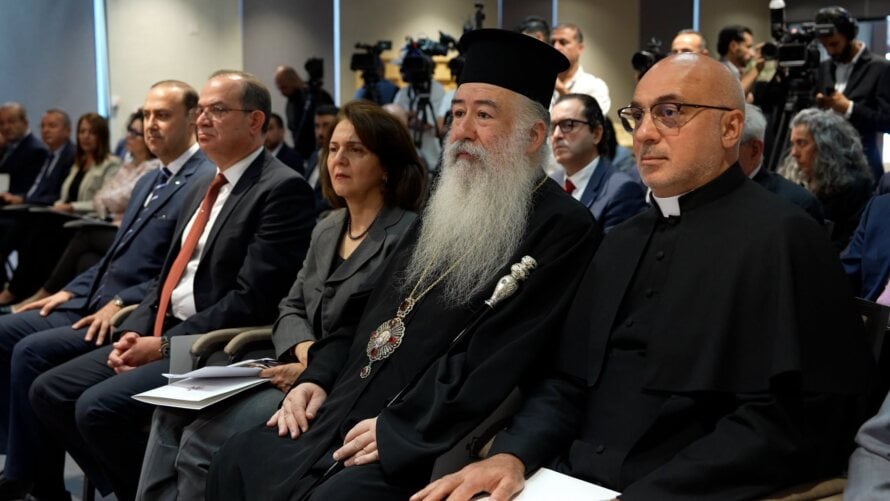
The committee also includes His Eminence Archbishop Christophoros of Kyriakoupolis of the Patriarchate of Jerusalem.
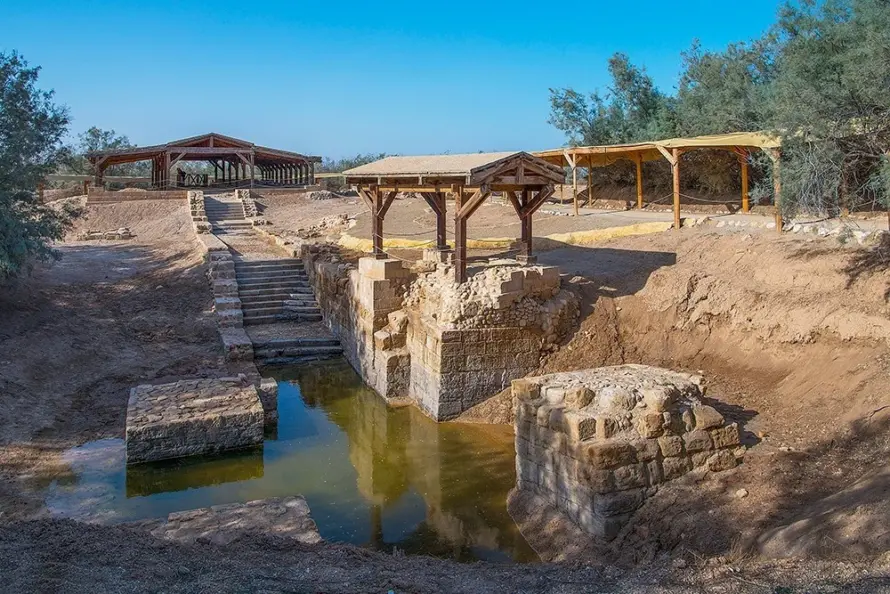
The projects will cover approximately 140 hectares of land adjacent to the Al-Maghtas site, where Jesus Christ was baptised, and are intended to preserve the area’s religious and historical character and to improve the experience of pilgrims.
Museum and pilgrims’ village
The largest investment, worth $50 million, will involve designing the Museum of the Baptism of the Lord Jesus Christ, which will cover 5,500 square metres. The museum will present the site’s religious and historical significance through a contemporary architectural concept, interpretative content, and specialised exhibitions.
Around $40 million will be allocated to an integrated village for pilgrims and visitors, comprising reception areas, a visitor centre, a hotel, restaurants, shops, a church and other facilities.
Infrastructure works, estimated at $27 million, will include main roads, water, desalination, and irrigation systems, electricity and solar power networks, street lighting, and other services required for the area’s operation.
Another project, worth approximately $3 million, will involve creating a green corridor. The Royal Society for the Conservation of Nature will design the project, with an emphasis on protecting biodiversity, expanding vegetation, and creating ecological corridors and pedestrian trails, in line with UNESCO recommendations for protecting the World Heritage-listed site.
‘A guardian of religious heritage’
Jordanian Minister of Tourism and Antiquities Imad Hijazin highlighted the religious and cultural significance of the project: “Jordan will remain a guardian of religious heritage, a model for strengthening the values of peace, dialogue and tolerance, and a trusted partner in protecting holy sites and presenting them to the world in a manner that reflects their historical and spiritual truth.”
The minister said the agreements went beyond being merely administrative documents.
“We regard these agreements as more than mere documents of cooperation; they represent a shared commitment and a national responsibility, as well as a strategic partnership that contributes to the success of this national project, strengthens Jordan’s presence on the international stage and highlights its unique civilisational heritage.”
Tharwat Al-Masalha, Chairman of the Board of Trustees of the Foundation for the Development of Lands Adjacent to the Baptism Site, said the projects formed part of preparations for the 2030 commemoration, initiated by the Council of Church Leaders in Jordan and supported by King Abdullah II of Jordan, “so that it may become a global event commensurate with the spiritual and historical status of the site and Jordan’s humanitarian message”.
“What we see today is a practical step towards creating an integrated destination worthy of the sanctity of the site and embodying Jordan’s message of peace, dialogue and moderation,” Tharwat Al-Masalha added.
Construction to begin in 2027
According to the announced timetable, preliminary works for the museum and the integrated pilgrims’ and visitors’ village will begin by the end of the first quarter of 2027, with the main construction works scheduled to start by the end of the second quarter of the same year.
The two projects are expected to be completed in the first half of 2029, ahead of the commemorative events planned for 2030.
The initiative to mark two millennia since the Baptism of the Lord aims, among other things, to develop religious programmes for the anniversary, promote Christian pilgrimage, increase the international visibility of the Baptism Site and other religious sites in Jordan, and improve infrastructure and services for pilgrims and visitors.
Photo: Facebook / Prime Minister of Jordan