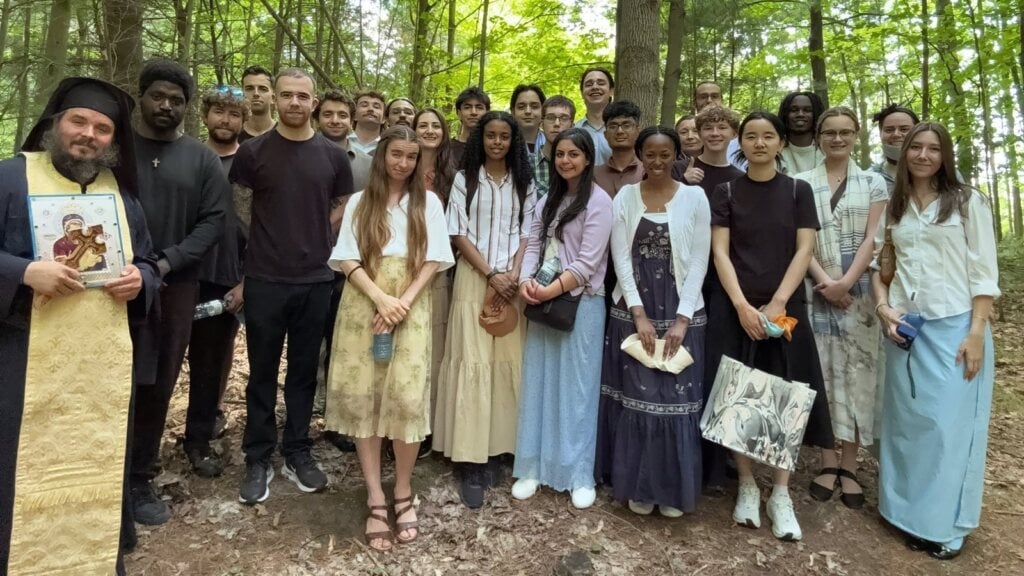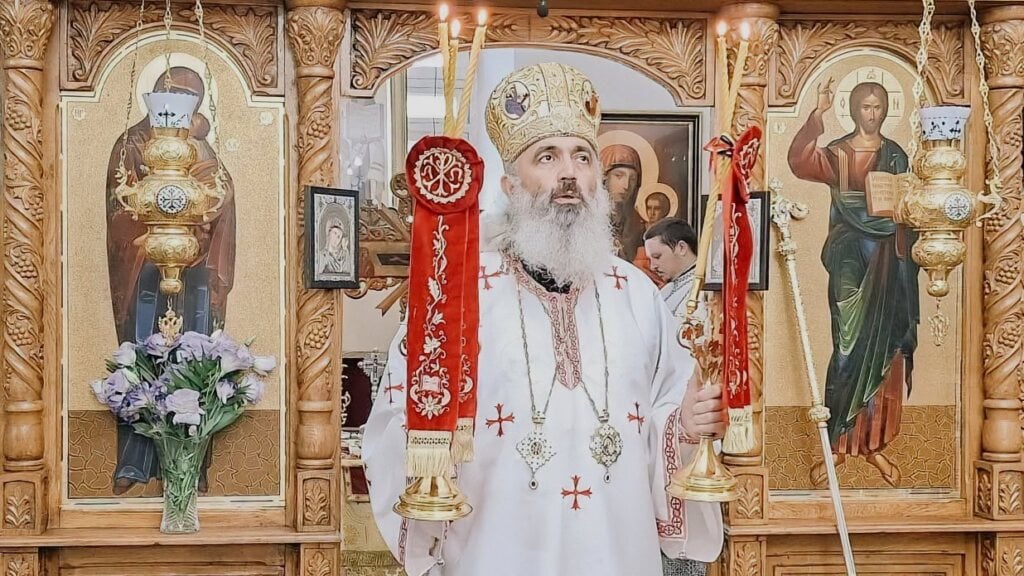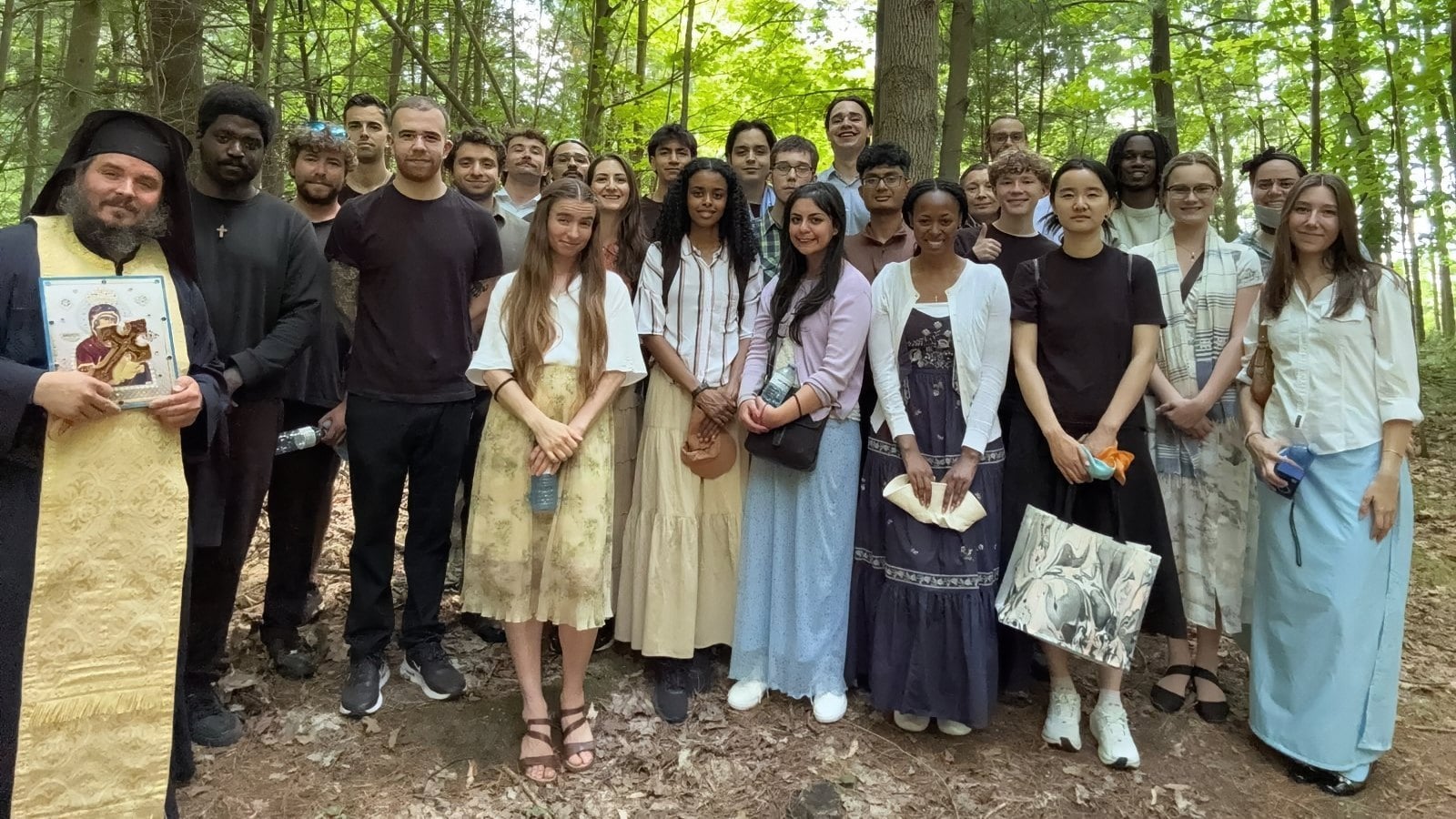
“Monastic life is not an escape from the world, but a journey towards God. A monk does not withdraw from people; rather, he seeks to carry everyone in his prayers. This calling is both a gift and a great responsibility,” says Hieromonk Policarp Athenagoras, abbot of the only Romanian Orthodox monastery in Canada.
The Romanian Orthodox Monastery of Mono, dedicated to the Exaltation of the Holy Cross and St Ephraim the New, is located in the province of Ontario. In an interview with the Basilica News Agency, Fr Policarp speaks about the call to faith, the essence of monasticism, the distinctive character of Romanian Orthodox believers in North America, and the challenges of building the Mono Monastery.
“A monastery is not built of stone, but of prayer, sacrifice and people who seek God and holiness,” the hieromonk emphasised.
Childhood in the Romanian Orthodox Church
Basilica.ro: Where were you born, and how did you first come into an Orthodox church?
Hieromonk Policarp: I was born in Tulcea, Romania, into an Orthodox family. My earliest memory from this earthly life dates back to when I was about three or four years old. I was standing inside the Holy Altar, beside the Holy Table of the Greek Church of the Annunciation in Tulcea, together with Rev. Professor Dumitru Gavrilă, who gave me a blue book containing the hymns of the Divine Liturgy, published with the blessing of the ever-memorable Patriarch Teoctist.
The atmosphere of the services, the hymns, Fr Dumitru’s ministry, and the portraits of the saints became deeply engraved in my soul.
Later, I often visited Celic-Dere Monastery, where my great-grandmother had been a nun. Through the sisters who had once been her spiritual daughters, her memory remained alive. For me, the days I spent there felt like weeks because I truly believed I was in paradise.
It was there that the seeds of my monastic calling were planted in my heart, when I was only five or six years old, through my encounters with Archimandrites Pamfil and Dorotei, Mother Melentina, Mother Irina, and many other members of the monastic community. Another profound influence was Archbishop Lucian of Tomis, whom I came to know as a monk in the fullest sense of the word and as a man of prayer.
A word received from a saint
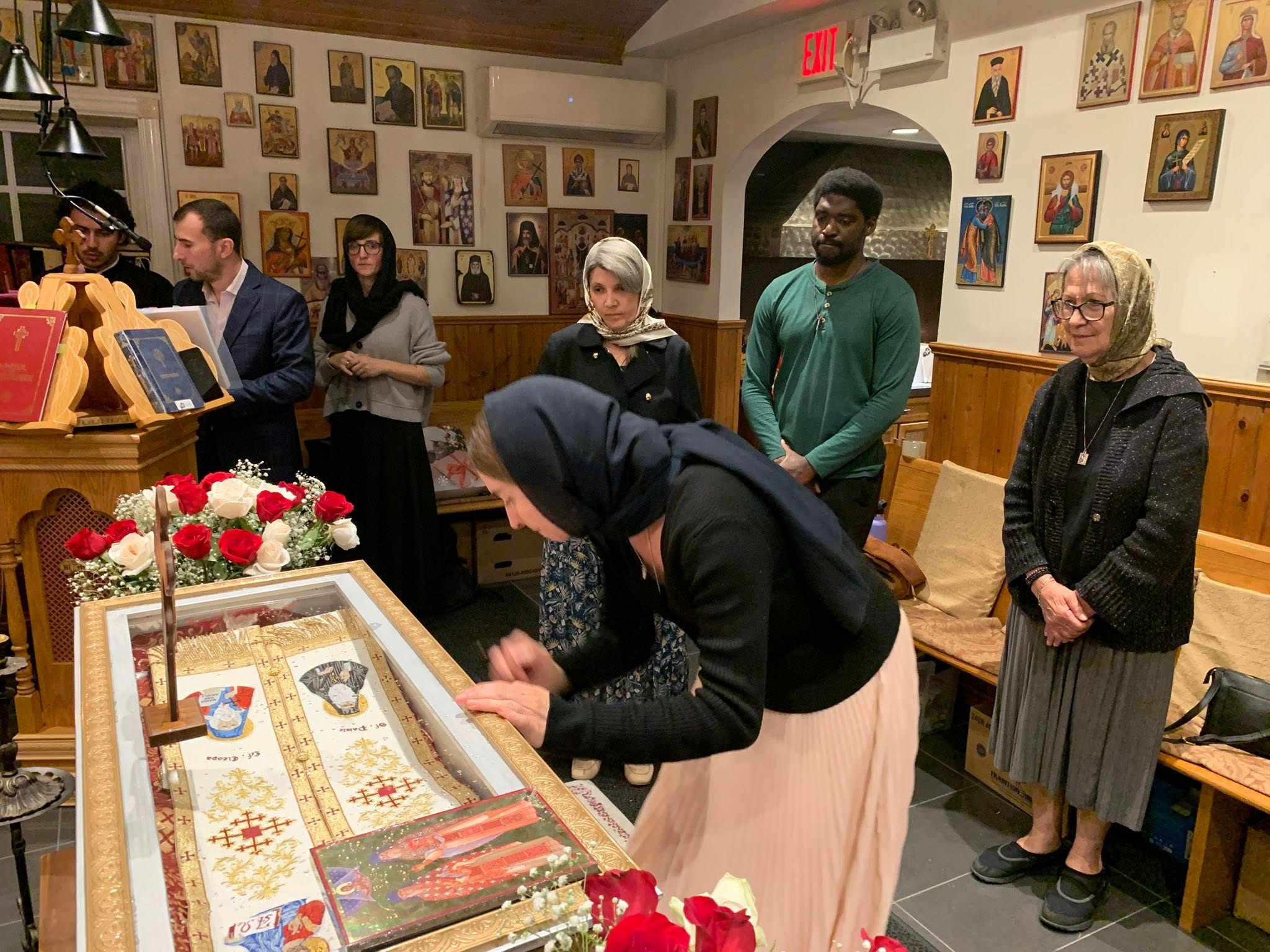
Hieromonk Policarp: Through my spiritual father, Fr Dumitru Gavrilă, I was also blessed, in 1995, to spend more than an hour with St Cleopas Ilie in his cell, at a time when he rarely received visitors.
Among the words he spoke to me, one has remained engraved in my heart forever: “The Mother of God is your Mother, and she will never abandon you.”
Only later did I fully understand the depth of those words.
Every day, I continue to feel the presence and blessing of St Cleopas Ilie, even though Mono Monastery lies more than 8,100 kilometres from Sihăstria Monastery.
Over the years, I also received blessings and spiritual encouragement from some of the greatest spiritual fathers of Romanian Orthodoxy and the Romanian diaspora: Fr Gheorghe Calciu, Fr Constantin Galeriu—whom I met again in the United States in 1999—Fr Arsenie Papacioc, Fr Ioanichie Bălan, Fr Ilarion Argatu, Fr Roman Braga, Fr Vasile Vasilachi, Elder Ephraim of Arizona, Fr Joseph of Roscoe, Fr Constantin Chirilă, Fr Mark Kerr, and, more recently, Elder Ștefan from Lakkoskete on Mount Athos.
Meeting these great spiritual fathers left a profound mark on my spiritual formation and on my ministry within the Church.
What is monasticism?
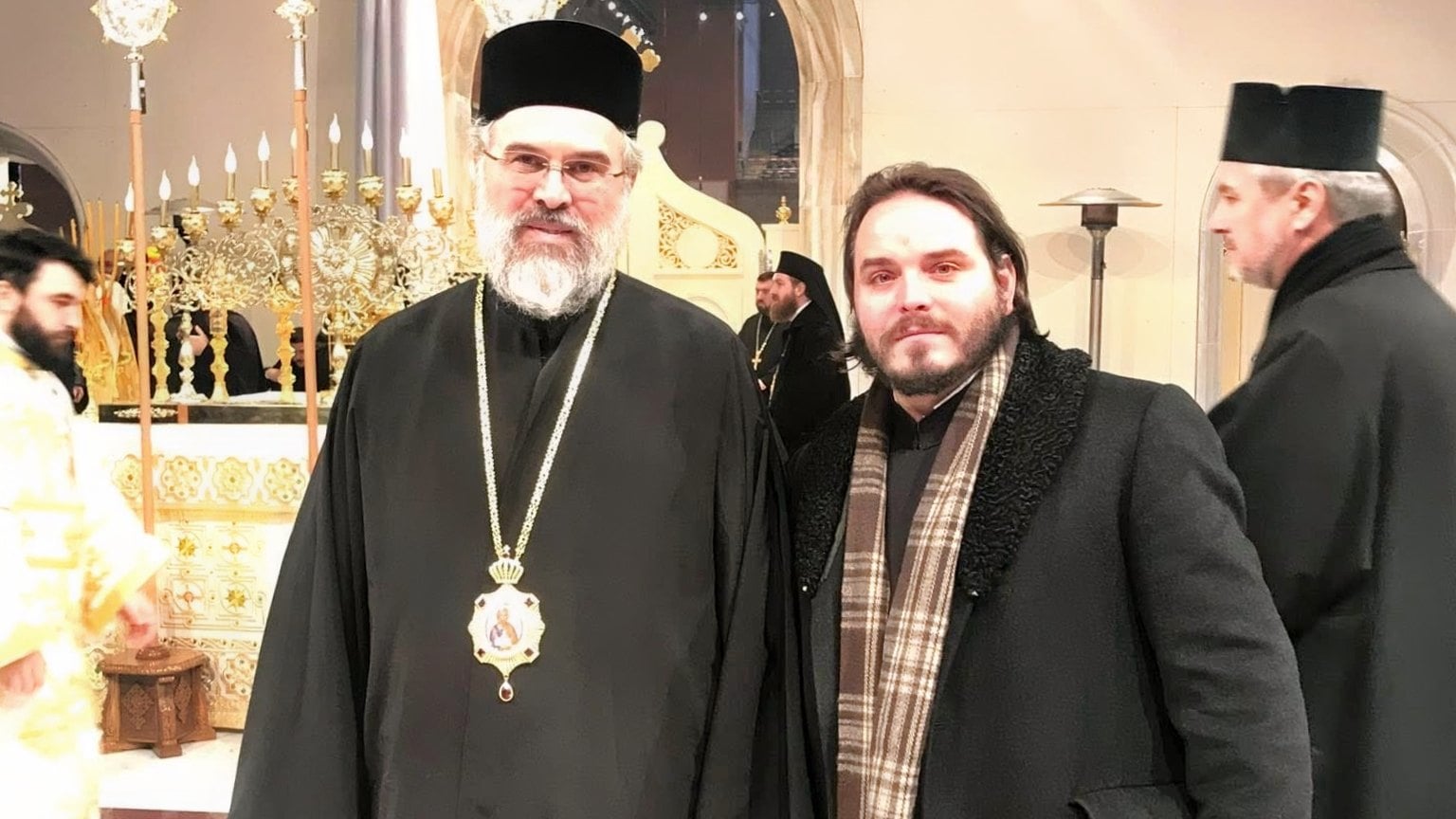
Basilica.ro: What does the calling to dedicate your life to God through monasticism mean to you personally?
Hieromonk Policarp: Monastic life is not an escape from the world, but a journey towards God. A monk does not abandon people; rather, he strives to carry them all in prayer. This calling is both a gift and, at the same time, a great responsibility.
Monasticism teaches me that true freedom is found in obedience, and that true joy is born of self-offering.
Every day I seek Christ through prayer, through the Divine Liturgy, and through service to my neighbour.
That is the true purpose of the monastic life.
Romanian identity in the diaspora
Basilica.ro: Do you believe there is something distinctive about Orthodox Christians of Romanian origin in Canada?
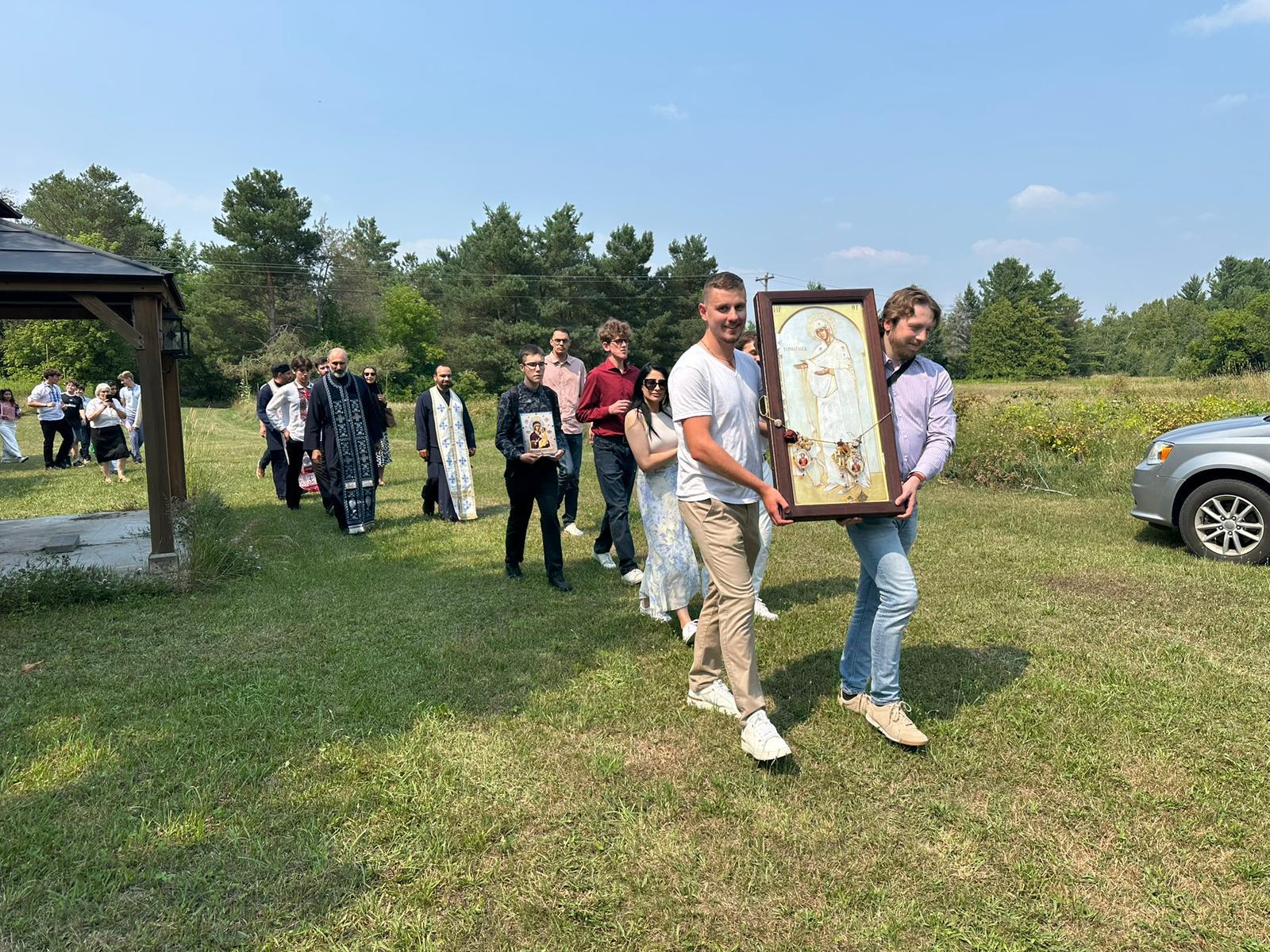
Hieromonk Policarp: Yes. Romanians in Canada, and more broadly throughout North and South America, have managed to preserve a deep connection with the faith and traditions they brought with them from home.
For many of them, the church is the place where they rediscover their language, culture, customs, and sense of belonging, while also receiving a deeper catechesis in the life of the Church.
At the same time, I have noticed a beautiful openness towards other Orthodox communities, especially around the monasteries of North America. Here in Canada, we are learning to live Orthodoxy in a spirit of pan-Orthodox communion, preserving our Romanian identity without isolating ourselves from others.
Basilica.ro: Why do you believe it is important for Romanians not to lose their identity in the diaspora?
Hieromonk Policarp: Identity is not merely a cultural heritage; it is a living inheritance that we pass on to our children. The Romanian language, the Orthodox faith, and our traditions are the roots that nourish us.
A person without roots becomes vulnerable. Children and young people need to know who they are and where they come from so that they can, in turn, contribute confidently to Canadian society.
I remember the words of an American judge at a citizenship ceremony: “You are not worthy of American citizenship if you deny the country where you were born.”
I believe this expresses a profound truth: love for one’s adopted homeland does not exclude love for one’s country of birth.
We can be loyal citizens of Canada while remaining Romanians who cherish our faith and spiritual heritage.
The greatest challenge: building a community
Basilica.ro: You undertook the mission of developing Mono Monastery, building and organising almost everything from the ground up. What has been the greatest challenge, and what has been the greatest joy? What will the monastery look like once the project is complete?
Hieromonk Policarp: The greatest challenge is not constructing buildings, but building a living community.
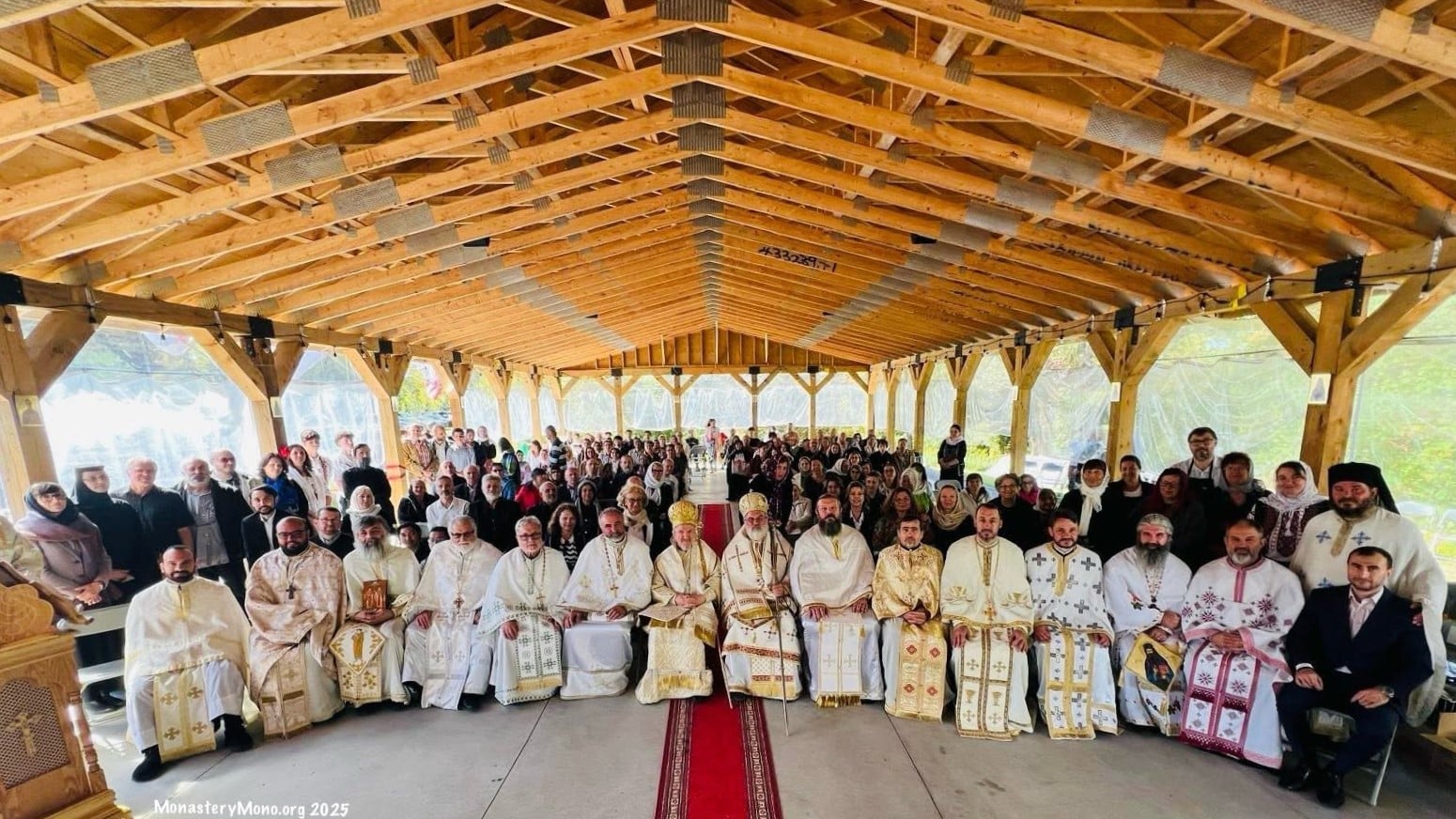
A monastery is not made of stone, but of prayer, sacrifice, and people who seek God and holiness. It is equally important for people to understand the roles of a monastery and a parish, and why pilgrims feel the need to come to such places.
Whenever we have faced material difficulties—whether funding, architectural planning, permits, or maintaining this project—the Mother of God has come to our aid. She has comforted us with the love of a mother who never abandons her children or the house of her Son.
God has never left us without help. We have witnessed countless miracles of the Mother of God through people who came to volunteer, to donate, or simply to pray for us.
Even in something as simple as providing the prosphora loaves for the Divine Liturgy, we have experienced her loving care.
That is why every Orthodox monastery is truly a garden of the Mother of God.
The greatest blessing for me is seeing pilgrims leave the monastery more at peace, closer to God, and carrying greater hope in their hearts.
The founding of Mono Monastery
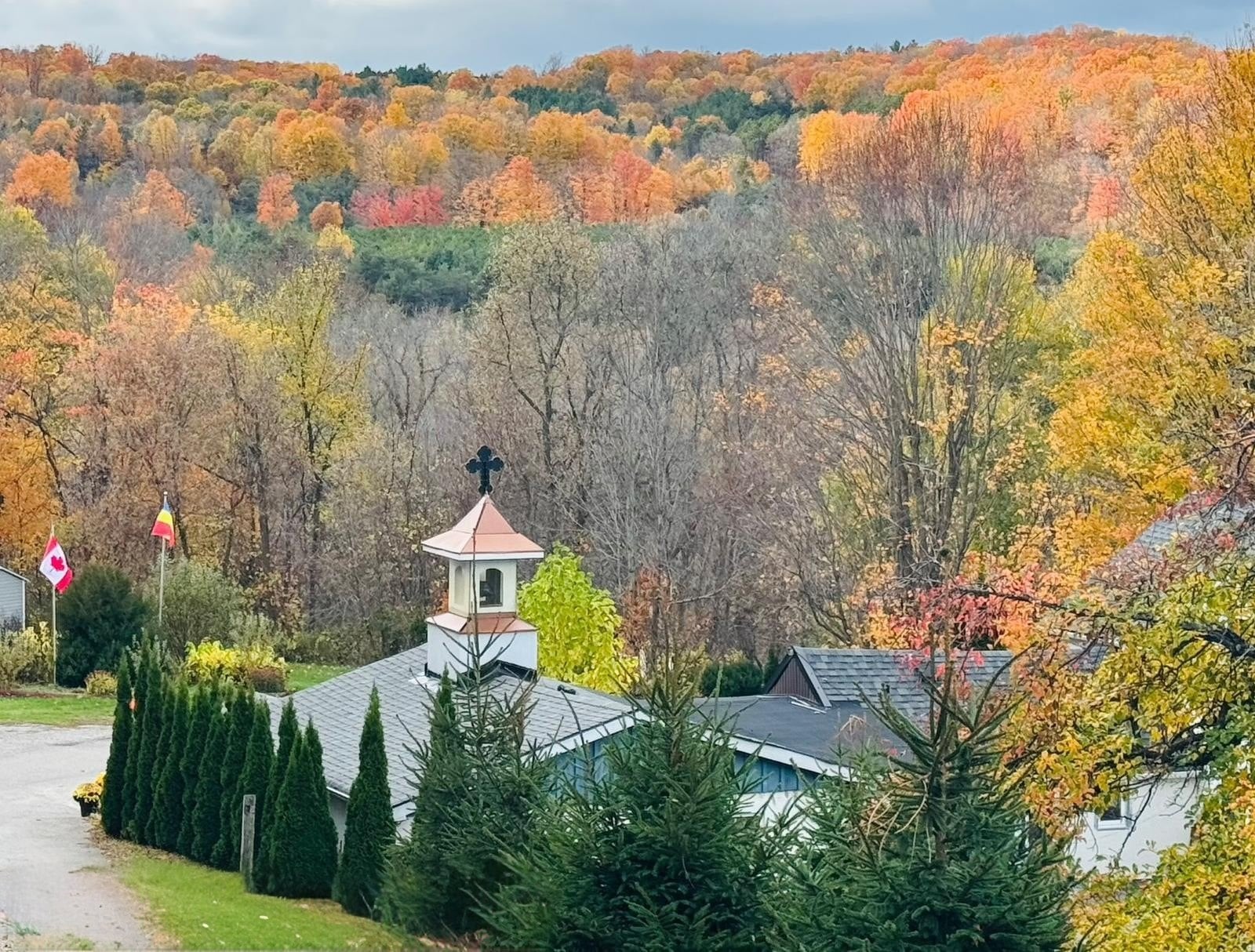
Hieromonk Policarp: The monastery was founded in 2005 by the Canadian priest Fr Nicholas, together with a group of Orthodox Christians that included Petre Busuioc, now the Administrative Vicar of the Romanian Orthodox Diocese of Canada. It was established with the blessing and pastoral care of His Eminence Nicolae, Romanian Orthodox Metropolitan of the Americas, and His Grace Bishop Ioan Casian of Canada.
In 2013, with the blessing of our hierarchs, the monastery relocated to Mono Hills.
Between 2013 and 2015, the existing building was renovated, while its garage was converted into the Chapel of St Anne. The grounds and the necessary infrastructure were also developed.
From 2015 to 2021, the liturgical life of the monastery continued through Sunday and feast-day services celebrated by Fr Paisie, later temporarily by Fr Lucian, with the frequent participation of Bishop Ioan Casian.
The beginning of his ministry

Hieromonk Policarp: On 1 October 2021, with the blessing of the Bishop of Canada, I was appointed to serve as a monk at the only Romanian Orthodox monastery in Canada.
Through the intercessions of the Mother of God and St Cleopas, and with the blessing and fatherly care of Bishop Ioan Casian, we began repairing the roof of St Anne’s Chapel in November 2021.
Beginning on 20 February 2022, we introduced the daily celebration of the Divine Liturgy. We also established the monastery’s annual pilgrimage in honour of the Mother of God, in addition to the existing pilgrimages dedicated to St Ephraim the New in May and the Exaltation of the Holy Cross in September.
Between 2023 and 2025, we built and fully paid for the outdoor altar.
In September 2025, Bishop Ioan Casian and Metropolitan Mitrofan of the Serbian Orthodox Church, a former student of St Dumitru Stăniloae, consecrated the Pavilion of Saints Cleopas and Paisius.
In December 2025, the monastery’s mortgage was paid off in full—thirteen years ahead of schedule.
In January 2026, we began designing the monastery’s future expansion and launched a fundraising campaign for the project. Glory to God for everything!
With God’s help, the monastery will one day include a church, a refectory, monastic cells, and all the facilities needed for a monastic brotherhood capable of welcoming pilgrims from across Canada.
Our hope is that it will become a place of unceasing prayer, spiritual formation, and fellowship for every generation of Romanians, as well as for all Orthodox Christians who seek the peace of Christ.
Inspiration from the saints
Basilica.ro: Why was St Ephraim the New chosen as one of the monastery’s patron saints? Personally, do you have a special devotion to other saints as well?
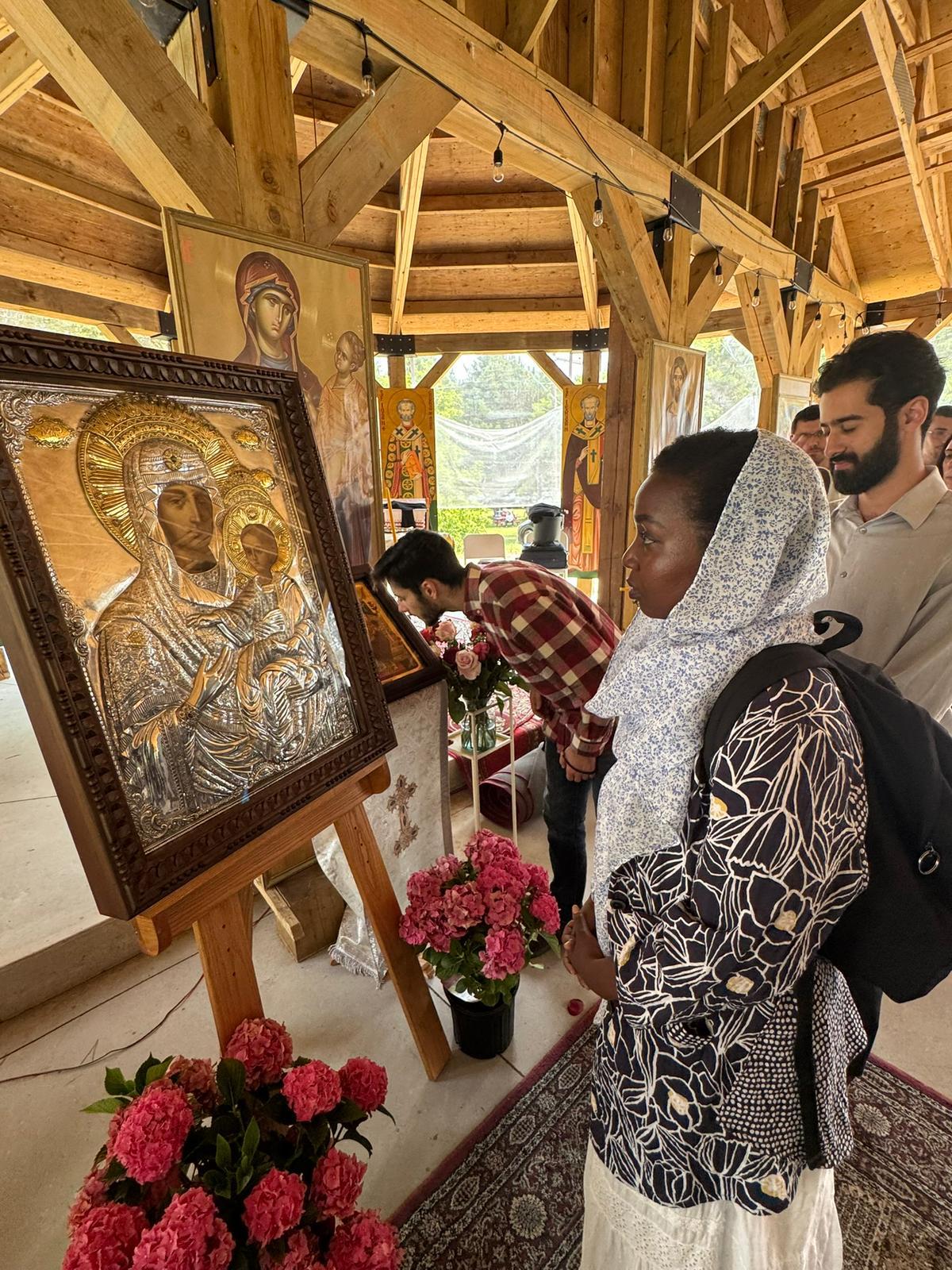
Hieromonk Policarp: St. Ephraim the New is a saint especially close to young people and to those enduring suffering and trials. Countless testimonies speak of his swift assistance and of the miracles God performs through his prayers. That is why my predecessors chose him as one of the monastery’s heavenly protectors.
Personally, I also have a special connection to St Ephraim through Archimandrite Andreas Desipri of Montréal, the brother of Mother Makaria Desipri, the nun who discovered the saint’s holy relics after nearly five hundred years. I had the blessing of serving beside him as a chanter from 2018 to 2019.
I have a particular devotion to the Mother of God, the protectress of the entire monastic life. I am also inspired by Saints Paisius and Cleopas Ilie, Elder Ephraim of Arizona, St John Maximovitch, St Raphael of Brooklyn, and Bishop Policarp Morușca—great missionaries, spiritual fathers, and shepherds of the Church.
The lives of these saints, spiritual fathers, and scholars remind us that holiness is still possible today.
God is not looking for perfect people, but for open hearts
Basilica.ro: What message would you like to share with young people?
Hieromonk Policarp: Do not be afraid to put God first in your life. The world offers you many possibilities, but only Christ can give you true peace.
You are never alone. The Mother of God and the saints—our friends and protectors in heaven—are always with you, constantly interceding on your behalf.
Pray, read the Holy Scriptures, take part in the life of the Church, seek out a spiritual father, and surround yourselves with people who draw you closer to God.
Fr Teofil Părăian used to encourage young people with these words: “Have one great ideal in life: become a person of God!” This is the most beautiful ideal a young person can have.
The Church needs you, and you need the Church. God is not looking for perfect people, but for open hearts. If you say to Him with all your heart, “Lord, let Your will be done,” He will guide you along the path of holiness, wherever you may be. For, as our Saviour assures us: “Take courage; I have overcome the world.” (John 16:33)
Mono Monastery is located at:
308328 Hockley Road, Mono, Orangeville, Ontario L9W 6N4, Canada.
Those wishing to support the construction of the monastery may make an online donation through the monastery’s website.
Photo: Mono Monastery