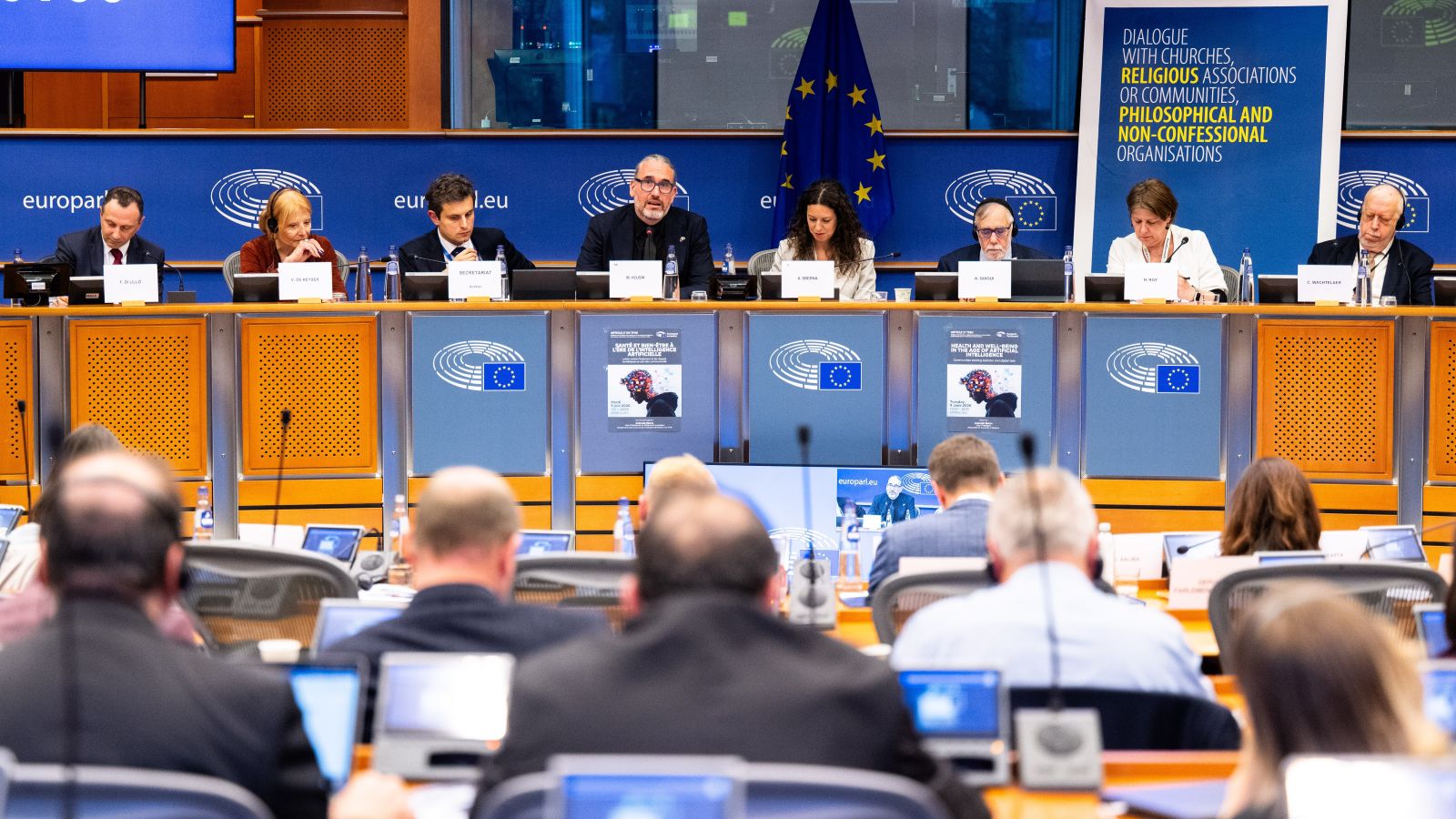
Two seminars held in Brussels on June 8-9 brought together representatives of Churches, European institutions and academia to examine the impact of artificial intelligence on humanity.
The first seminar, hosted by the European Commission, focused on the theme “The Ethical and Social Impact of Artificial Intelligence.” Participants analysed the opportunities and risks associated with AI-based technologies, with particular emphasis on their effects on democracy, education, labour, social cohesion and human dignity.
Attendees were also briefed on the implementation of the European Artificial Intelligence Act (AI Act), highlighting the European Union’s commitment to combining innovation with safeguards for vulnerable individuals, accountability mechanisms and human oversight in high-risk sectors.
Throughout the discussions, participants repeatedly stressed that the challenges posed by artificial intelligence are not only technological but also cultural and anthropological. Topics such as human freedom, responsibility, creativity and social participation were central to the debate.
Orientation Toward Christ
Representing the Committee of Representatives of the Orthodox Churches to the European Union (CROCEU), Professor Florin Pop, Director of the Doctoral School of Automation and Computer Science at the National University of Science and Technology Politehnica Bucharest, advocated maintaining an anthropocentric vision in the development and use of artificial intelligence.
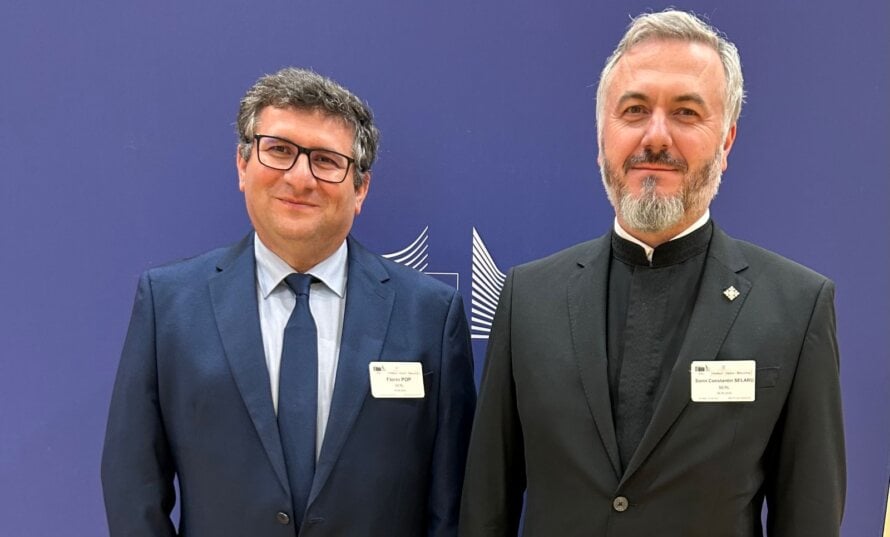
“In my intervention, beyond addressing ethical concerns and the ontological crisis faced by the human person in the age of artificial intelligence, I emphasized that this human-centred approach, grounded in a strong anthropology, should be complemented and strengthened by the Church through authentic living, the preservation of human dignity and freedom—values that can be fully embraced only through the sacramental life of the Church and orientation toward Christ, who offers us salvation,” Professor Florin Pop told Trinitas TV.
Participants also addressed long-term concerns regarding the use of artificial intelligence in military applications, the cognitive effects of AI-assisted learning on young people and the implications of human enhancement technologies, which challenge traditional understandings of human nature.
Health and Well-Being in the AI Era
The second seminar, hosted by the European Parliament, was dedicated to the theme “Health and Well-Being in the Age of Artificial Intelligence: Communities Tackling Isolation and Digital Risks.”
Discussions focused on the impact of AI technologies on mental health, interpersonal relationships and social cohesion. Particular attention was paid to the phenomenon of virtual companions, the risks of digital isolation and the growing influence of algorithms on human behaviour, especially among children and young people.
One of the recurring messages of the seminar was that technological development should primarily serve human development rather than exclusively pursuing economic efficiency or commercial interests.
Keeping the Human Person at the Centre of Technological Development
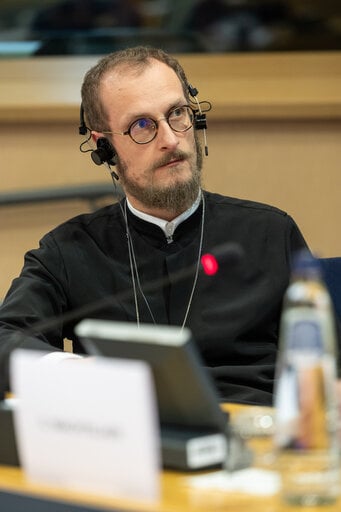
Fr. George Vâlcu, Secretary General of CROCEU, stressed that artificial intelligence is no longer a challenge of the future but a reality already shaping everyday life.
“The discussions highlighted the importance of cultivating a balanced approach to artificial intelligence, avoiding both uncritical enthusiasm and unjustified alarmism,” Fr. George Vâlcu said.
“While we recognise the considerable benefits offered by these technologies, we should not naively ignore the substantial risks they entail. For the Orthodox Church, the essential challenge is ensuring that the human person remains at the centre of technological development.”
“Beyond questions of efficiency and technological performance, societies must continue to ask whether new technologies genuinely contribute to the integral development of the human person and to the common good,” the CROCEU Secretary General added.
Participants concluded that the dialogue under Article 17 of the Treaty on the Functioning of the European Union remains a valuable framework for cooperation between European institutions and religious communities to address issues essential to the present and future of European society.
Photo: EC Audiovisual Service