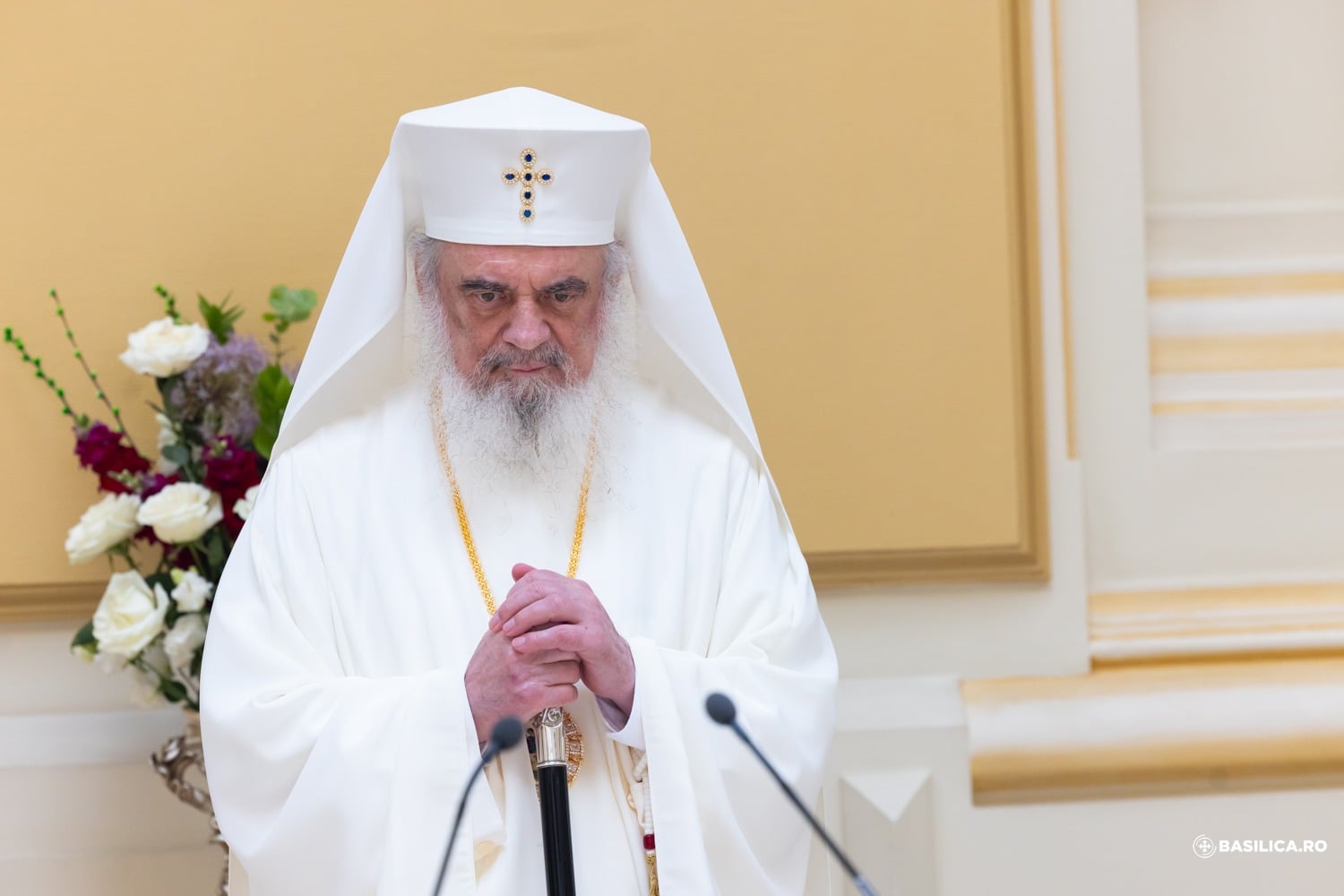
As Romania marked the 75th anniversary of the Bărăgan deportations, His Beatitude Patriarch Daniel has highlighted the role of personal prayer and participation in the Divine Liturgy in sustaining thousands of victims during one of the communist regime’s most severe campaigns of internal displacement.
In a message delivered on the occasion of a commemorative event hosted by the Presidential Administration at Cotroceni Palace on Tuesday, Patriarch Daniel recalled the forced deportation of approximately 44,000 people from Romania’s border region with Yugoslavia to the Bărăgan Plain on the night of Pentecost, June 17–18, 1951.
The Patriarch of Romania described the deportations as part of a broader system of political repression that targeted clergy, intellectuals, prosperous farmers and ethnic minorities throughout the communist period. He noted that faith, family solidarity and participation in Church life helped many deportees endure years of hardship, forced labour and social marginalisation.
Patriarch Daniel also paid tribute to survivors, historians and civic organisations working to preserve the memory of the deportations, stressing the importance of recovering historical truth and honouring the more than 1,700 people who died in the Bărăgan settlements between 1951 and 1956.
Please find below the full text of Patriarch Daniel’s message.
Personal Prayer and Participation in the Divine Liturgy Were a Source of Strength During the Ordeal of the Communist Deportations
The tragedy of the deportation of approximately 44,000 people from Romania’s border region with Yugoslavia to the Bărăgan Plain, on the night of Pentecost (June 17–18) in 1951, represents one of the most dramatic repressive actions carried out by the communist regime in Romania after the Second World War.
It forms part of the broader context of deportations ordered between 1941 and 1960: the deportation of hundreds of Romanian priests, intellectuals and prosperous farmers from Bessarabia and Northern Bukovina to Kazakhstan and Siberia (1941, 1949, 1951), the deportation of ethnic Germans to the Soviet Union (1945), and the deportation of thousands of political prisoners to labour colonies in the Danube Delta (1950–1960) and at the Danube–Black Sea Canal (1949–1953/1955). Torn away from their native places and subjected to inhumane treatment, these people became victims of a systematic programme of political and ideological extermination.
Large families consisting of parents, children and grandparents of various ethnic backgrounds—including Banat Romanians, Oltenians, Bessarabians and Bukovinians, Aromanians, Vlachs, Megleno-Romanians, Serbs, Swabians, Bulgarians, Hungarians, Jews and others—belonging to different social categories, especially the class of prosperous peasants labelled by the authorities as “kulaks” and considered enemies of the communist regime, were taken from their homes during the night of June 17–18, 1951.
They were removed from the counties of Timiș, Caraș-Severin and Mehedinți, within a 25-kilometre radius of the Yugoslav border, and transported by freight trains to the Bărăgan Plain, where they remained until 1956.
Upon arriving in Bărăgan, they were forced to build their own houses and villages and to work on state farms in the region, receiving meagre wages and being subjected to regular inspections by state authorities. The cohesion of their families gave them the strength to face with stoicism the hardships imposed by history and geography and to survive.
Particularly moving are the testimonies of some of those deported regarding their participation in church services in neighbouring villages and the way in which faith saved them from spiritual destruction:
“Every Sunday, lines of children, women and even men would make their way through the marshes to attend the Divine Liturgy at the little church in Tămăoani. There they prayed to the good Lord to give them strength and health and to help them endure the ordeal inflicted upon them by communism.
I can still see them today, crossing the marshland along a narrow path beneath the willows, past burdock, reeds and rushes. Over their heads, from time to time, a marsh bird would fly by—a duck, a lapwing or a hawk—while they stepped over the dry reeds, going to or returning from the little church, one behind another.
Those from Beba, Checea and Giulvăz organised a choir, and on feast days they sang carols and church hymns so beautifully that the small church in Tămăoani, where there was not even room to drop a pin, resounded with their voices.
The local villagers were astonished and asked us why we had been brought there and forced to build a village on the lakebed, because they saw us as decent, hardworking people who feared God, even though the authorities had told them we were dangerous bandits.” [1]
The domestic policy of forced agricultural collectivisation, initiated in 1949 and one of the principal causes of the Bărăgan deportations, had a dramatic impact on the clergy of the Romanian Orthodox Church.
Between 1950 and 1952, numerous Romanian Orthodox priests from villages throughout the country were classified as kulaks by the so-called local people’s councils.
Violent and humiliating measures were directed against them. They were assigned tasks incompatible with their dignity and priestly vocation: doubled taxes and increased state quotas, compulsory transportation services using their own carts for the benefit of local authorities, the “requisitioning” of horses from their households, forced labour at threshing sites, transporting stone, sand, wood and water, repairing bridges, cleaning roads, ditches and the courtyards of local councils, whitewashing school dormitories and toilets, being supervised “with a stick from behind” while enduring insults and vulgar abuse, physical mistreatment, slaking lime in the courtyard of the people’s council, scrubbing floors, washing windows, removing willows and logs from riverbeds, loading railway wagons with salt, timber and grain, collecting and delivering grass seeds, discrimination against priests’ children through expulsion from schools, preventing priests from celebrating liturgical services on Sundays and feast days, and the forced entry into churches by drunken local officials, among other abuses.
The gravest accusation brought against these “kulak priests” was that they were “class enemies and enemies of peace, exploiters and enemies of the working people” because they owned agricultural land, brandy stills, threshing machines or other means of production.
Priests were generally accused of “having employed servants and using hired labour to cultivate their land.” [2]
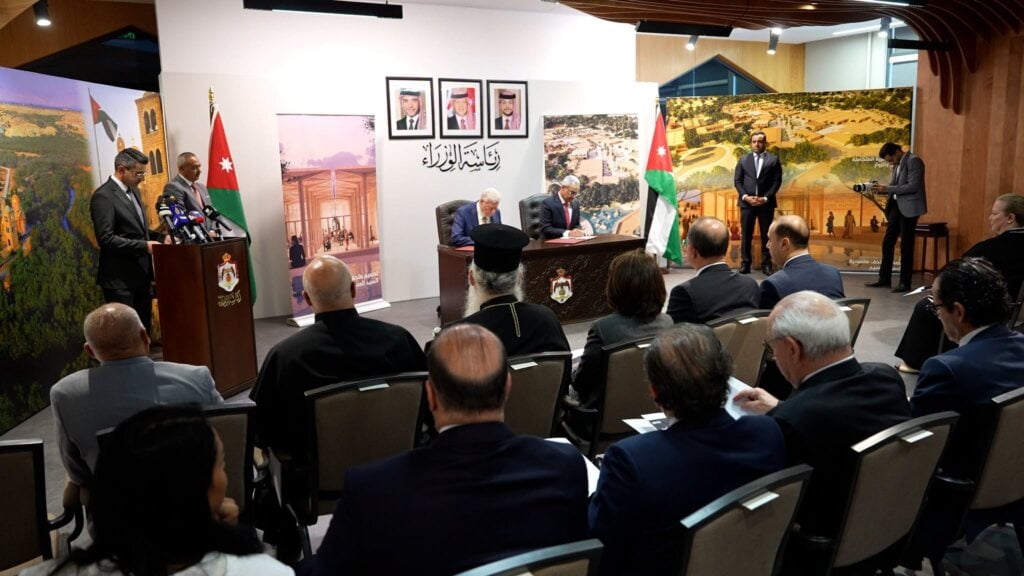
On the occasion of the 75th anniversary of the Bărăgan deportations, we extend a word of blessing and congratulations to the organisers of the cultural and scientific event hosted today, June 16, 2026, by the Presidential Administration at Cotroceni Palace, and to all those attending the premiere of the film The Voices of Bărăgan: The 1951 Deportation, among whom are members of the Association of Former Deportees to Bărăgan and the Association of Former Political Prisoners of Romania, survivors of the deportations and their descendants.
We also express our appreciation to the historians who conduct archival and oral history research, the results of which are reflected in books, symposia and documentary media productions aimed at recovering the historical truth of a difficult period in Romania’s history—one that lasted forty years and profoundly affected Romanian society, including the Romanian Orthodox Church.
The erection of memorial crosses and monuments in various localities, the celebration of memorial services and panikhidas for deceased deportees, and the use of Church media platforms to share the testimonies of survivors and publicise related events are all part of the Romanian Orthodox Church’s efforts to stand in solidarity with the projects of the Association of Former Deportees to Bărăgan.
Today’s event is an occasion not only for remembrance, but also for humble prayer offered to the Holy Trinity for the salvation of the souls of the approximately 1,700 people—including 175 children—who died in the 18 villages of the Bărăgan between 1951 and 1956, and whose graves “were ploughed over by tractors in 1964 so that the land could be cultivated with vegetables and grain or transformed into irrigation systems.” [3]
With profound esteem and paternal blessing,
† DANIEL
Patriarch of the Romanian Orthodox Church
Notes
[1] Viorel Marineasa & Daniel Vighi, Rusalii 51. Fragmente din deportarea în Bărăgan, Marineasa Publishing House, Timișoara, 2004, p. 17.
[2] Archive of the Diocese of Arad, Dossier III 38/1951.
[3] Romulus Rusan, Morți fără morminte în Bărăgan (1951-1956) [Dead without tombs in Bărăgan], Ed. Fundației Academia Civică, 2011, p. 2.
Photo: Basilica.ro Files / Mircea Florescu